
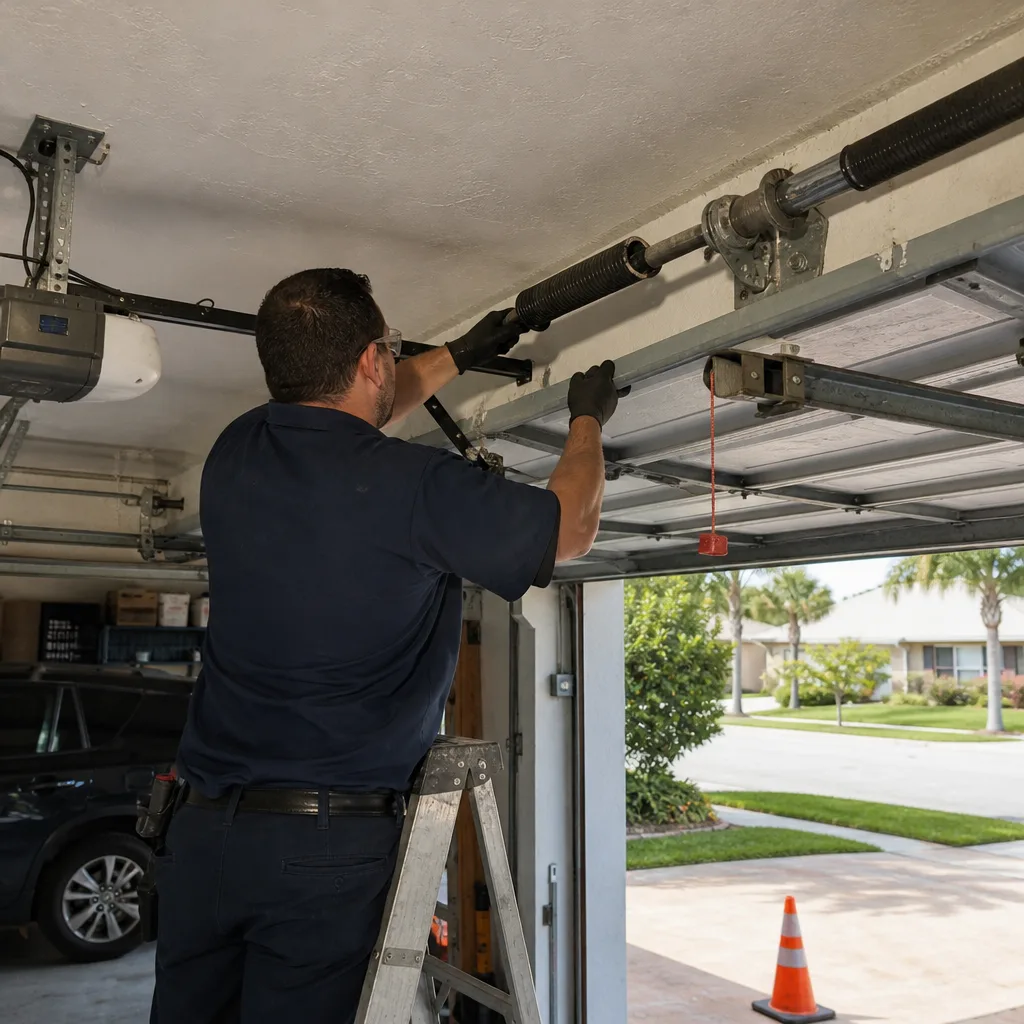
Last updated November 23, 2026
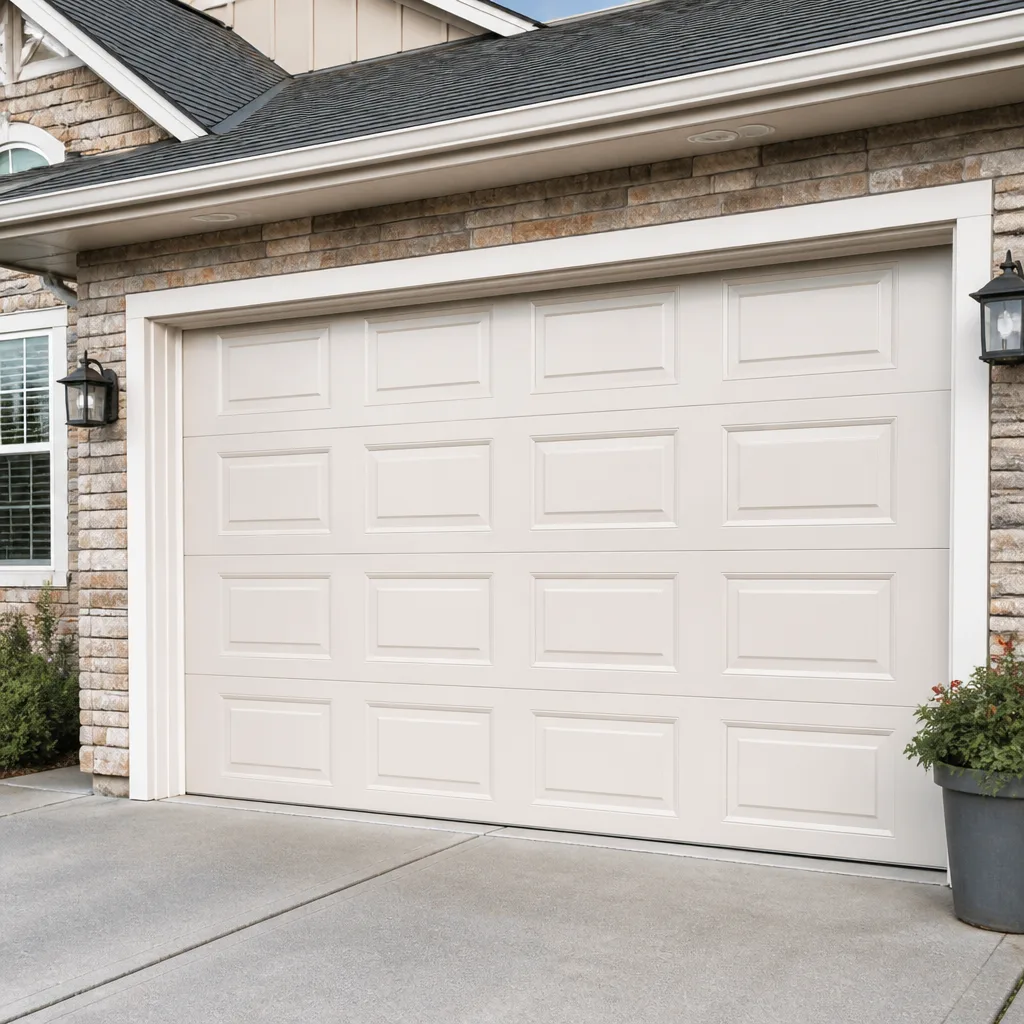 Raised-panel steel
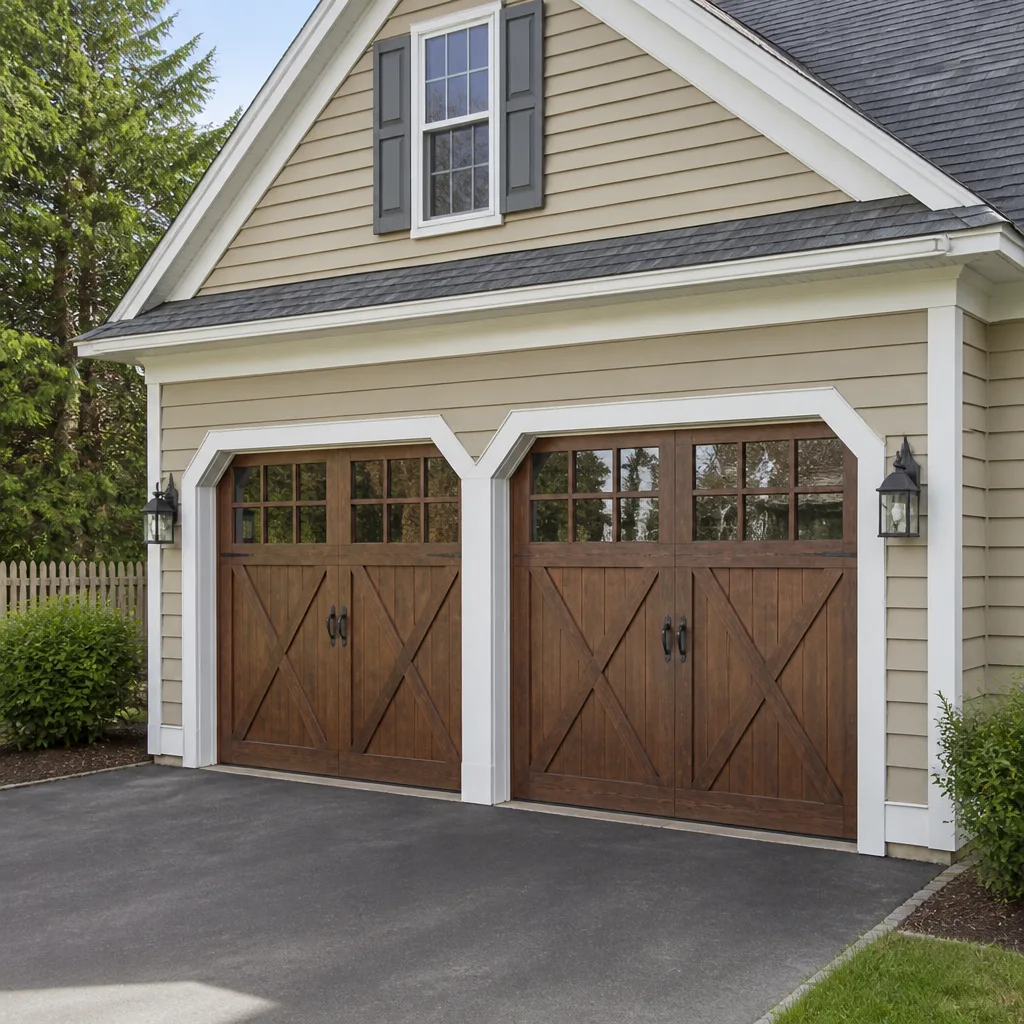 Carriage house
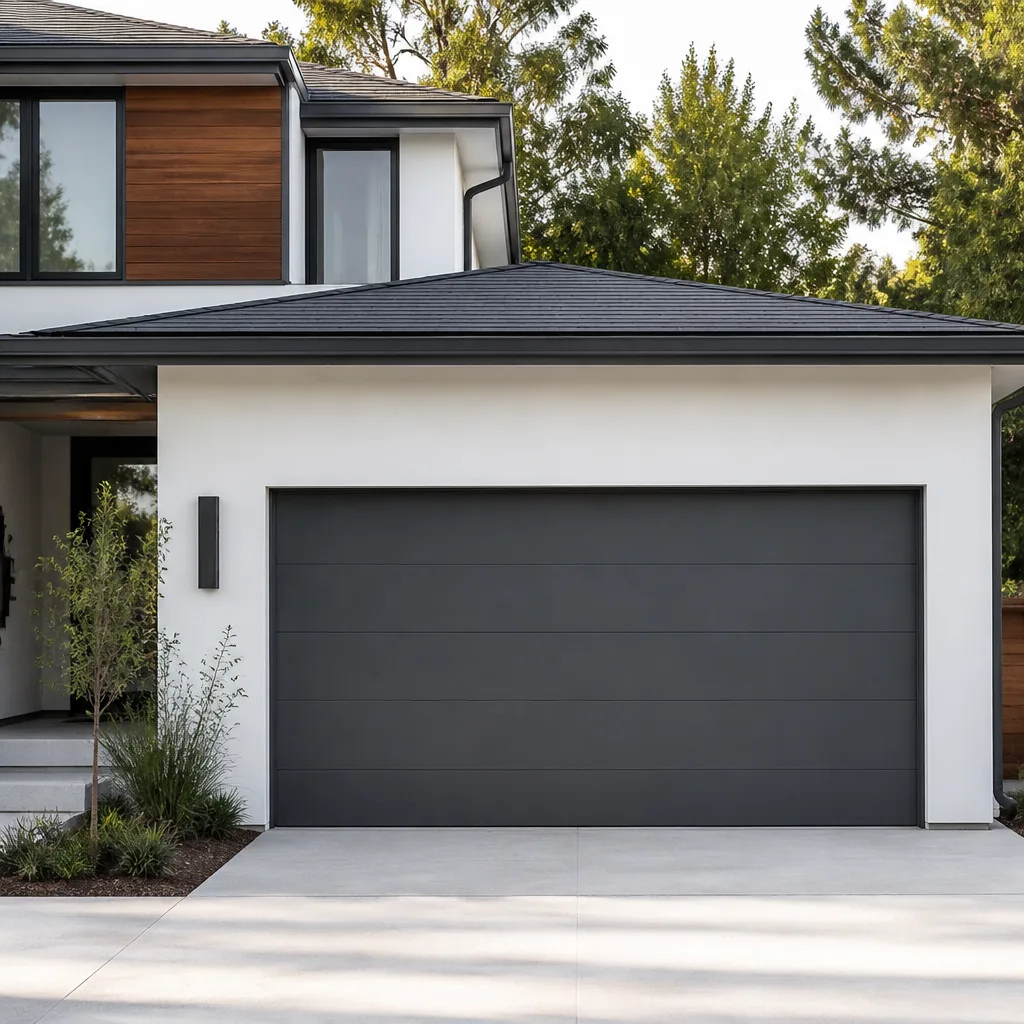 Modern flush
 Full-view glass
 LiftMaster openers
 Chamberlain openers
Full 25-point door and opener safety check with every visit - springs, cables, rollers, tracks, and your LiftMaster or Chamberlain opener included
You get a price before we start. It does not change when the pro arrives.
Get your free estimateDIY vs Professional Garage Door: The Boynton Beach Homeowner’s Decision Guide
Torsion springs store enough energy to break bones when they let go, and that fact gets stretched into a blanket warning that keeps homeowners away from tasks they can safely do themselves. Lubricating rollers, swapping a bottom seal, cleaning photo-eye sensors, and resetting a keypad don’t require a technician. Replacing a torsion spring does. The trick is knowing where that line sits for your door, your opener, and your house. This guide draws it precisely: which jobs are genuinely safe to self-perform in Boynton Beach, which ones risk injury or a voided warranty, and how Florida’s wind load rules change the math on a full door replacement.
Quick Answer
You can safely handle lubrication, bottom seal replacement, sensor cleaning and alignment, and keypad battery or code resets yourself. You should call a professional for torsion spring replacement, cable replacement, track realignment after an impact, and opener motor work. On a full door replacement in Boynton Beach, the wind load code requirements and the insurance coverage gap they create make a permitted professional install the safer financial choice, not just the safer physical one.
Styles & brands we work with
- Raised-panel steel
- Carriage house
- Modern flush
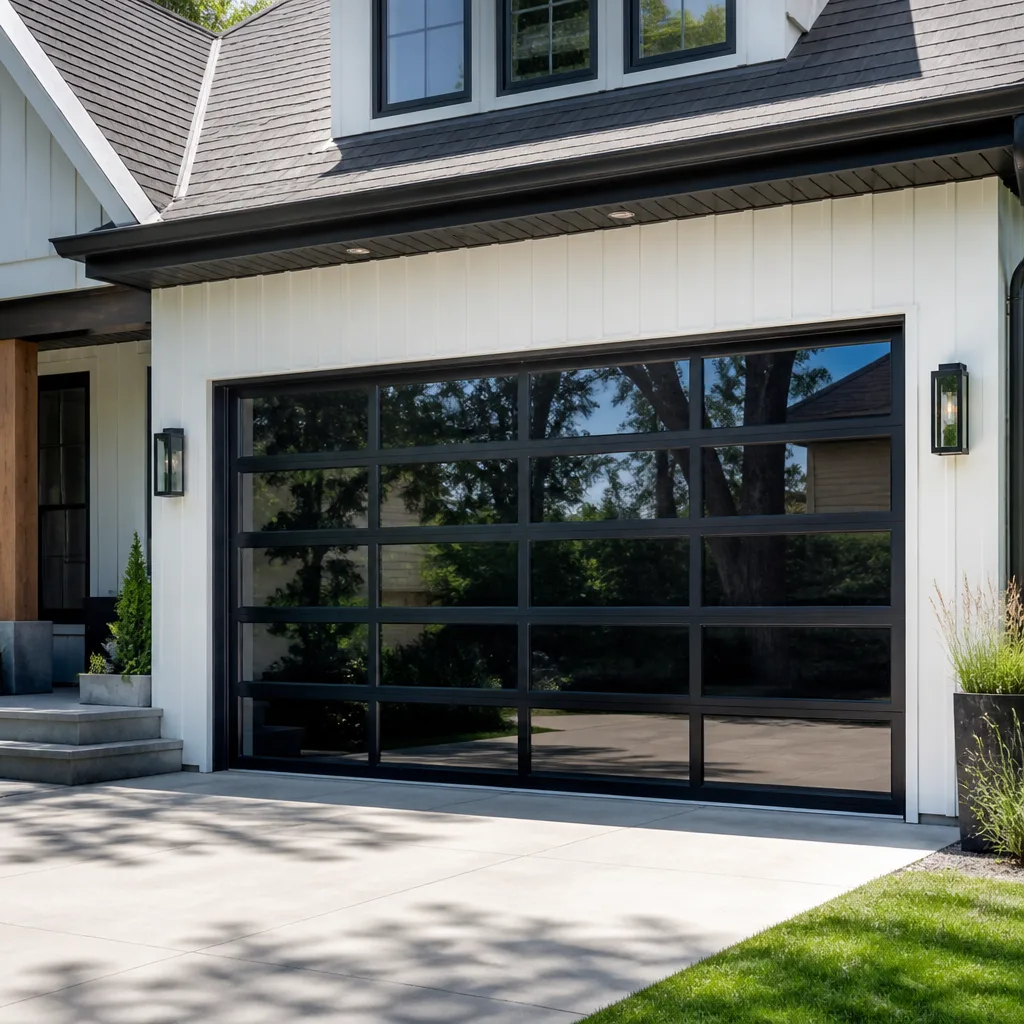
- Full-view glass
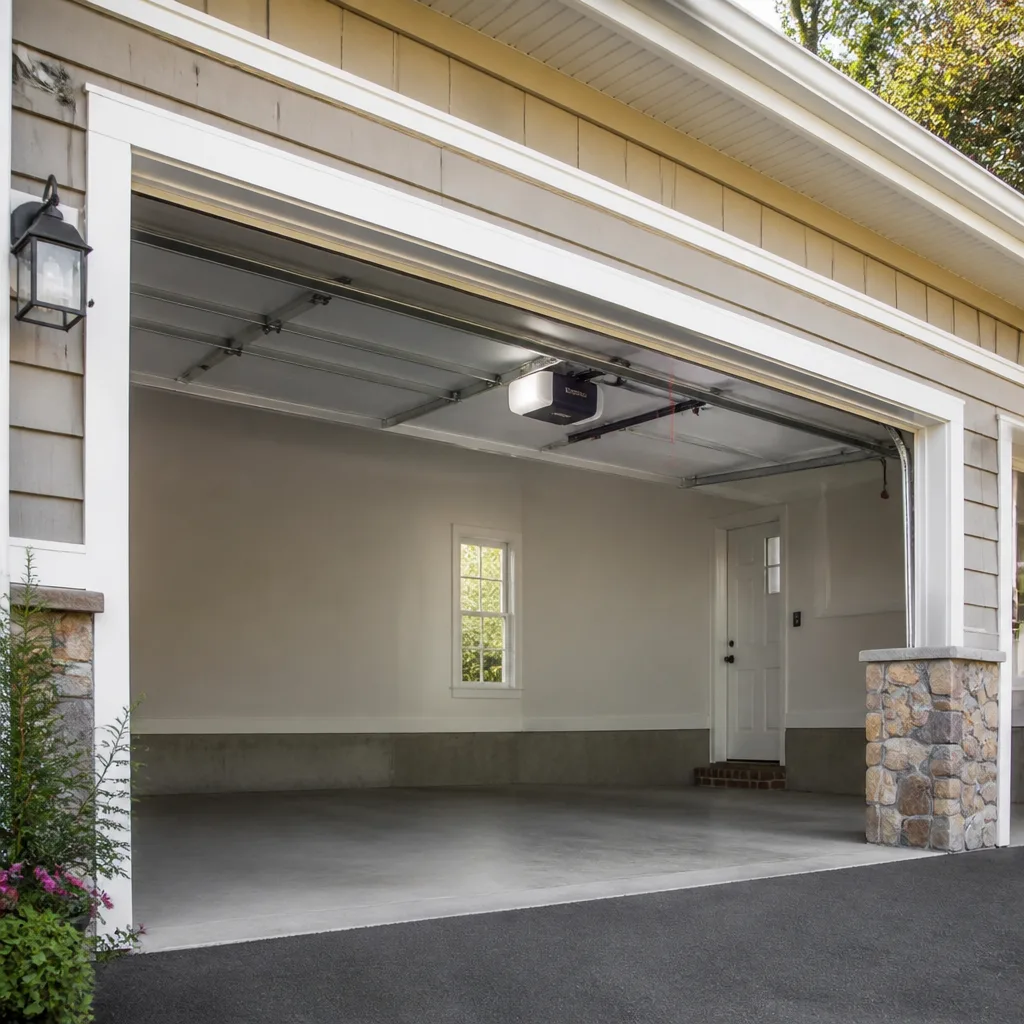
- LiftMaster openers
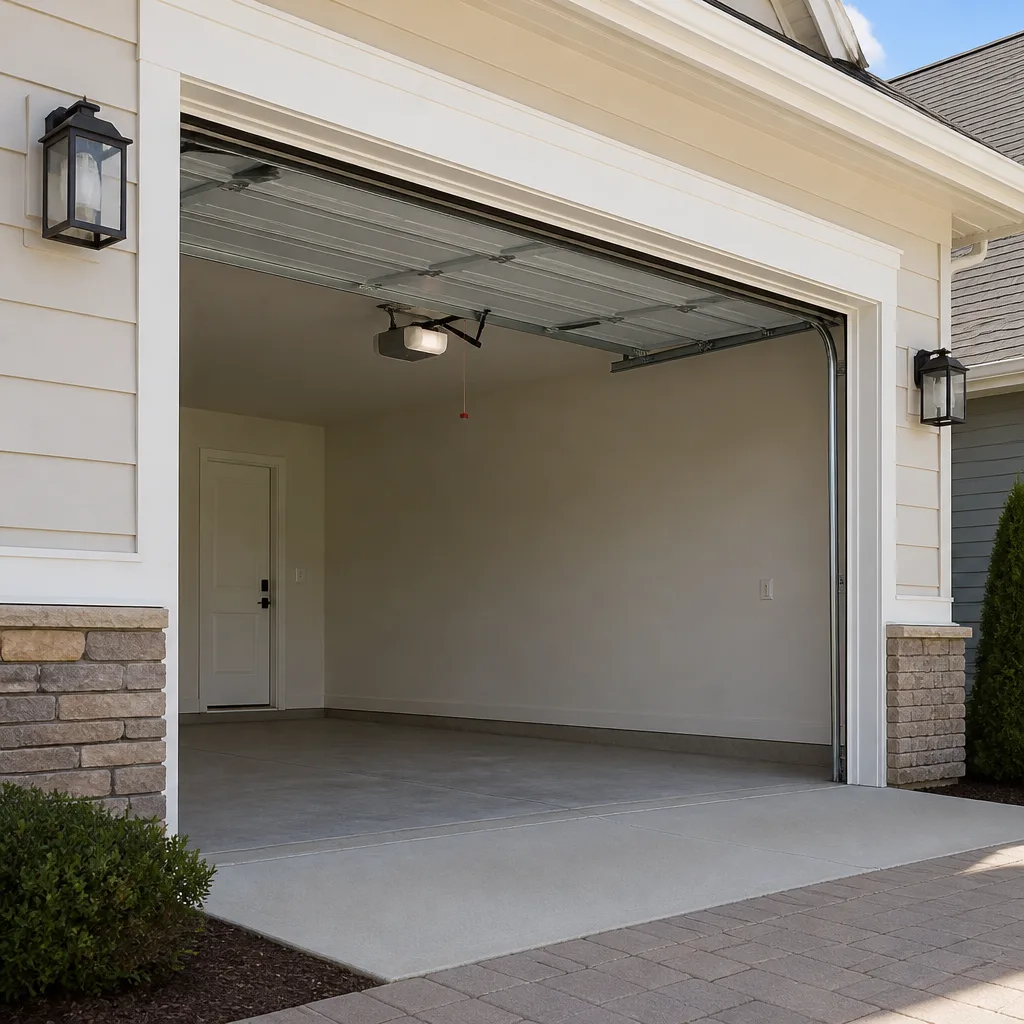
- Chamberlain openers
Table of Contents
- Which Garage Door Tasks Are Safe to DIY?
- Which Garage Door Repairs Require a Professional?
- Why Torsion Springs Are Different From Every Other Part
- The Florida Wind Load Question and Your Insurance
- The Hidden Cost of a Failed DIY Repair
- How to Check a Tutorial Actually Matches Your Door
- Why Brand Matters: Wayne Dalton, LiftMaster, and the Rest
- What Each Path Actually Costs
Which Garage Door Tasks Are Safe to DIY?
These are the jobs that don’t involve stored tension, blades under load, or a door that can fall. They’re genuinely cost-effective to handle yourself and they extend the life of your door. In our experience, most Boynton Beach homeowners who call us for a “broken door” on these issues could have handled them in twenty minutes with basic tools.
- Lubrication. Rollers, hinges, and the torsion bar and bearing plates get a light coat of garage door lubricant (not WD-40, which attracts grit). Two or three times a year is enough. Wipe off excess so it doesn’t collect Florida dust and pollen.
- Bottom seal replacement. A cracked or torn bottom seal lets in rain, insects, and the afternoon heat that builds up in a south Florida garage. Slide the old one out of the retainer and feed a matching replacement in. Measure the width before you buy.
- Photo-eye sensor cleaning and alignment. If the door reverses immediately or won’t close, look at the two small sensors near the floor on each side of the opening. Wipe the lenses, then check that the LED on each is steady (not blinking). A nudge to one bracket is usually all the alignment that’s needed.
- Keypad battery and code reset. Most LiftMaster and Craftsman keypads take a standard battery and reset via a sequence printed on the inside cover. If the door closes from the wall button but not the keypad, this is almost always the fix.
- Visual inspection. Look at the springs for gaps or stretching, check for frayed cables, and listen for scraping or grinding. Catching a problem early is the cheapest DIY step there is.
None of these involve the springs, cables, or the door’s lift mechanism. That’s the dividing line. If your task requires loosening a bolt under tension or moving the door by hand, stop and read the next section.
Which Garage Door Repairs Require a Professional?
The high-risk repairs all share one thing: stored energy or falling weight. Torsion springs, extension springs, and the cables that run alongside them are under constant tension, and a door that comes off its track or a spring that releases mid-work can cause serious injury in a fraction of a second. These are jobs for a trained technician, not a homeowner with a YouTube video.
- Torsion spring replacement. The spring sits on the torsion bar above the door and is wound to hundreds of pounds of tension. Replacing it requires winding bars, precise turns, and knowing which way the spring was originally coiled. A slip is dangerous.
- Extension spring replacement. Same risk on the sides of the door. Some extension spring systems have a safety cable, but that cable doesn’t protect the person unwinding the spring.
- Cable replacement. A snapped cable means the door is hanging by one side or by nothing. Even if it’s still standing, the cable is under load and cutting or releasing it the wrong way is a hazard.
- Track realignment after impact. If the car nudged the door or a ladder struck a vertical track, the whole panel and hardware assembly needs to be checked, not just the bent section. A door that closes “mostly” square can still stress the springs and the opener over time.
- Opener motor or gear replacement. The drive train on a LiftMaster or Genie unit is more accessible than the spring system, but the door must be uncoupled from the opener, and a mistake can strip the gear or damage the rail.
- Door replacement. Full panel replacement (not just a new bottom panel) requires lifting and balancing the door, and in Boynton Beach it also brings the wind load code discussion in the next section.
For any of these, our garage door spring repair team can walk through what’s involved. Same-day service is common for spring and cable failures, and the price is quoted and agreed before any work starts.
Why Torsion Springs Are Different From Every Other Part
A torsion spring is a coil of steel that’s wound tight enough to lift a door weighing well over a hundred pounds, dozens of times a day, for years. When a technician winds a spring, they’re putting hundreds of pounds of rotational force into the metal. If that energy releases while someone is in the way, the results are serious – broken bones, torn tendons, and head injuries are all reported in the trade. That’s why spring work is the one category where a small saving is not worth the risk.
If your door feels heavy to lift by hand, opens only partway, makes a loud bang when it moves, or the spring visibly has a gap, stop operating it. Call a professional. Operating a door on a broken spring stresses the opener and the cables and can cause the door to come down unevenly. Turn the opener off at the wall if you can and stop using the door until it’s checked.
One more point on the DIY spring kits sold online: even when a homeowner gets the spring on, the balance and winding turns have to be right. A door that’s badly balanced accelerates wear on the opener, the hinges, and the rollers, and it may not reverse properly on the opener’s safety test. This is the one repair where the risk doesn’t end when the job is “done.” For more on the full service range, see our garage door repair page.
The Florida Wind Load Question and Your Insurance
This is the part of the DIY-vs-pro decision that most guides skip, and in Boynton Beach it matters more than a few dollars of labor. Garage doors in Florida are covered by the state’s wind load requirements, and a door replacement has to meet them. That’s a building code question, not a product question, and the way most homeowners get it wrong is assuming “it looks like the old one” is enough.
Here’s what goes wrong: a homeowner installs a replacement door from a big-box store that isn’t rated for the local wind requirements. The door works fine for a year, then a storm comes through and the door fails. The insurance claim gets denied because the door didn’t meet code. Standard homeowner policies in Florida are written around compliant construction, and an unpermitted, non-compliant door creates a coverage gap after storm damage. That gap is not something a discount on the door covers.
The fix is straightforward. A permitted installation from a licensed installer means the door is matched to the home’s opening, the wind rating is documented, and the installation was inspected. If you’re doing a door replacement in Boynton Beach, ask your city’s building department what permit and wind load requirements apply to your address, and make sure the replacement door’s rating meets them. We can walk you through that conversation before you buy anything.
Springs, cables, and openers do not have the same code implication. They’re mechanical service inside the existing door assembly. But full door replacement is a construction project with a permit side, and it’s the one place in this guide where the insurance gap is real.
The Hidden Cost of a Failed DIY Repair
A failed DIY repair isn’t just the cost of the original part. It almost always adds cost, in three places:
- Damaged parts. If an amateur attempt bends a track, strips a hinge bolt, or warps a panel, the replacement parts aren’t covered by any manufacturer’s warranty. Wayne Dalton and LiftMaster, for example, warrant their products against defects, not against installation damage. The homeowner pays for the replacement part.
- Added labor time. When a pro arrives at a partially-disassembled door, the first hour is often spent undoing the attempt. That’s more time than a clean job would have taken.
- Damage to the opener. An unbalanced door or a door run on a broken spring stresses the opener motor, and a burned-out opener is a bigger repair than the original problem.
The math is simple: the money saved on a DIY spring kit or an online panel goes away the first time a technician has to straighten out what went wrong. On the safe tasks in the list above, that math works the other way – you come out ahead. That’s the difference between a good DIY job and a bad one.
How to Check a Tutorial Actually Matches Your Door
Youtube is a reasonable resource for the safe tasks and a risky one for everything else, because the most-watched tutorial for a given keyword is almost never the one for your door. Before you follow any tutorial, run this check:
- Identify the brand and model. Openers carry a model plate on the back or the ceiling housing. Look for the brand (LiftMaster, Chamberlain, Genie, Craftsman, Raynor) and the model number. A LiftMaster opener is not the same as a Genie.
- Identify the spring type. Torsion springs run horizontally on a bar above the door. Extension springs run along the tracks on each side. They are different systems and the tutorials are not interchangeable.
- Identify the track configuration. Standard lift, high lift, and low-headroom setups look similar but the geometry is different. A video shot on a different configuration can lead you to loosen the wrong part.
- Check the publication date. Opener tech has changed in the last few years (smart openers, battery backup, camera built-in). An older video may reference a part that’s been redesigned.
- Confirm the tutorial is about the task, not the system. A “how to reset your opener” video that’s actually about a specific Craftsman model is common. Look for brand match, not just topic match.
If you’re not sure whether your door is torsion or extension, or the tutorial’s brand doesn’t match yours, that’s the signal to call a pro. We service all eight major brands, and one of the questions on any call is “what brand and model is your opener?” because we come with the right parts knowledge, not a guess.
Why Brand Matters: Wayne Dalton, LiftMaster, and the Rest
A garage door is a system of parts from several manufacturers: the door itself, the springs, the cables, the hinges and rollers, and the opener. On most jobs all of those need to be known before the repair starts, because the parts aren’t interchangeable. A LiftMaster opener pairs with a specific logic board and remote frequency. A Wayne Dalton door may use a specific spring balance system. A Raynor commercial-grade door and a Clopay residential panel have different spring sizes and hardware.
This is the reason brand matters in the DIY-vs-pro question. When you call a specialist, the first thing they should do is ask what brand and model you have, and they should know the answer matters. A generalist may show up, look at the door, and call a supplier. A specialist who works on your brand every week recognizes the failure pattern before they get out of the vehicle. We work on all eight leading brands – LiftMaster, Chamberlain, Genie, Clopay, Amarr, Wayne Dalton, Craftsman, and Raynor – and the diagnostic check matches the brand, not a generic guess.
For complete service under one company, from opener repair to a full new install, there’s no second contractor to coordinate. For openers specifically, our garage door opener repair page covers the main failure patterns. For the overall service overview, start at Boynton Beach Garage Door Repair Pros.
What Each Path Actually Costs
Prices below are typical estimates for the Boynton Beach area. The written estimate sets the final price, and it’s free. These ranges are given as one number per job, not a range that grows with a premium.
| Task | DIY vs. Professional | Typical Estimate |
|---|---|---|
| Lubrication and visual inspection | DIY is safe and cost-effective | Cost of a can of lubricant |
| Bottom seal replacement | DIY is safe | Cost of the seal itself |
| Sensor cleaning and alignment | DIY is safe | No cost |
| Keypad battery and code reset | DIY is safe | Cost of the battery |
| Single torsion spring replacement | Professional | Typical estimate on request |
| Matched pair of springs | Professional | About twice a single spring |
| Cable replacement | Professional | Quoted per door by written estimate |
| Track realignment after impact | Professional | Quoted per job by written estimate |
| Opener motor or gear repair | Professional | Quoted per unit by written estimate |
| Full door replacement with permit | Professional | Free measure and written price |
The one line in that table worth repeating: springs are quoted as one spring, not a pair. Most doors have a matched pair, and when one spring fails, the second is usually the same age and under the same load. Replacing both at the same time is the standard approach. A pair costs about twice a single spring, and that’s stated up front because it’s the number that catches homeowners with a quote that “grew.”
The other line worth repeating: the price is quoted and agreed before any work starts. If a technician arrives, diagnoses, and the price has to change because the job is more than expected, that conversation happens before the work, not on the invoice. Any reputable garage door specialist will do the same.
Common Mistakes to Avoid
- Attempting a torsion spring replacement to save money. This is the single most common injury scenario in the trade. The spring is under hundreds of pounds of tension; a slip is dangerous, and the savings don’t cover a hospital visit.
- Buying a spring online without checking the door’s weight and model. Springs are matched to the door’s weight and the length of the bar. A spring that’s slightly wrong will wear out in months and can throw off the door’s balance, which stresses the opener.
- Installing a replacement door without checking the wind load rating. In Boynton Beach this is the one mistake with a financial tail. A non-compliant door can create a coverage gap after storm damage, and the insurer’s decision is out of your hands at that point.
- Using WD-40 instead of garage door lubricant. WD-40 is a solvent, not a lubricant. It dries out the rollers and attracts grit. A tube of proper garage door lubricant is a better use of the same money.
- Ignoring a door that opens “mostly” square. After a car bump or a ladder strike, the door may still close by hand but the tracks are out of alignment. Left alone, that misalignment accelerates wear on the springs and the opener, so a cheap fix becomes a bigger one.
- Disconnecting the opener and operating the door by hand on a broken spring. A door on a broken spring can fall unevenly. Stop using the door until it’s checked, even if the opener is turned off.
- Following a tutorial for a different brand. A LiftMaster logic board reset is not the same as a Genie. The brand name on your opener is the first thing to look up, not the last.
See the difference
 Before
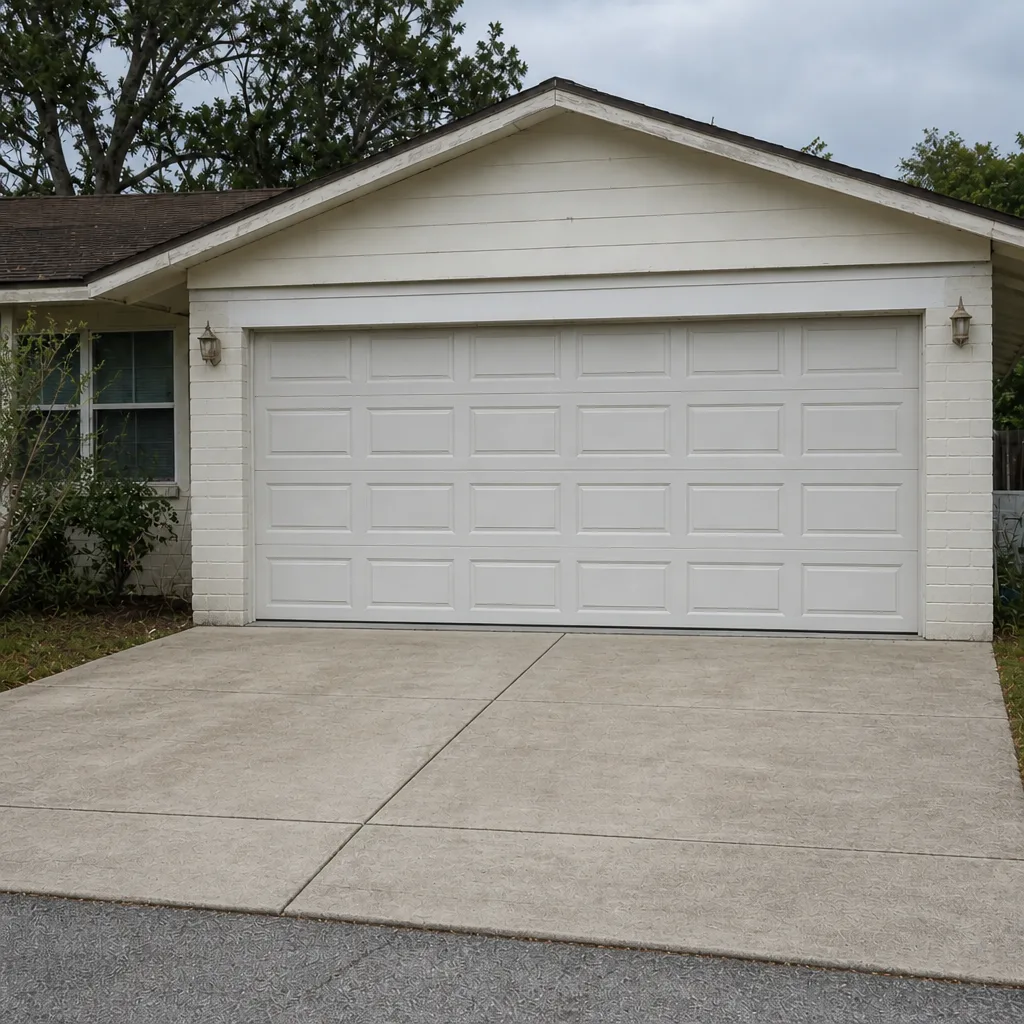 After
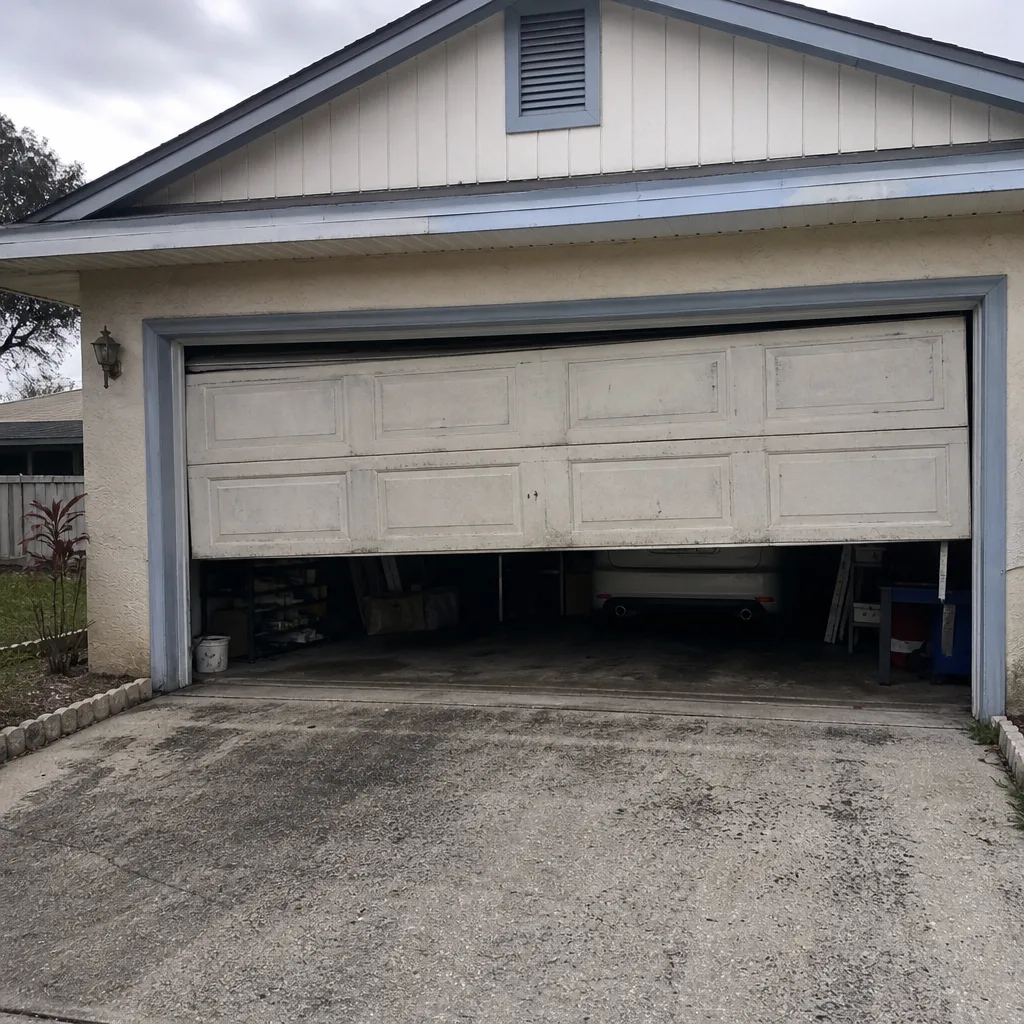 Before
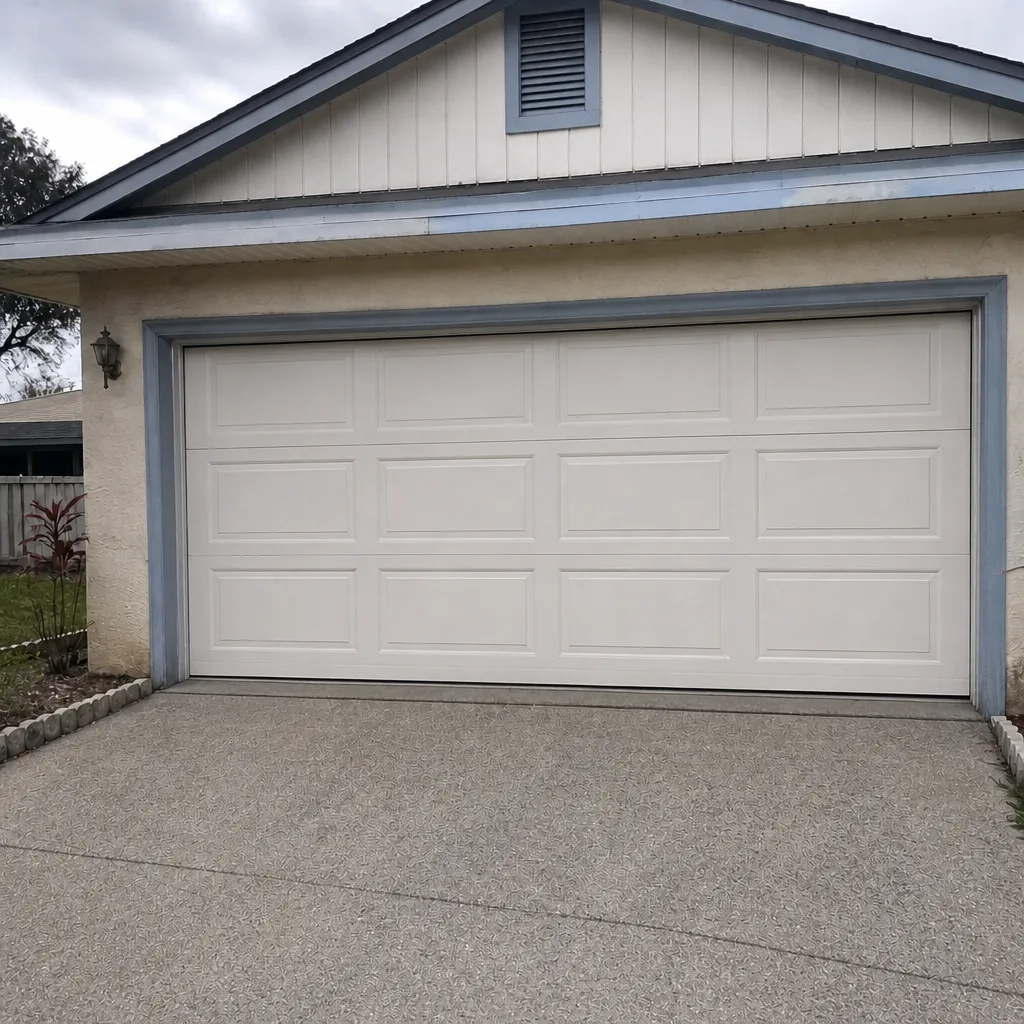 After
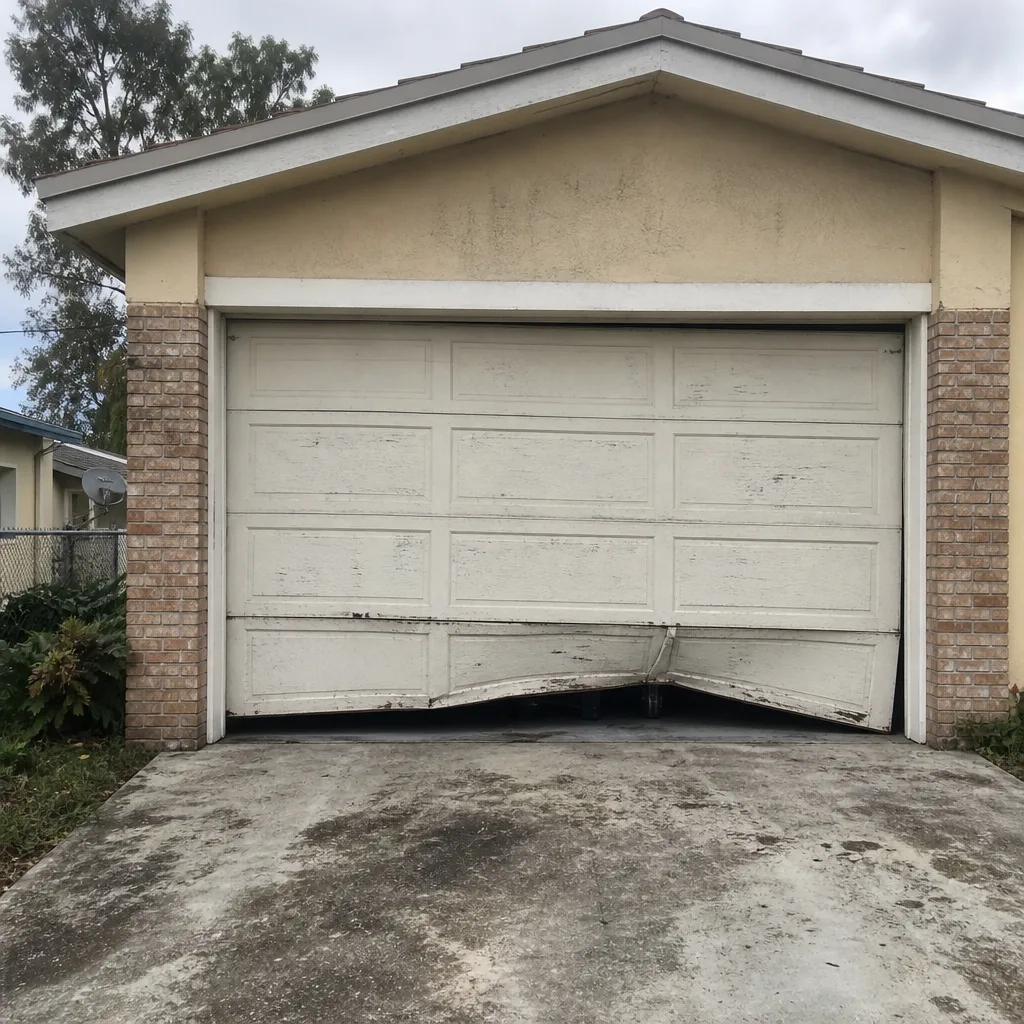 Before
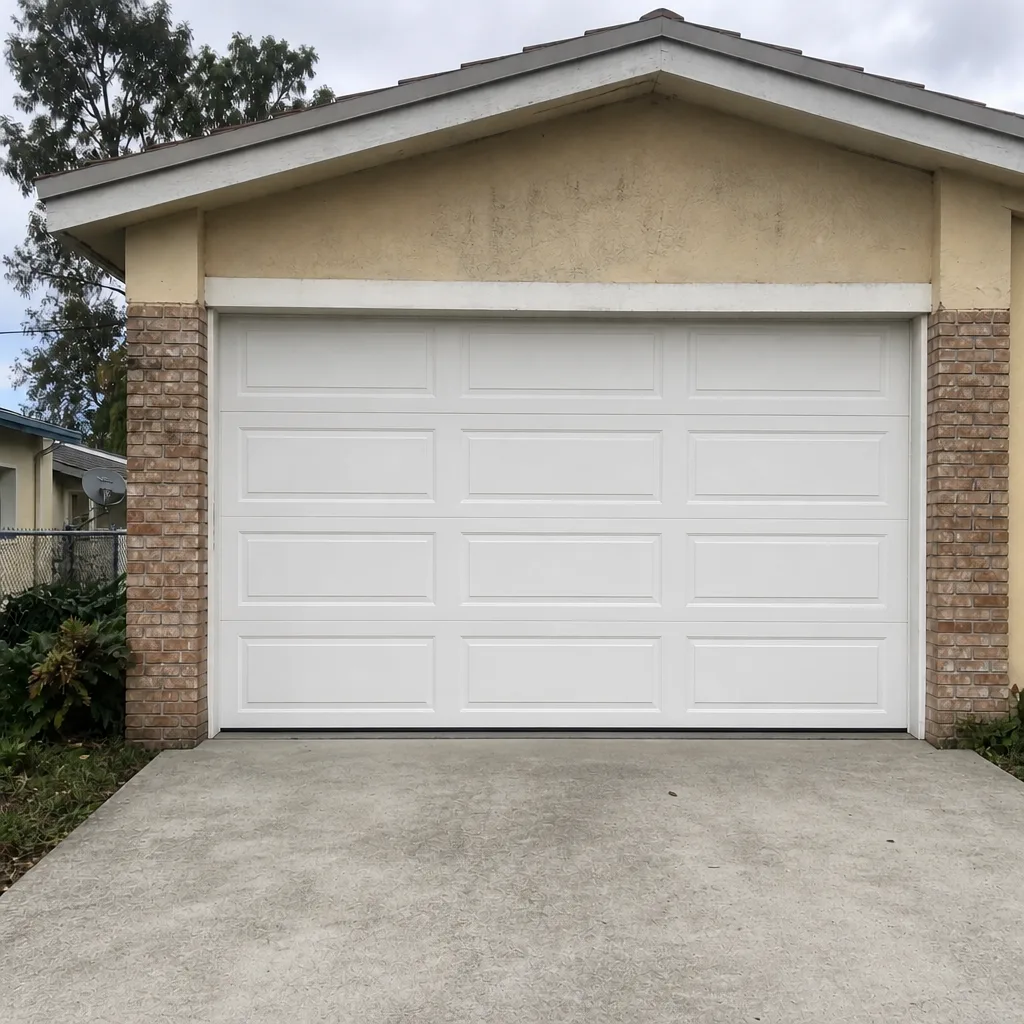 After
When to Call a Professional
Call a professional when any of these is true: the door won’t move or is stuck open or closed; the spring has visibly broken or the door feels extremely heavy by hand; a cable has snapped or is hanging loose; the door has been hit by a car or bumped by a ladder; the opener runs but the door doesn’t move; or you’re considering a full door replacement and need to navigate the permit and wind load requirements. Our technicians have up to 12 years of experience and know the eight leading brands – LiftMaster, Chamberlain, Genie, Clopay, Amarr, Wayne Dalton, Craftsman, and Raynor – so the diagnostic fits the system, not a general guess. Boynton Beach Garage Door Repair Pros offers free estimates in Boynton Beach. Call (866) 937-8319. We answer 24/7. Fast dispatch from 7am to 7pm, Sunday through Friday. Same-day service is available for most spring and cable failures, and the price is quoted and agreed before any work starts.
Frequently Asked Questions
No. Torsion and extension springs are under enough stored energy to cause serious injury when they release, and the winding process requires specialized bars and the exact weight and turn count for your door. A single torsion spring replacement is quoted by written estimate, and a matched pair usually costs about twice that because both springs are typically replaced together. Call (866) 937-8319 for an exact quote – estimates are free.
On lubrication, bottom seal replacement, sensor alignment, and keypad resets, yes – those are genuinely safe and cost-effective. On springs, cables, track realignment after impact, and opener motor work, no. The savings don’t cover the risk, and a failed DIY attempt often adds cost because the damaged parts aren’t covered by warranty.
It can create a coverage gap after storm damage if the door doesn’t meet the wind load requirements. Standard Florida homeowner policies are built around compliant construction, and an unpermitted replacement can be excluded from a claim. Ask Boynton Beach’s building department what permit and wind load requirements apply to your address before you buy a replacement door.
Yes for most spring and cable failures. We answer 24/7. Fast dispatch from 7am to 7pm, Sunday through Friday. A call outside dispatch hours is booked into the next opening. Same-day service is common, and the price is quoted and agreed before any work starts. Call (866) 937-8319 for an exact quote – estimates are free.
No. The price is quoted and agreed before any work starts. If a diagnosis reveals more than expected, that conversation happens before the work, not on the invoice. A written estimate sets the final price.
We service all eight leading brands: LiftMaster, Chamberlain, Genie, Clopay, Amarr, Wayne Dalton, Craftsman, and Raynor. The first question on the call is what brand and model your opener and door are, because the diagnostic and the parts depend on it. Call (866) 937-8319 for an exact quote – estimates are free.
The Bottom Line
The DIY-vs-pro question on a garage door has a clean answer, and it isn’t “always call a pro.” Maintenance tasks that don’t involve stored tension are genuinely safe and worth doing yourself: lubrication, bottom seal replacement, sensor alignment, and keypad resets. The moment a job involves a spring, a cable, a track that’s out of alignment after impact, or a door that has to be lifted and balanced, the risk shifts and so does the math. Springs are the sharpest example – hundreds of pounds of stored energy, a real injury risk, and a job most homeowners should never start. On a full door replacement in Boynton Beach, add the wind load permit question and the insurance coverage gap. The safe tasks you keep; the high-risk ones go to a specialist who works on your brand.
If you’re at the point where a spring has broken, a cable is loose, or you want a free measure on a replacement door, call Boynton Beach Garage Door Repair Pros at (866) 937-8319. We answer 24/7. Fast dispatch from 7am to 7pm, Sunday through Friday. Estimates are free and the price is quoted and agreed before any work starts.
Written by the team at Boynton Beach Garage Door Repair Pros.