
Last updated November 23, 2026
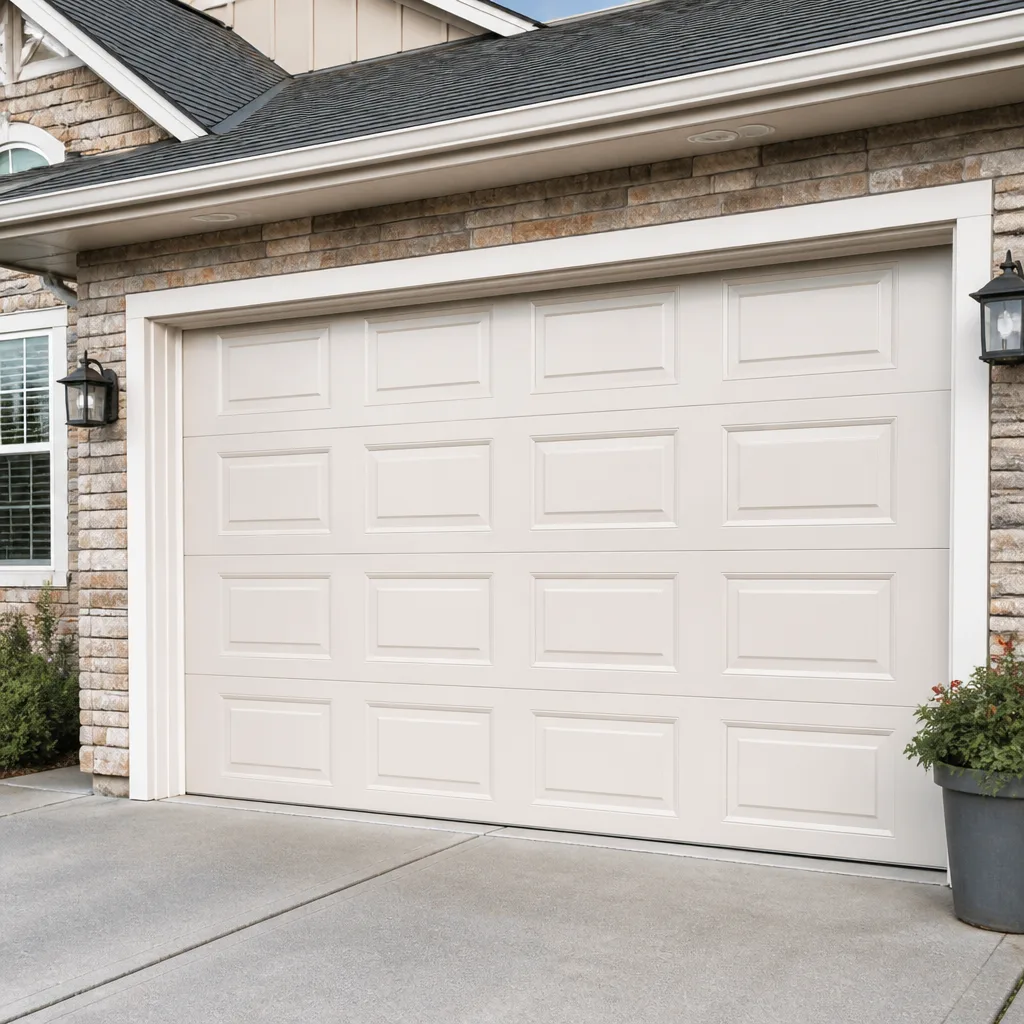 Raised-panel steel
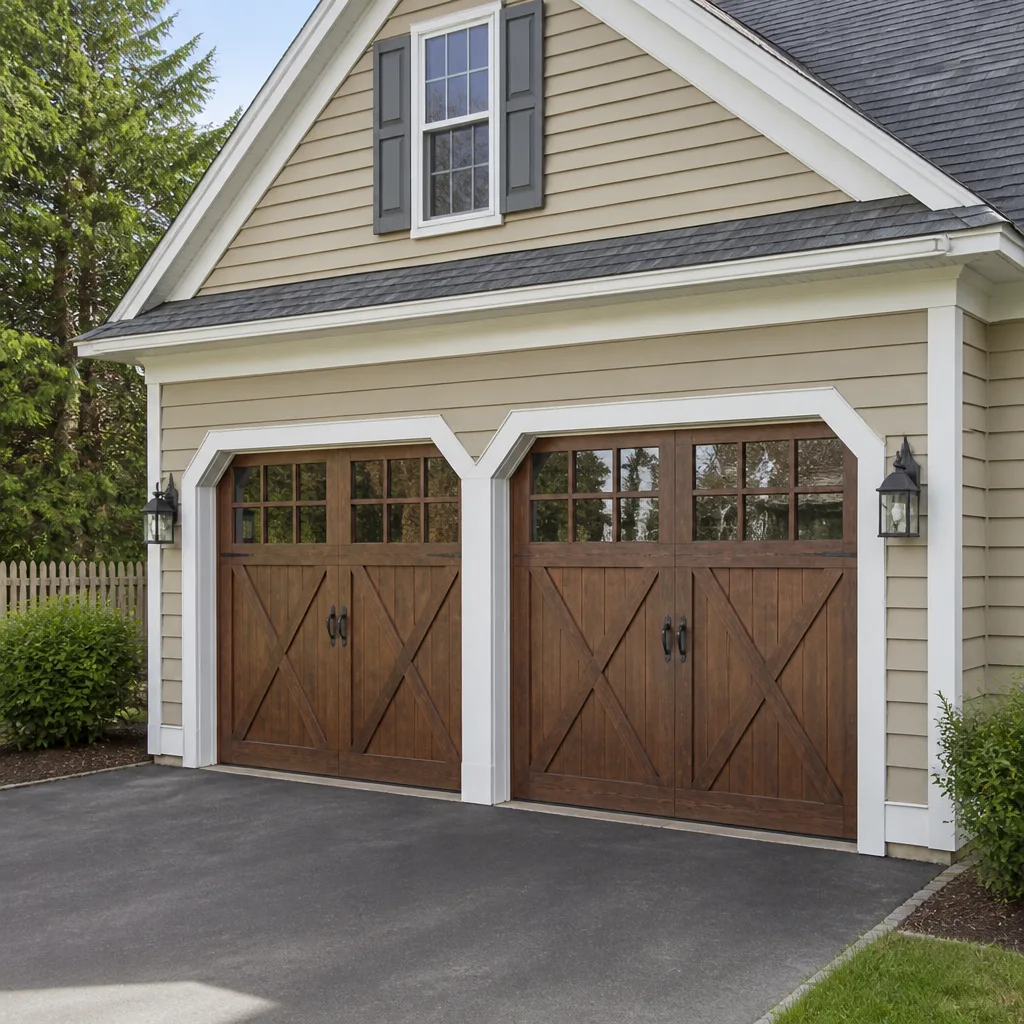 Carriage house
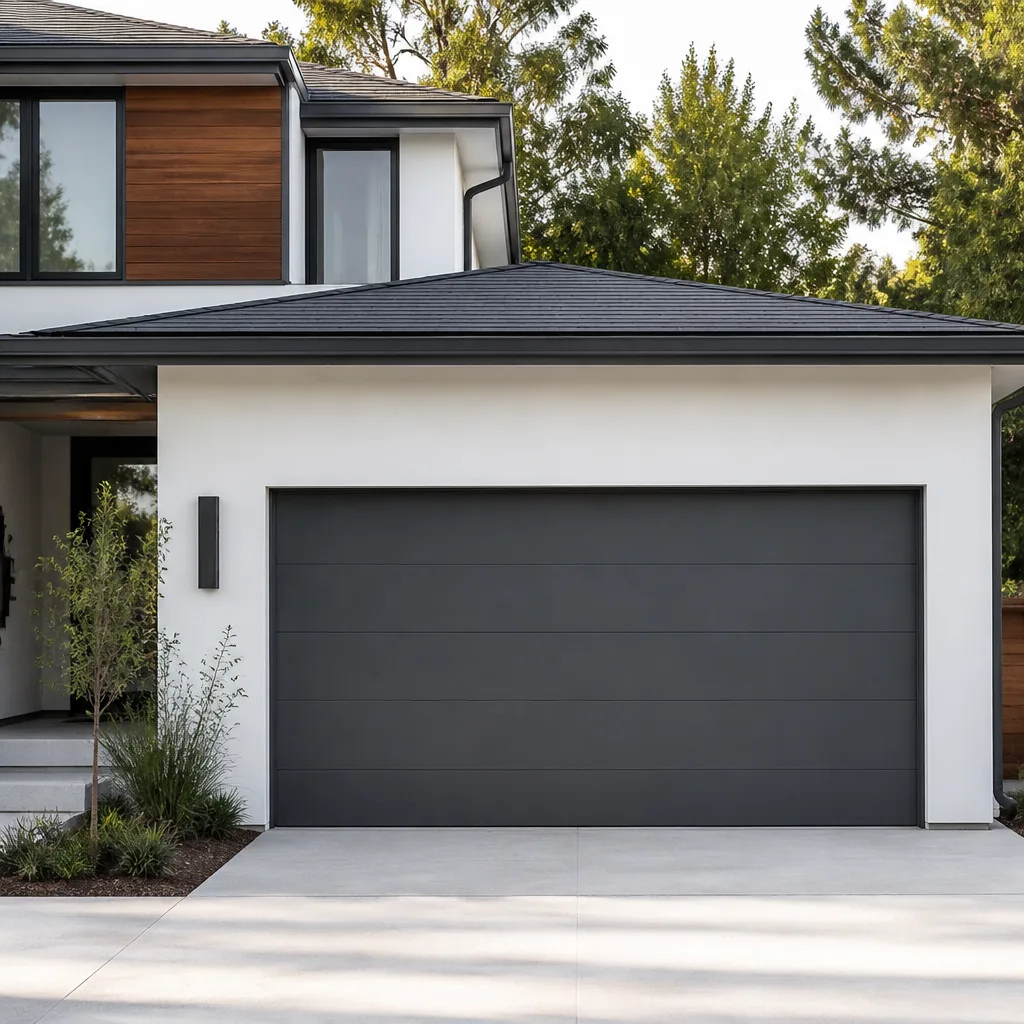 Modern flush
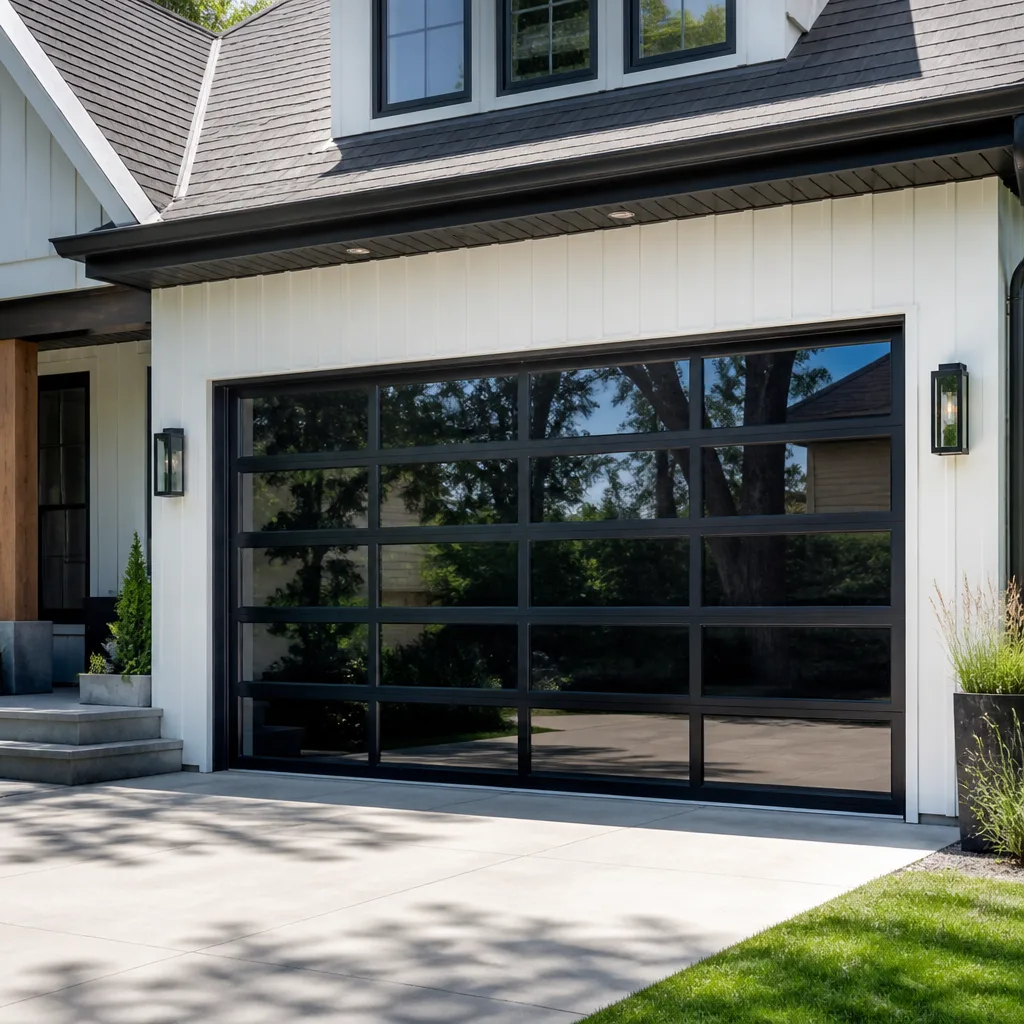 Full-view glass
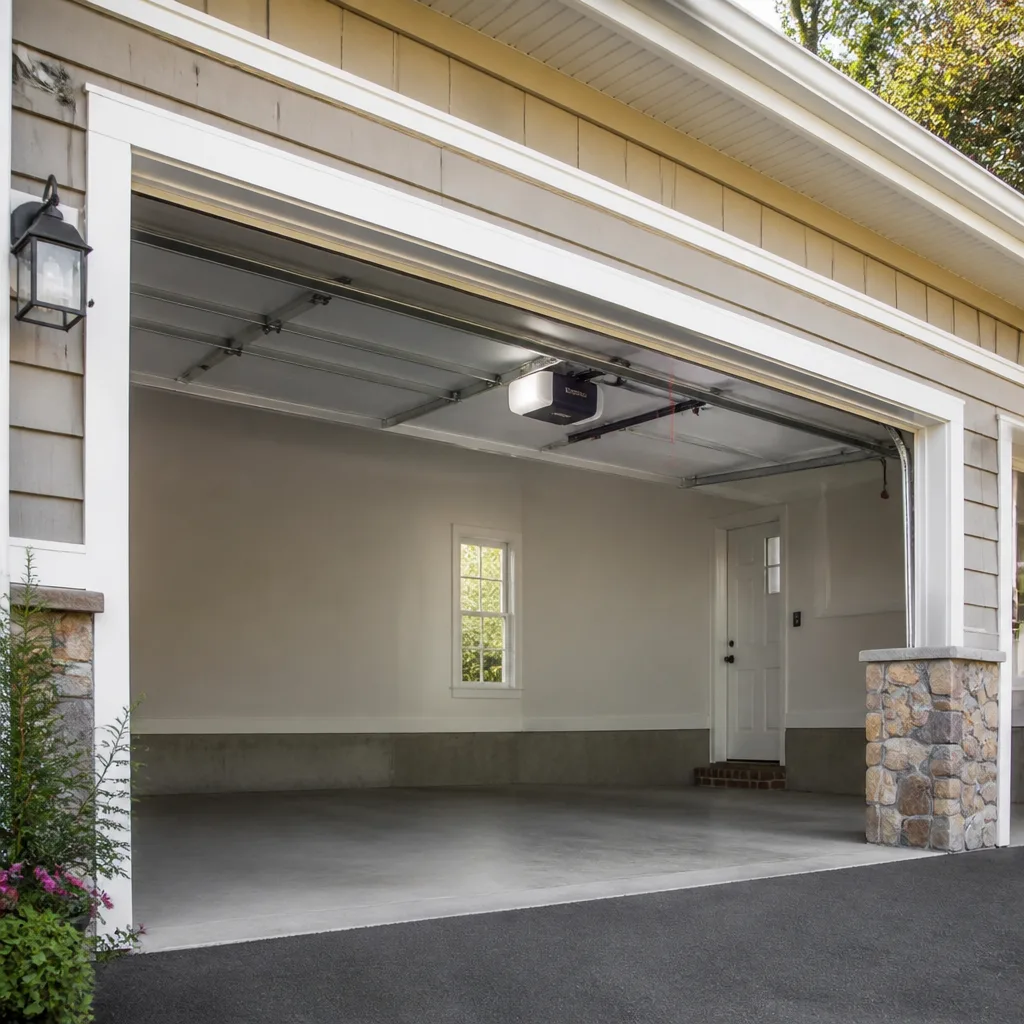 LiftMaster openers
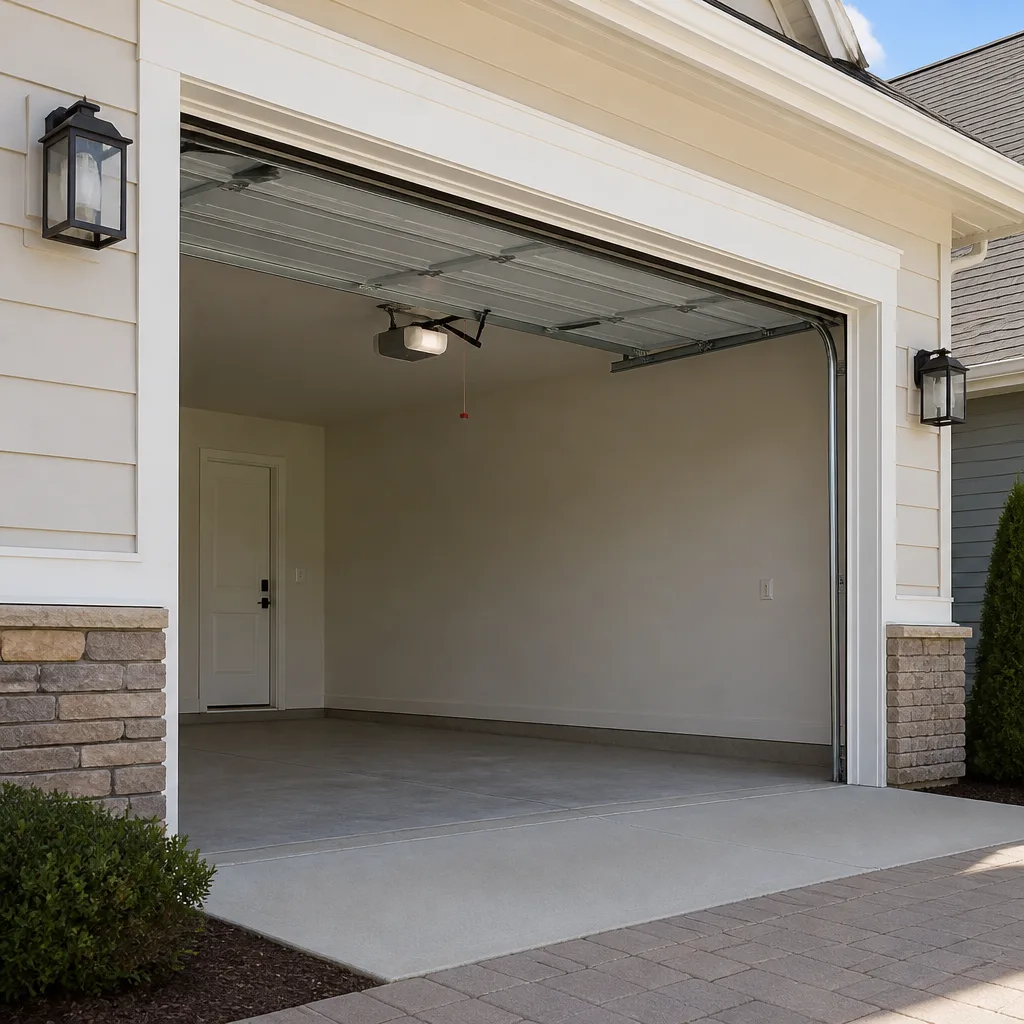 Chamberlain openers
Full 25-point door and opener safety check with every visit - springs, cables, rollers, tracks, and your LiftMaster or Chamberlain opener included
You get a price before we start. It does not change when the pro arrives.
Get your free estimateGarage Door Repair Troubleshooting in Boynton Beach: Common Problems and How to Fix Them
Most people assume a garage door problem is mysterious, that the whole system has to come apart, or that they should start spraying lubricant on everything and hope for the best. The truth is the opposite. A residential garage door is a fairly simple machine with a handful of parts doing almost all the work, and nearly every failure announces its cause before you have to touch anything. In this guide we walk through a symptom-to-cause method we use on calls across Boynton Beach: what a grinding, popping or scraping sound points to, which checks are safe to do yourself, and which repairs belong in the hands of a trained technician.
Quick Answer
Garage door troubleshooting starts with matching the symptom to a component: grinding or roaring usually points to rollers, bearings or an opener gear; a loud pop followed by a dead door almost always means a broken torsion spring; and a door that reverses immediately is typically a photo-eye or travel-limit issue. You can safely handle lubrication, sensor alignment, remote reprogramming and track wiping yourself, but spring, cable and torsion work carries serious injury risk and should always go to a professional. If the door won’t move at all, call a garage door company rather than force it.
Styles & brands we work with
- Raised-panel steel
- Carriage house
- Modern flush
- Full-view glass
- LiftMaster openers
- Chamberlain openers
Table of Contents
- The Symptom-to-Cause Diagnostic Tree
- Florida-Specific Culprits: Heat, Humidity and Storms
- The Homeowner Stop Line: What’s Safe and What Isn’t
- Opener Error Codes and Blinking Lights, Decoded
- When a “Working” Door Is Still a Problem
- Step-by-Step: Your First Ten Minutes of Troubleshooting
- Spring and Cable Failures: Why We Treat Them Differently
- What Garage Door Repair Costs in Boynton Beach
The Symptom-to-Cause Diagnostic Tree
Troubleshooting gets much easier when you stop asking “what’s wrong with my door?” and start asking “what is my door actually doing?” A door is a mechanical system, and the way it fails tells you which part failed. Here is how we map behaviors to causes when we arrive at a Boynton Beach home.
Sounds that point to a cause
- Grinding or roaring: worn nylon or steel rollers, dry hinge bearings, or a stripped opener gearbox. The door still moves but the noise gets worse over time.
- A single loud pop from above the door: a broken torsion spring. The door will feel impossibly heavy, and in most cases it won’t lift at all.
- Scraping or rubbing metal: a bent track, a loose roller riding out of its channel, or a panel that’s out of alignment.
- Rattling and banging: loose hinges, a slack chain or belt, or a door panel that has begun to separate from its stiles.
- Clicking then nothing: the opener’s logic board or capacitor, often confused with a dead remote.
Behaviors that point to a cause
- Door starts down then reverses: photo-eye alignment or obstruction, or a travel-limit setting that no longer matches the opening.
- Opens a foot or so then stops: force-sensitivity or limit switch, or a binding door the opener can’t push through.
- Opens fine but won’t close: safety sensor, remote frequency, or a mis-set down limit.
- Door is dead but the opener hums: a stripped drive gear or a broken spring the motor can’t overcome.
That last distinction matters. If the motor hums and the door doesn’t move, the opener is often fine and the problem is either mechanical resistance or a stripped gear. Knowing which saves you from replacing an opener you didn’t need to replace. If you’d rather not diagnose it yourself, call garage door repair and we’ll tell you what’s likely before we arrive.
Florida-Specific Culprits: Heat, Humidity and Storms
Garage doors in South Florida live in a different environment than the doors covered in national troubleshooting guides. Boynton Beach’s mix of high heat, year-round humidity and seasonal storm wind works on the hardware in ways that northern guides never mention. We see three local patterns repeatedly.
Humidity and the tracks
Constant moisture in the air makes metal tracks and hinges prone to surface corrosion, and it makes the small adjustment points (bolts, roller stems, hinge pins) stiff. A roller that should pivot freely starts dragging, which puts uneven pressure on the track and eventually warps it. That warped track is why doors in Boynton Beach so often develop a scrape partway down the rail. Wiping the track and keeping hinges and roller stems lightly lubricated with a garage-door-specific product slows this considerably.
Torsion springs and heat
The torsion spring is a coiled piece of steel under high tension, and heat cycling accelerates fatigue. A door that was installed when Boynton Beach temperatures were milder sees hundreds of expansion and contraction cycles a year. Springs can snap at any time, but heat-stressed coils often show warning signs first: a gap in the coil, a sluggish lift, or a door that feels heavier than it used to. If your spring looks worn, get it looked at before it fails.
Wooden and composite panels
Older wood panel doors absorb moisture and swell, causing the panels to bind in the track and the sections to pull apart at the joints. Clopay and Amarr make composite and steel-backed options that handle humidity far better. If your door is wood and you’re fighting swelling every summer, replacement may cost less over time than repeated repair.
Wind load is the other local factor. The building code that governs garage door wind ratings in Florida is best confirmed with your city or county building department, and a properly rated door plus hurricane bracing matters in storm season. If you’re not sure what your door is rated for, ask before the next system moves through.
The Homeowner Stop Line: What’s Safe and What Isn’t
Some fixes genuinely belong to the homeowner. Others are dangerous enough that even our own technicians use specific tools and take precautions before they touch them. Here’s where we draw the line, and where every responsible garage door company should draw it too.
Safe for most homeowners
- Lubricating hinges, rollers, springs (surface only) and tracks with a garage-door-specific lubricant.
- Wiping down and aligning the photo-eye sensors so the beam lines up and the safety light stays solid.
- Reprogramming remotes and keypads, changing batteries, and re-pairing a remote to a LiftMaster or Chamberlain opener.
- Clearing obstructions from the door path and resetting the opener after a power outage.
- Checking and lightly tightening visible hinge and bracket bolts.
Hands off, call a technician
- Torsion spring replacement. The spring stores enough energy to cause serious injury if released incorrectly. This is the single most dangerous garage door repair there is.
- Cable replacement or rewinding. The cables carry the full tension of the spring system. A slack cable that slips is unpredictable and fast.
- Track straightening and resetting the door onto the track. A door that jumps the track can fall while you’re under it.
- Replacing the bottom bracket or the center bearing plate. Both are under load from the springs.
If a spring is broken, a cable is slack, or the door is off the track, don’t run the opener and don’t try to lift the door by hand. That is the moment to call. Our garage door spring repair service exists precisely because spring and cable work is the part of the trade that homeowners should never attempt on their own.
Opener Error Codes and Blinking Lights, Decoded
Blinking lights are the opener’s way of telling you what’s wrong. The catch is that the meaning depends on the brand, so a generic list on the internet often sends people in the wrong direction. Here’s how the patterns read on the brands we work with most in Boynton Beach.
LiftMaster and Chamberlain
These two brands share much of their internal design, so their codes often match. A repeated number of LED flashes is the opener’s diagnostic counter. A pattern of five flashes, for example, typically signals a problem with the safety sensor circuit or a door obstruction the sensor is reading. A single flash followed by nothing usually means the remote signal isn’t being received or the travel limit needs reset. Because these openers log their last fault in memory, a technician can read the code and know what happened even if the problem isn’t happening right at the moment.
Craftsman
Craftsman openers often blink the main light alongside the error counter. On the common units, a set of flashes followed by a pause and a second set tells you the sensor issue is on one side versus the door travel issue. The quickest first step is to check that both photo-eyes have power and a clear line of sight.
Genie
Genie units tend to use longer flash patterns and sometimes a separate diagnostic LED on the logic board. On many Genie models the solution to a red blinking sensor light is straightforward alignment rather than a bad board. If you’re getting a code you can’t match to your manual, call garage door opener repair and we can identify the opener and interpret the pattern over the phone.
One more note. If your opener is old enough that the manual is long gone and the brand is out of production, repair may not be the best path. We can tell you whether the unit is repairable or whether replacement makes more sense.
When a “Working” Door Is Still a Problem
Plenty of Boynton Beach garage doors run every day and are quietly on the edge of failing. They’re not broken, they’re just wearing out in ways that don’t make noise yet. Catching those signs now is cheaper than a spring or opener replacement later, and it’s especially important before storm season.
Warning signs worth acting on
- The door feels heavier than it used to. A lifting door should feel light and controlled. If it feels like you’re really fighting it, the springs are losing tension.
- The door doesn’t open or close at a consistent speed. A sudden slowdown or surge in one direction points to a straining spring or a motor working too hard.
- Rust lines or a visible coil gap on the torsion spring. Heat and humidity accelerate this; a spring with a gap in its coil won’t last much longer.
- Cracks or separation at hinge points and stiles. Common in wooden doors that swell with humidity. Left alone, the door starts sagging and binding.
- Panel gaps or a warped bottom section. Heat distortion and impact damage can pull a panel out of alignment long before the door stops working.
- The opener short-cycles or reverses for no obvious reason. Often an early sign of a failing sensor or logic board.
Our technicians have up to 12 years of experience reading exactly these signs. If you’ve noticed any of them on your door, a quick look now can save you an emergency repair later. If the door has stopped entirely, our Boynton Beach Garage Door Repair Pros team handles emergency calls so you’re not stuck trying to move a broken door on your own.
Step-by-Step: Your First Ten Minutes of Troubleshooting
Here’s a practical sequence you can run through before calling anyone. It’s the same order we use to narrow things down, and it catches the easy fixes without risking injury.
- Look at the door itself. Stand back and check whether the door is sitting square in the opening. Any visible tilt or a panel that’s pulling away from the track tells you the problem is mechanical, not the opener.
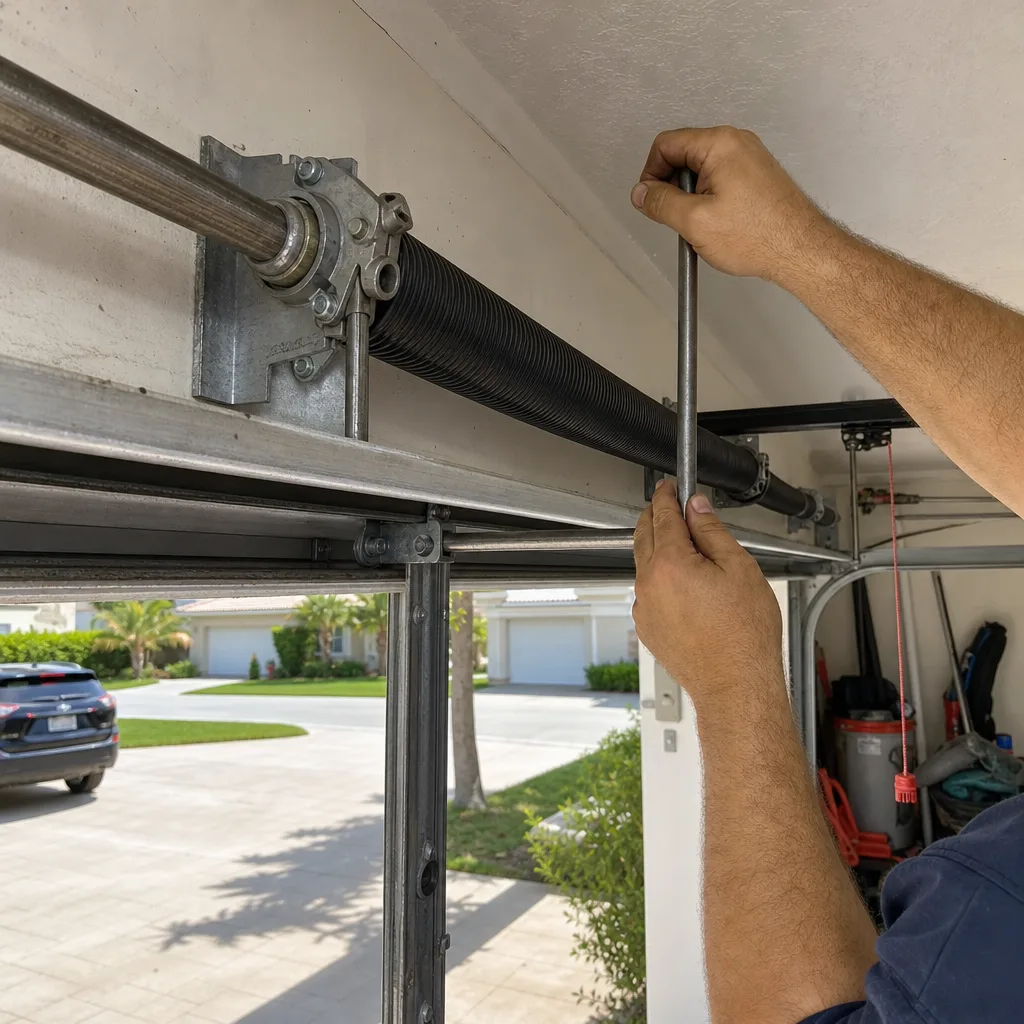
- Check the springs. With the door closed and no one nearby, look at the torsion spring above the door. A clean break with a gap in the coil means the spring has failed. Stop here and call a professional.
- Check the photo-eyes. Both small sensor lights should be solid, not blinking. If one is dark or flashing, wipe the lenses and align them so they point exactly at each other.
- Check the track. Run a hand along the inside of the track (don’t put fingers near the hinges with the door moving). Dents and debris are common causes of a stuck door.
- Test the opener’s response. Press the wall button. If the opener hums but doesn’t move the door, the problem is mechanical resistance or a stripped gear, not the remote.
- Check the limits. If the door stops short or reverses, the travel limit may need adjusting. Check your opener manual to see how to fine-tune it, or call and we’ll talk you through the check.
- Check the remote. Try the wall button and the remote separately. If the wall button works and the remote doesn’t, it’s a battery, pairing, or frequency issue. If neither works, it’s a power or opener problem.
If you get through those seven steps and the door still isn’t working, you’ve likely ruled out the easy causes and it’s time for a trained set of eyes. Call (866) 937-8319. We answer 24/7. Fast dispatch from 7am to 7pm, Sunday through Friday.
Spring and Cable Failures: Why We Treat Them Differently
The torsion spring is the heart of the whole system. It’s a coiled metal spring under engineered tension that counterbalances the weight of the door. When it’s healthy, a 150-pound door lifts with one hand. When it fails, everything changes, including the danger to anyone nearby.
We treat spring and cable work as a specialized service because it is. A trained technician uses proper winding bars, understands how to safely release the stored energy, and knows how to reset the system so it works as designed. A homeowner doing it with hand tools is taking a real physical risk. We’ve seen the results of that, and it’s why we say plainly: don’t do it.
Cold-rolled steel springs in the Boynton Beach climate take a beating. Heat and humidity cycle them hundreds of times a year. A door that lifts fine today can have a spring that’s close to the end of its life, and the failure always comes without warning. If your door is slow to lift, feels heavier than it did a year ago, or the spring looks worn, schedule an inspection before it stops working.
We stock the parts for common spring jobs and can usually get a working door back in service the same day. Call (866) 937-8319 for an exact quote. Estimates are free.
What Garage Door Repair Costs in Boynton Beach
Costs for garage door troubleshooting and repair in Boynton Beach divide closely along the lines of what’s broken. Genuine consumer pricing here varies based on the door’s age, the opener brand, and the parts needed. What we quote is per job, set by the written estimate, and agreed before any work starts.
What drives the price
- Spring replacement. A single torsion spring is typically cheaper than a matched pair; a pair is usually replaced together, so expect roughly double the single-spring figure. We give you the exact number in the written estimate.
- Opener repair. Gear, capacitor or logic-board work depends on the brand. LiftMaster, Chamberlain, Genie, Craftsman and the rest each price differently because the parts differ.
- Off-track a Usually priced per panel or per track section, depending on damage.
- New door installation. Measured, ordered and scheduled; the price is set in the estimate after we measure the opening.
Two things you can count on: the estimate is free, and the price is quoted and agreed before any work starts. You won’t get a surprise invoice after the job.
Common Mistakes to Avoid
- Forcing a broken door to open. If the spring is gone or the door is off the track, pulling it up by hand can drop it. Stop and call.
- Lubricating with WD-40 or household oil. Those are solvents, not lubricants, and they attract grit that wears the track. Use a garage-door-specific product.
- Adjusting springs to “fix” a slow door. The tension isn’t something to fiddle with yourself. That’s a spring repair job, and it’s hazardous.
- Replacing the opener when the spring is the problem. A door that lifts heavy will burn out a brand-new opener. Fix the spring first.
- Ignoring humidity-driven track warping. A small bend in a Boynton Beach track becomes a stuck door within a season. Wipe and lubricate the track before it bends.
- Skipping the storm inspection. A door that works but has loose hinges or worn springs is a wind-resistance problem during storm season. Check it annually.
- Buying replacement parts by eye. Spring gauge, wire size, opener model and door weight all matter. Get the part number before ordering.
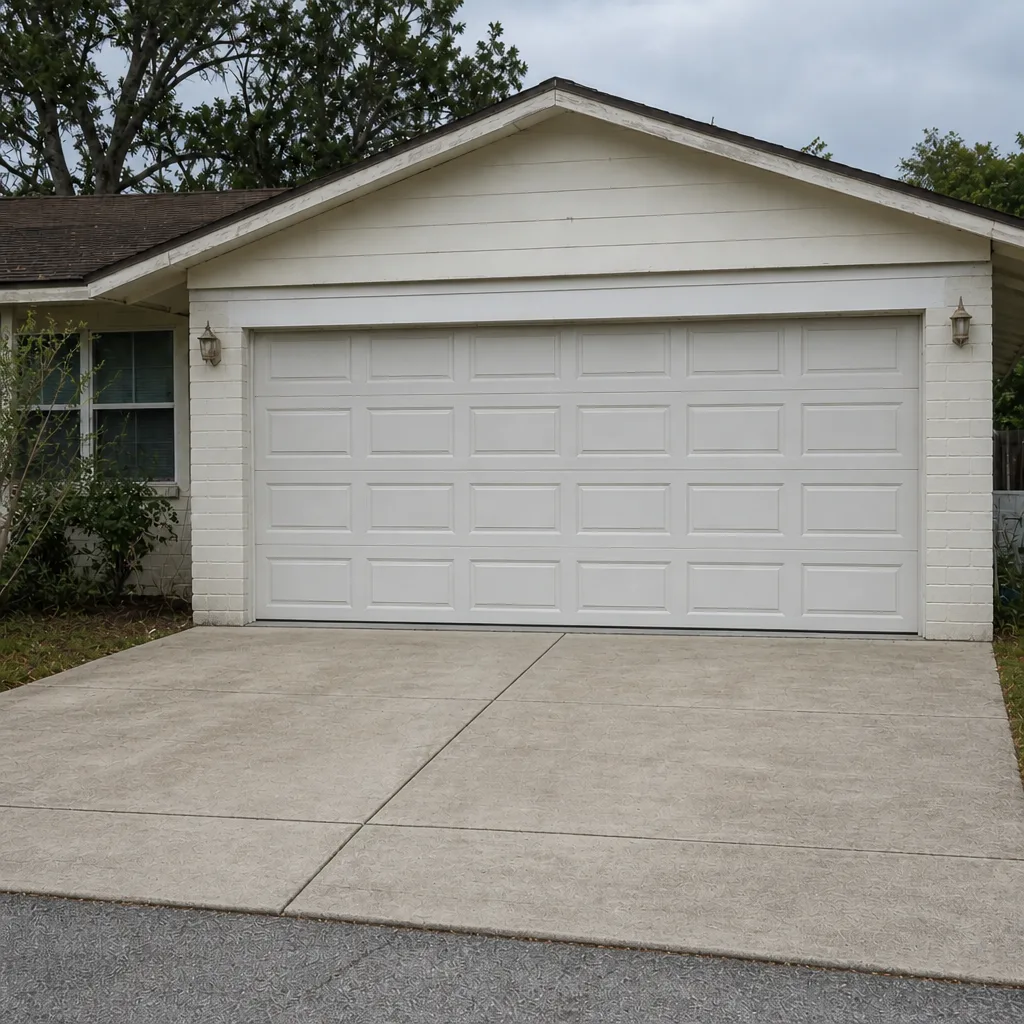
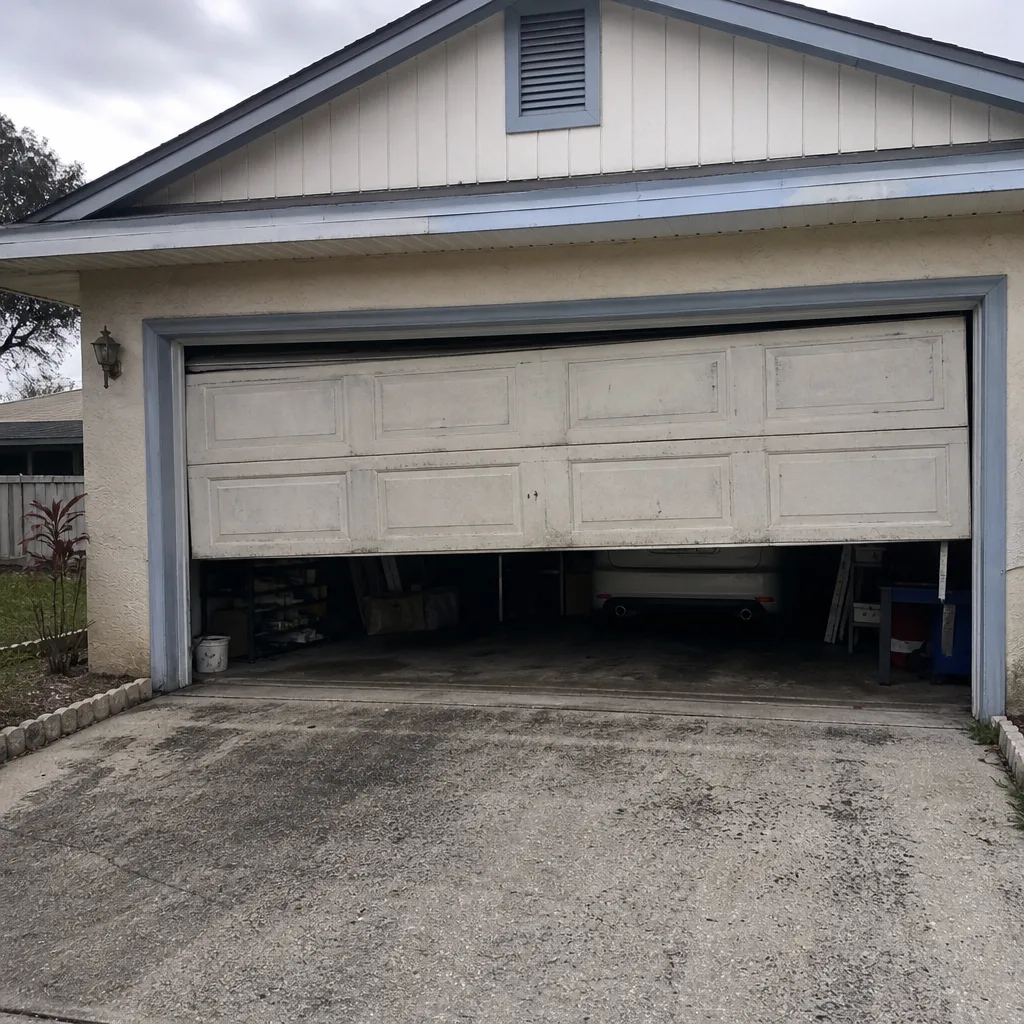
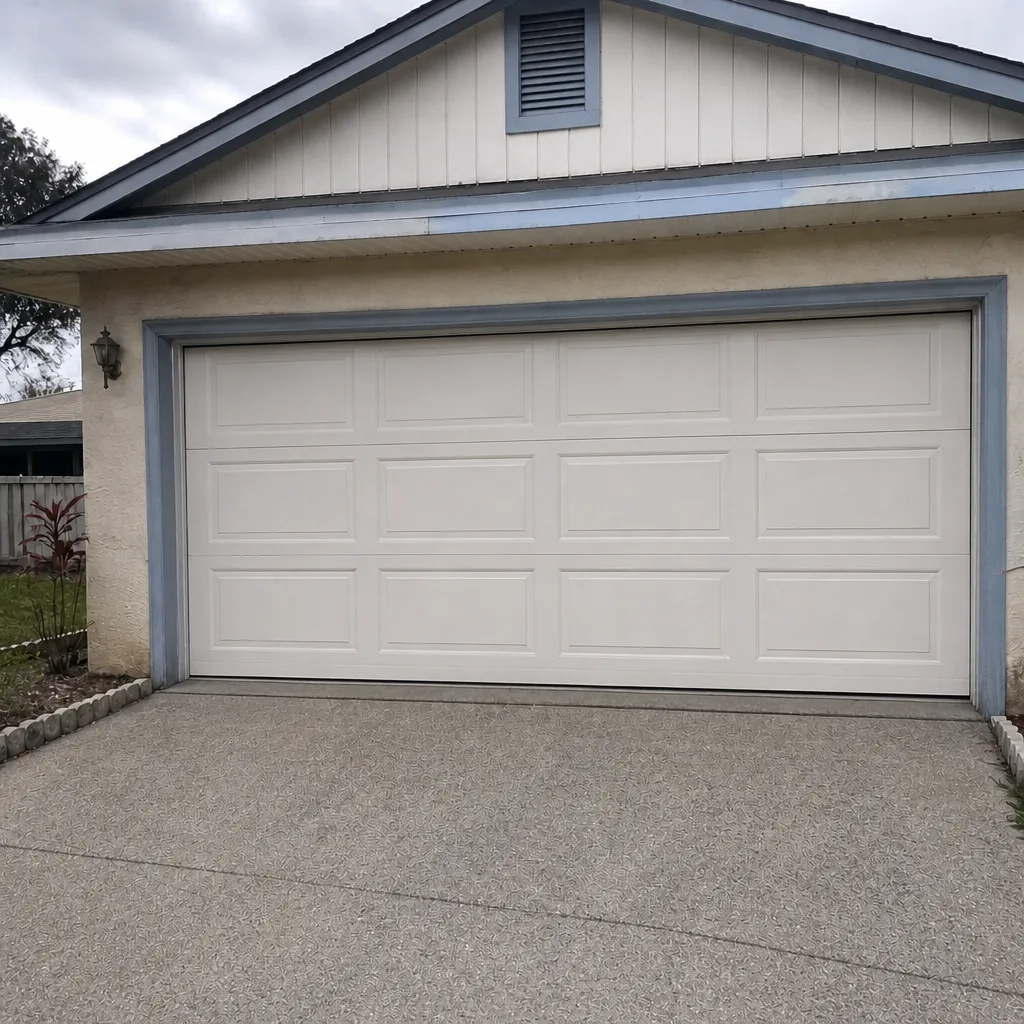
See the difference
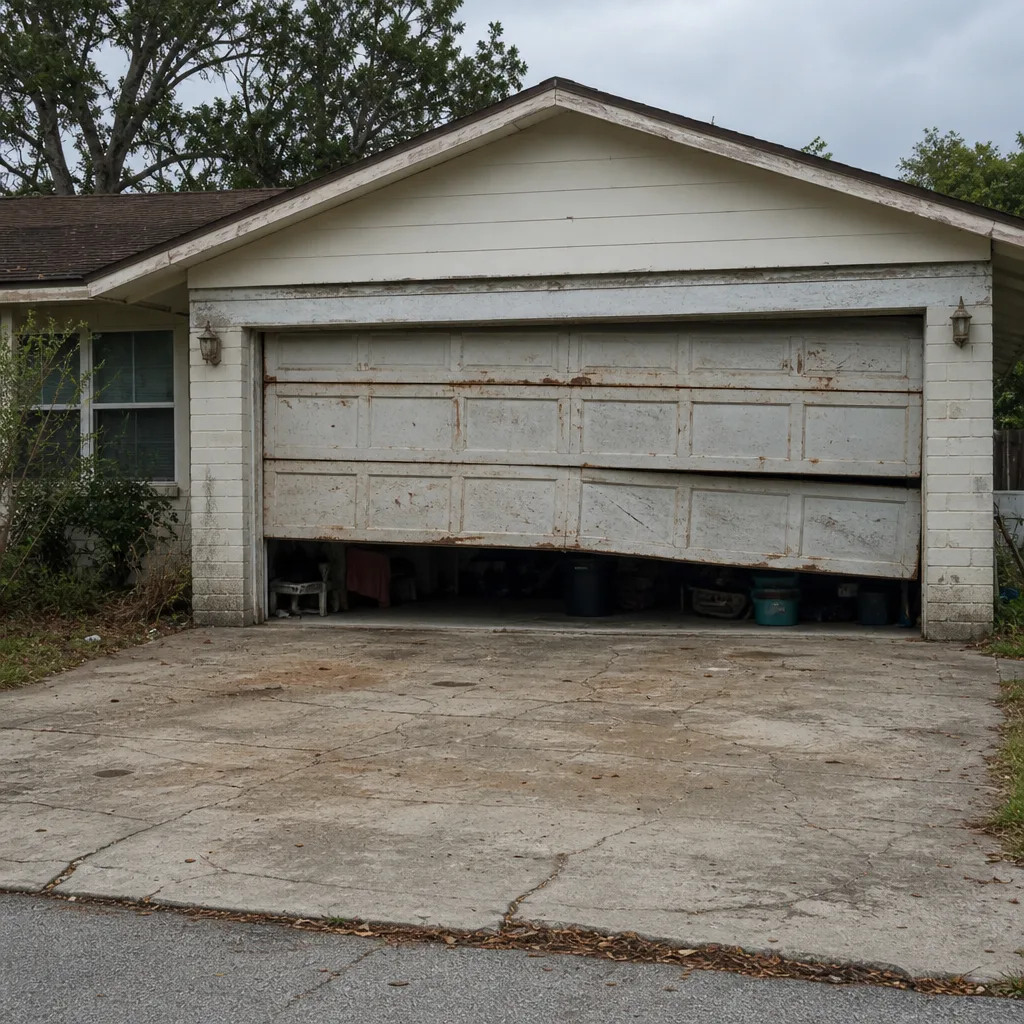 Before
 After
 Before
 After
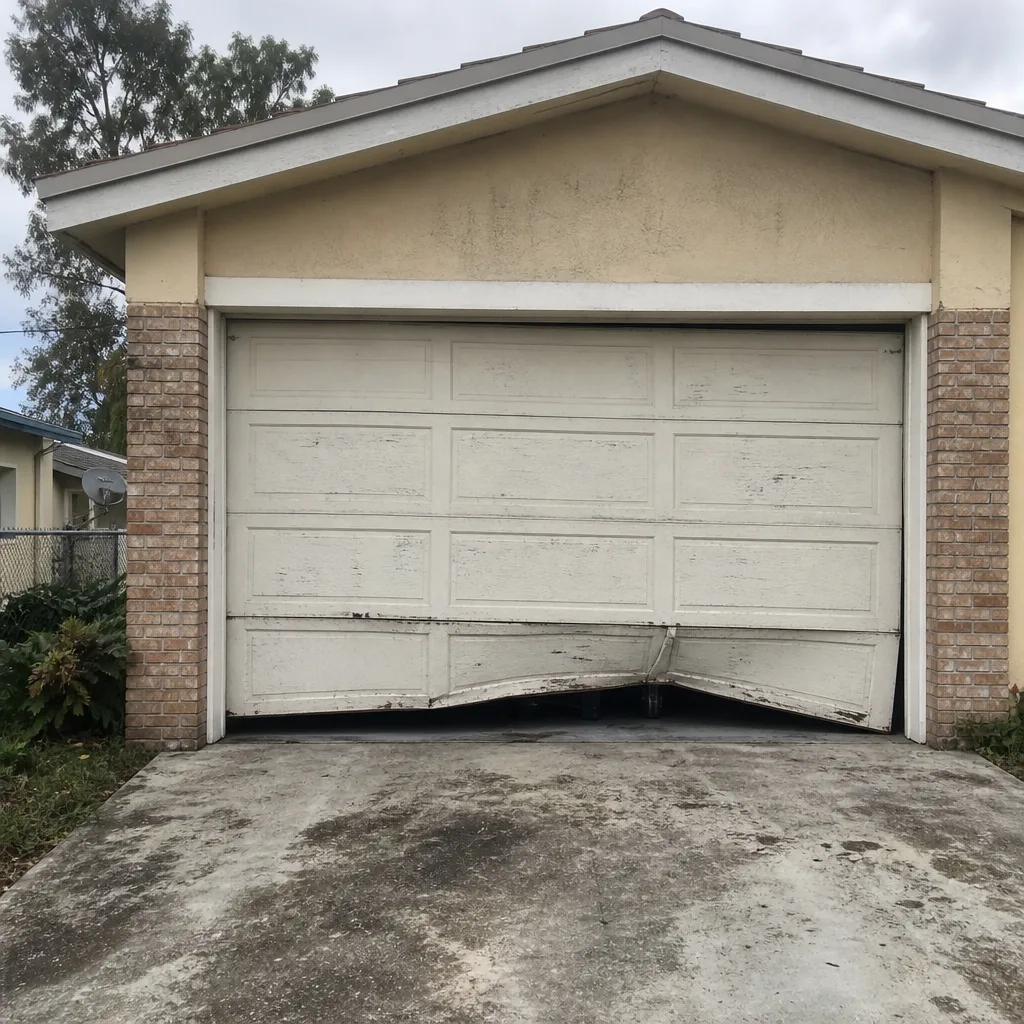 Before
 After
When to Call a Professional
You should call a professional if the door won’t move at all, if you can see a broken spring or slack cable, if the door has jumped the track, or if the opener hums but the door stays put. Those are the clear cases. Less obvious ones: the door is noticeably heavier than it was a year ago, it reverses on its own, or you’re planning to change your door and want a proper measurement first. All of those are moments when a trained professional will save you time and, in some cases, an injury. Boynton Beach Garage Door Repair Pros offers free estimates in Boynton Beach. Call (866) 937-8319.
Frequently Asked Questions
No. A torsion spring is under extreme tension and can cause serious injury if it releases incorrectly. Spring replacement is the one repair we consistently say never to attempt yourself. Call (866) 937-8319 for a free estimate; spring repair is one of our specialties.
That behavior usually means the opener’s force setting or travel limit is off, or the door is binding on a warped track. In Boynton Beach humidity, a slightly bent track is a common cause. Check the track for smoothness first, then the limits. If neither fixes it, call and we’ll diagnose it.
The number of LED flashes is the opener’s fault code, and the code tells you which circuit is failing. A repeating pattern commonly points to the safety sensor or door obstruction. If the lights are flashing and the door won’t close, check the photo-eye first. Call (866) 937-8319 if you can’t read the pattern.
No. WD-40 is a solvent rather than a proper lubricant, and it attracts grit that wears the track faster. Use a garage-door-specific lubricant on hinges, rollers and the spring surface only. If your track is already grinding, call and we’ll tell you whether it needs straightening.
Watch for a door that lifts heavy, a slow or surging opening speed, or a visible gap or rust line in the spring coil. Those are warning signs that a spring is losing tension. In Boynton Beach heat and humidity, spring fatigue accelerates, so a door with any of those signs should be inspected quickly. Call (866) 937-8319 for a free estimate.
Yes. We service LiftMaster, Chamberlain, Genie, Clopay, Amarr, Wayne Dalton, Craftsman and Raynor. Some older unis are better replaced than repaired, and we’ll tell you honestly which is the better call for your door and budget. Call (866) 937-8319 for a free estimate.
The Bottom Line
Most garage door failures trace back to a handful of parts, and the symptom tells you which one is struggling. A broken spring or slack cable means stop and call; a sensor or remote issue means you can safely troubleshoot it. In Boynton Beach, heat and humidity accelerate the wear on springs and tracks, so it pays to act on warning signs before the door stops working. If you’re not sure, don’t force the door. Call Boynton Beach Garage Door Repair Pros at (866) 937-8319. We answer 24/7. Fast dispatch from 7am to 7pm, Sunday through Friday. We’ll give you a free estimate and a clear answer.
Written by the team at Boynton Beach Garage Door Repair Pros.