
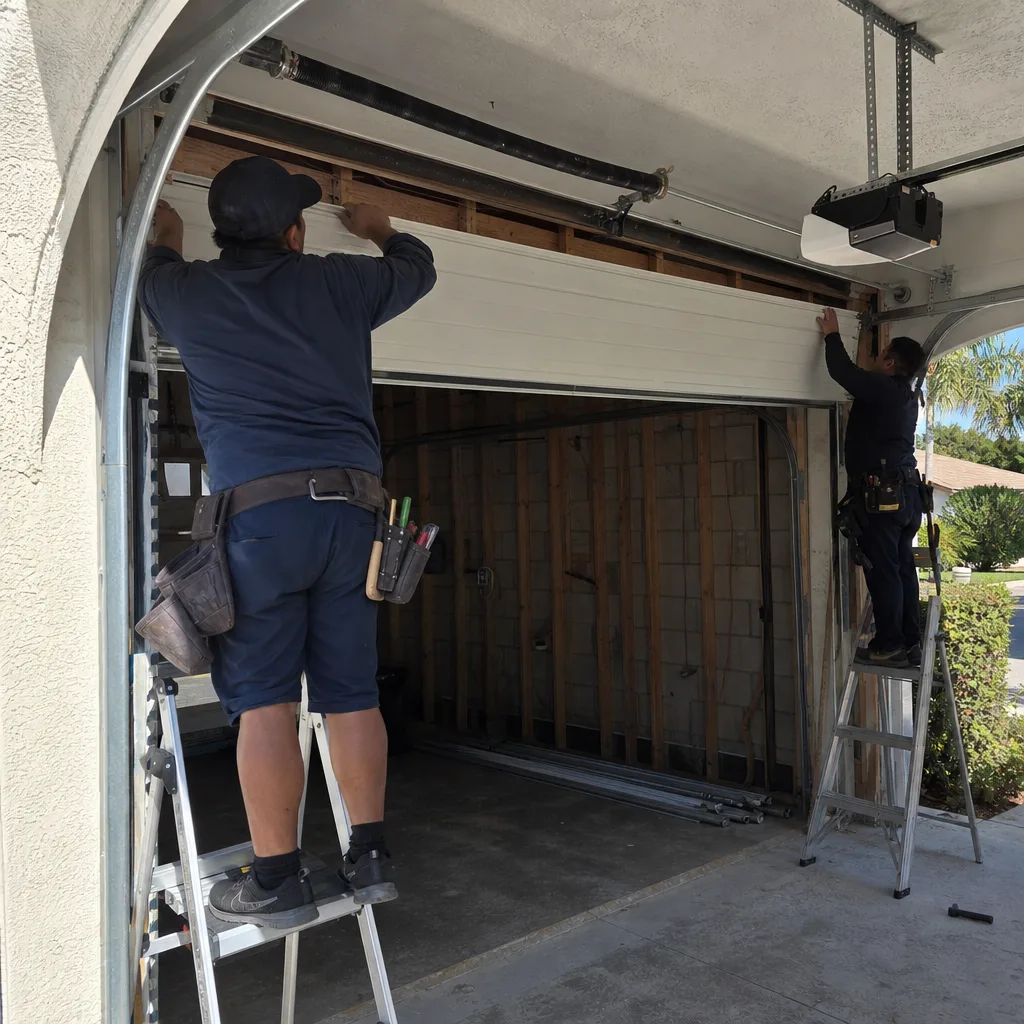
Last updated November 23, 2026
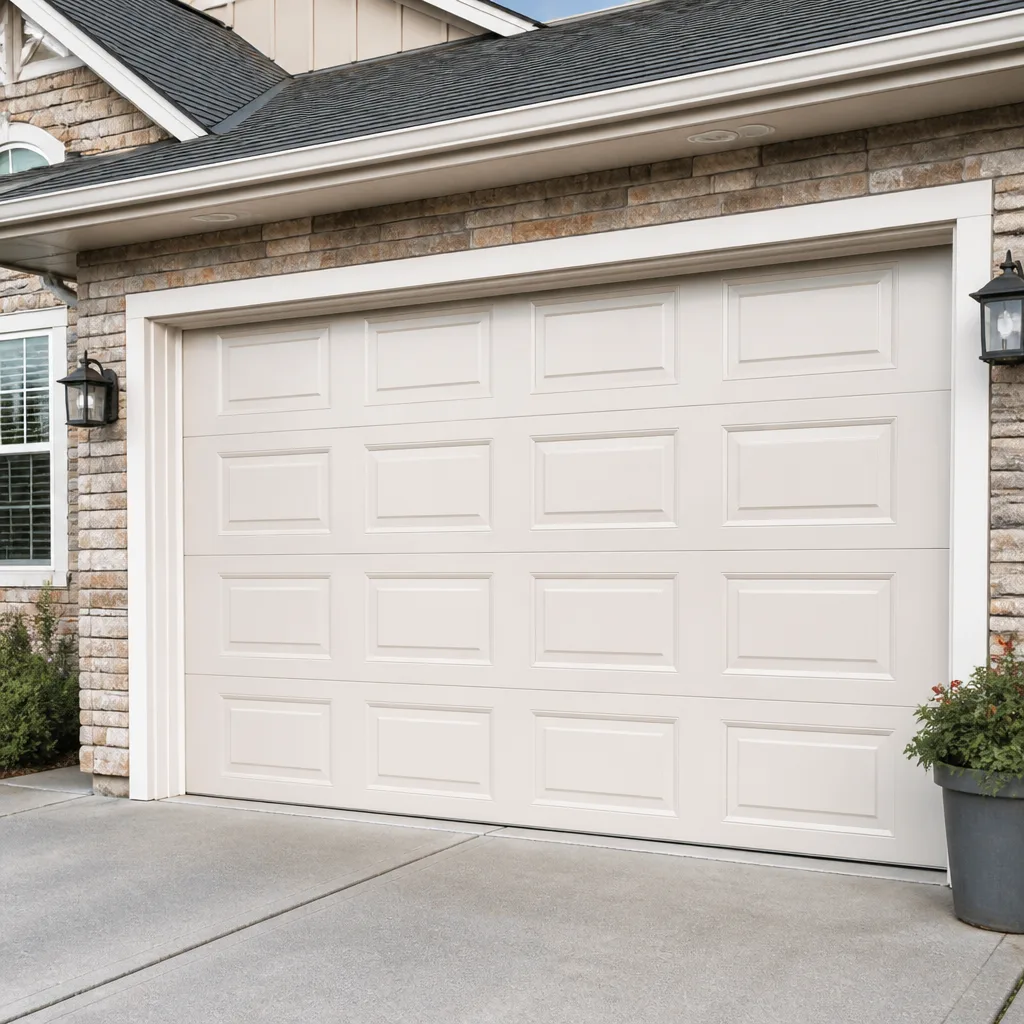 Raised-panel steel
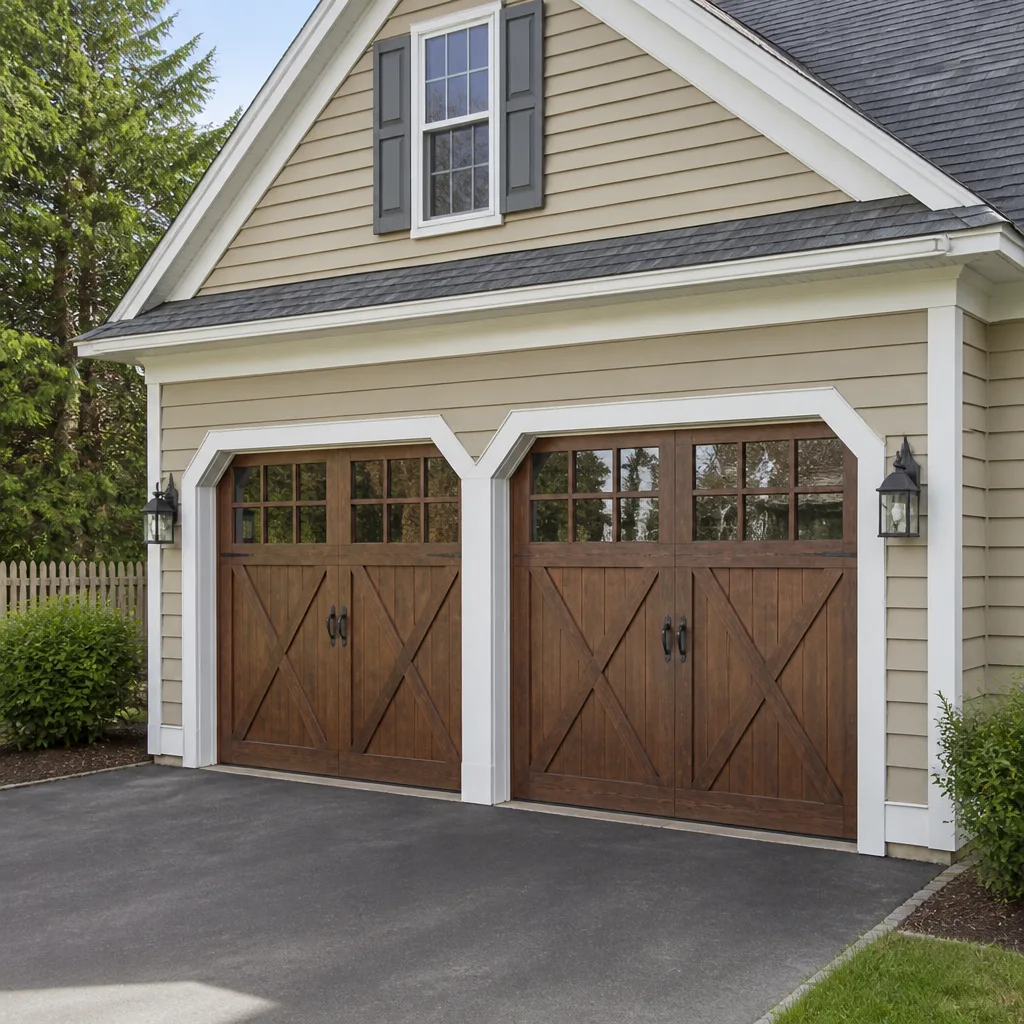 Carriage house
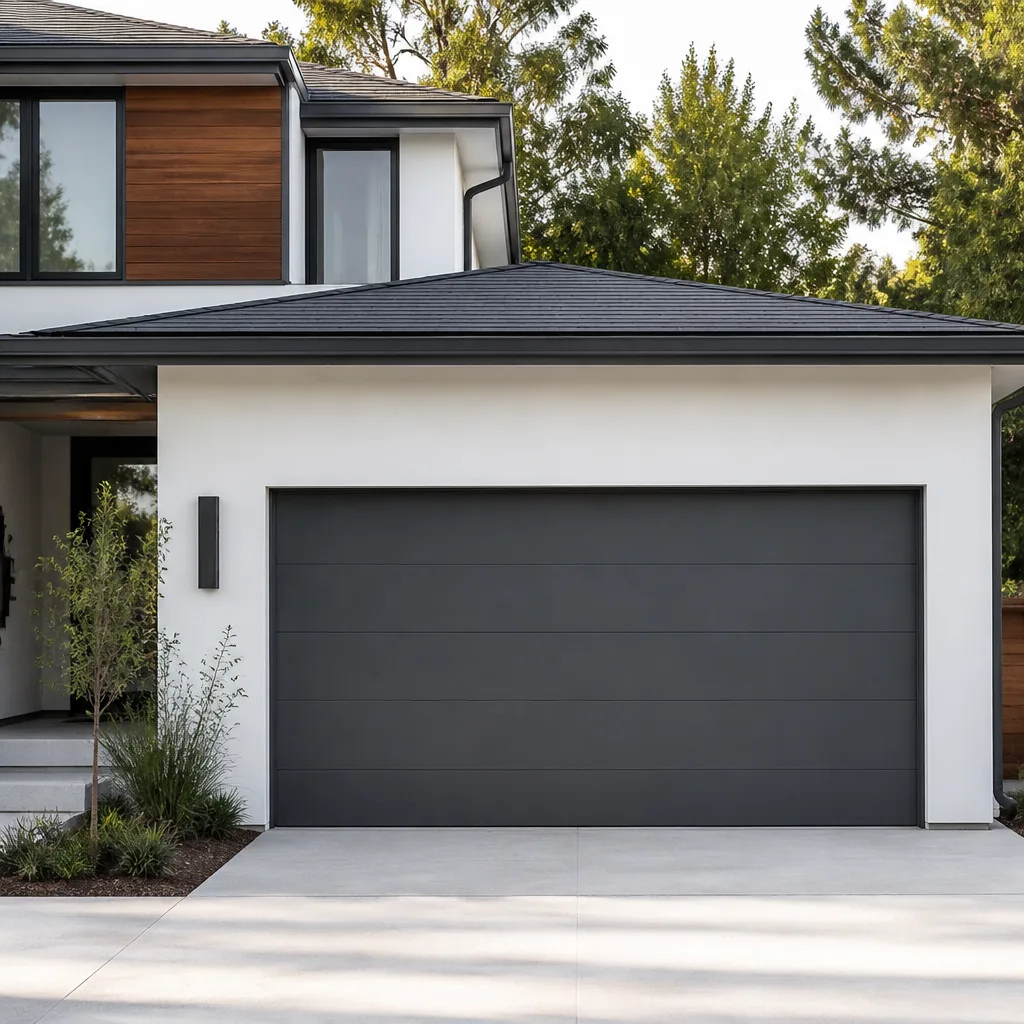 Modern flush
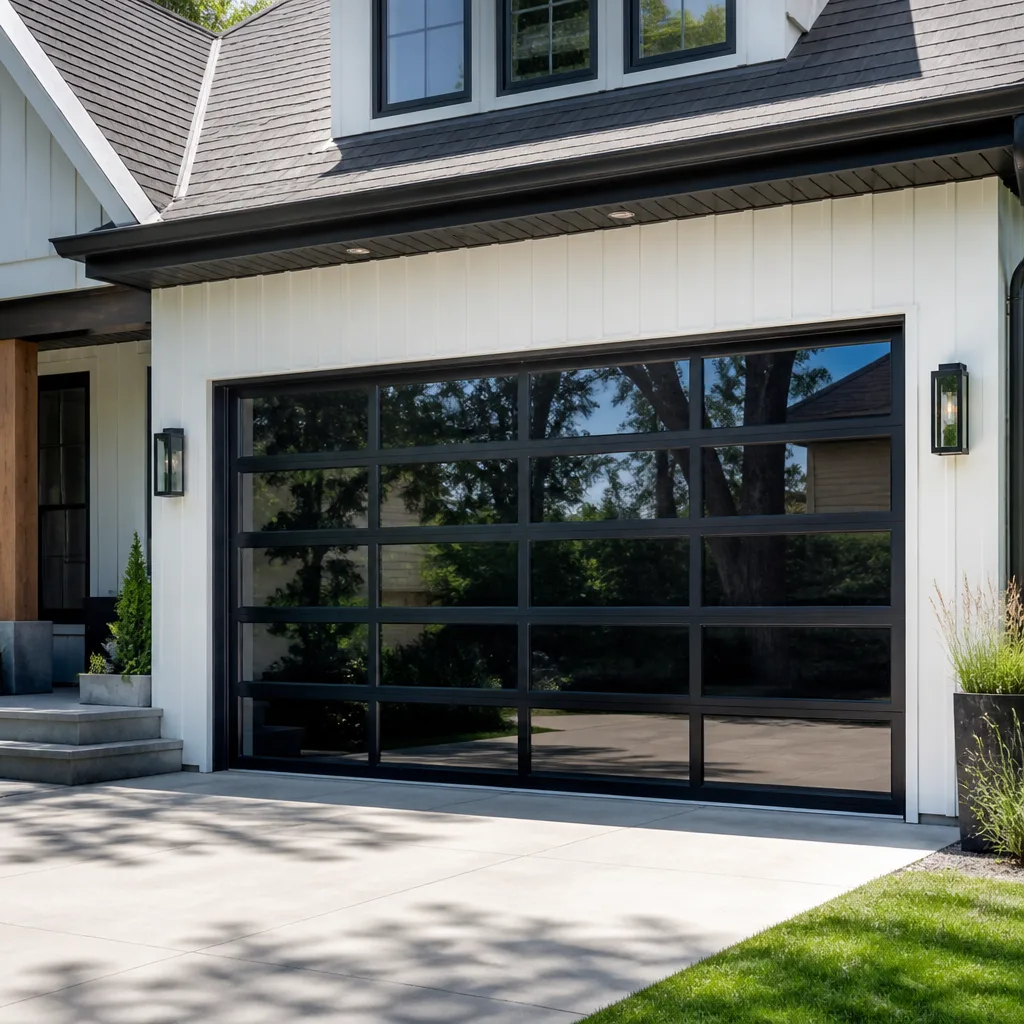 Full-view glass
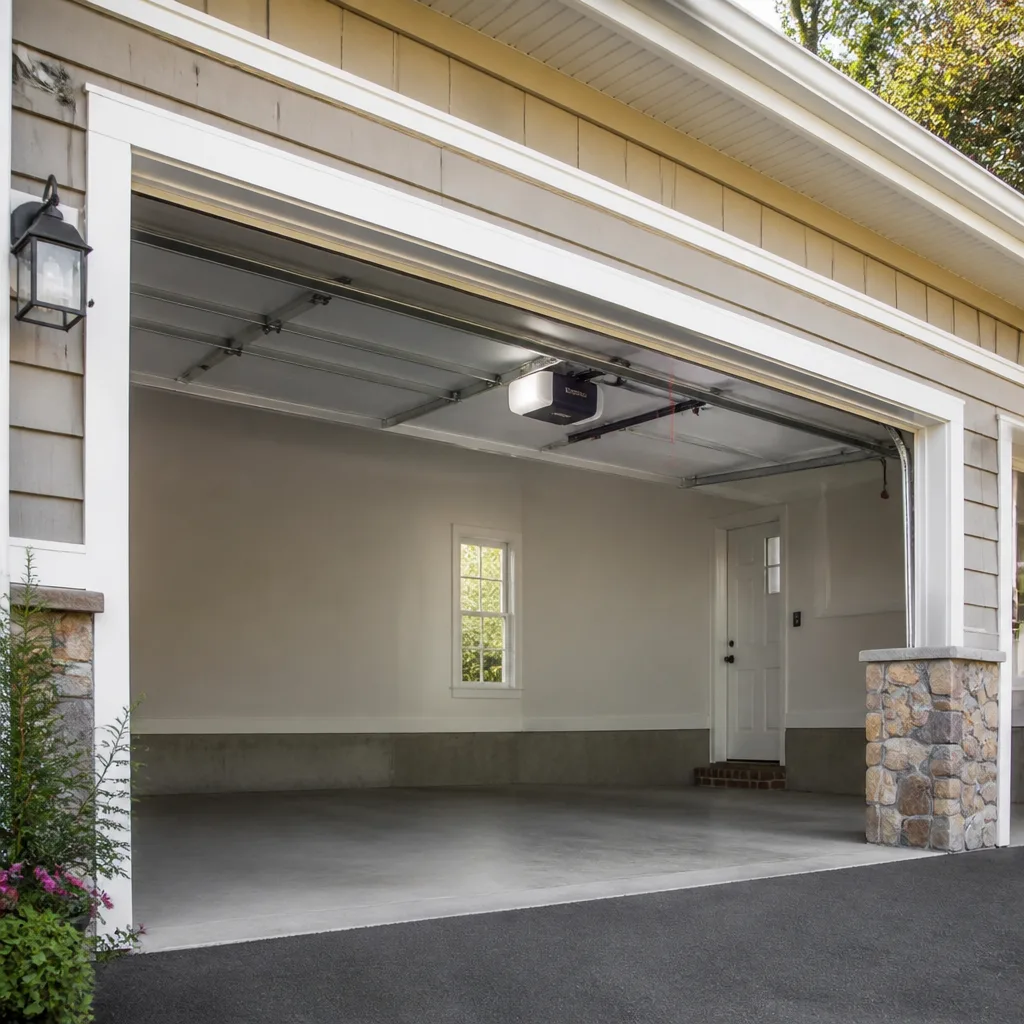 LiftMaster openers
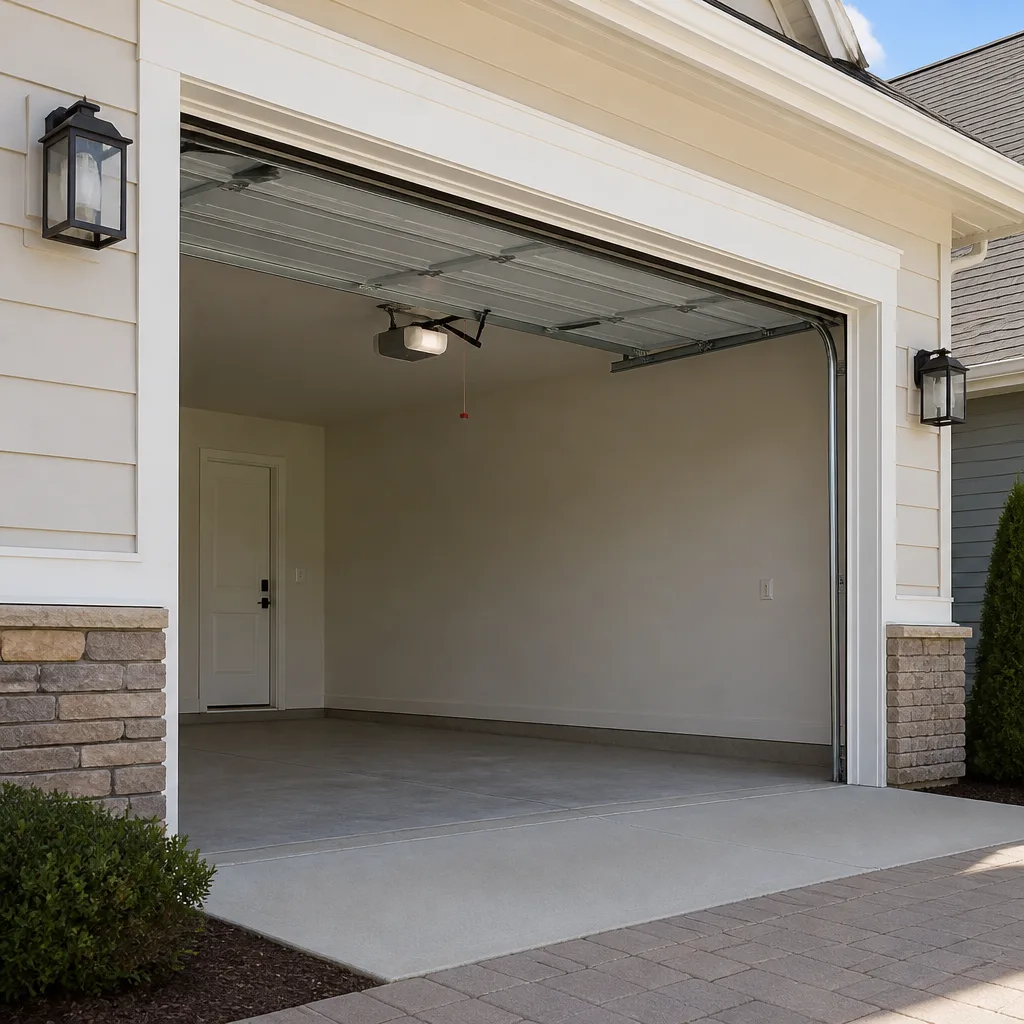 Chamberlain openers
Full 25-point door and opener safety check with every visit - springs, cables, rollers, tracks, and your LiftMaster or Chamberlain opener included
You get a price before we start. It does not change when the pro arrives.
Get your free estimateSeasonal Garage Door Care for Boynton Beach: Year-Round Homeowner’s Guide
Most garage door advice you’ll read online was written for a place with four proper seasons. Boynton Beach doesn’t work that way. Our year splits into two stretches that put very different demands on a garage door: the long humid hurricane season from June through November, then the dry shoulder season from December through May when everything the humidity loosened up finally gets tested. A door that coasts through summer can still fail on the first cool morning of December, because hardware that spent months swelling, sticking and grinding stiffens all at once. This guide walks through what to check in each stretch of the Boynton Beach year, what to do after a storm passes, and when a call to a specialist beats a Saturday project.
Styles & brands we work with
- Raised-panel steel
- Carriage house
- Modern flush
- Full-view glass
- LiftMaster openers
- Chamberlain openers
Quick Answer
In Boynton Beach, seasonal garage door care comes down to two cycles: prepare for hurricane season in April and May (bracing, seals, manual release, hardware torque), then assess and lubricate in November and December once the humidity drops. Year-round, watch the bottom seal and painted surfaces for UV breakdown. Low winter humidity can shrink and gap wood panels, so check those in January and March. We answer 24/7 at (866) 937-8319.
Table of Contents
- Why Boynton Beach Garage Doors Age Differently
- Pre-Hurricane Season Checklist (April and May)
- After a Storm Passes: Before You Touch the Door
- Post-Hurricane Season: Corrosion and Lubrication (November and December)
- Dry Season Panels and Gaps (January through March)
- UV Damage to Seals and Paint
- Brand-Specific Care and Why It Matters
- Common Mistakes to Avoid
- When to Call a Professional
- Frequently Asked Questions
Why Boynton Beach Garage Doors Age Differently
Heat and humidity don’t just make you uncomfortable in Boynton Beach. They’re the two forces that quietly wear out a garage door all year, and the effect compounds. Hardware that would last a decade in a dry climate works harder here, because the summer air is heavy with moisture that finds its way into hinges, rollers, tracks and the small springs inside your opener. Painted steel and aluminum surfaces get tested constantly by strong South Florida sun. Wood, if you have a wood door, breathes in and out with the humidity cycle and shows it.
A typical garage door has more than a hundred moving and load-bearing parts. When they’re all aging at the same rate, a single failure can cascade: a stiff roller drags on the track, the hinge takes extra load, and the opener motor starts doing overtime until something gives. That’s why the year-round care question isn’t “is my door okay?” but “which parts are working harder than they should be?”
There’s also the wind factor. Boynton Beach sits in a zone where hurricane season means real wind exposure, and a garage door is one of the largest openings a storm can push against. A door that’s out of alignment in April doesn’t fix itself by June. The seasonal checklist below is built to catch those problems before the wind finds them.
The two seasons that actually matter here
- Hurricane season (June through November): High humidity, strong storms, and the months when deferred maintenance gets expensive.
- Dry shoulder season (December through May): Lower humidity, cooler nights, and the stretch when slow corrosion and low-humidity shrinkage finally show up.
A few terms in this guide apply across both seasons, so let’s define them. “Hardware” means hinges, rollers, brackets, bolts and the arm connecting your opener to the door. “Weather seal” is the rubber strip along the bottom and sides that keeps rain, wind and warm air out. “Manual release” is the cord or lever that disconnects the opener so you can lift the door by hand. For any of those systems, our garage door repair service handles the whole door, not just the motor.
Pre-Hurricane Season Checklist (April and May)
Quick answer: In April and May, walk the door and check four things: the wind brace and its fasteners, the bottom seal for gaps and softness, the manual release for smooth operation, and every bolt and hinge for looseness. Fix what’s loose before June, not after. This is the single most useful hour you’ll spend on your garage door each year in Boynton Beach.
Here’s how to run the checklist in order. Work with the door closed first, then open it slowly if you’re able.
- Look up at the wind brace. Many doors have a horizontal or diagonal strut across one or more panels that adds stiffness. Check that it’s attached firmly at both ends and the bolts are tight. A brace that’s rattling loose isn’t doing its job.
- Press the bottom seal all around. The rubber should be flexible, not chalky or cracked, and it should sit flat on the concrete with no daylight squeezing through. A hardened seal that’s pulled away lets wind-driven rain in and lets pressure work its way under the door. Check the side and top seals too. This one is quick and easy: our garage door spring repair and door services can reset a seal that’s come unglued, but a bottom seal that’s past its life gets replaced.
- Test the manual release (with the door closed). Pull the release cord once to disconnect the opener. Then lift the door partway by hand and lower it. It should move smoothly and evenly. If it fights you, or the door hangs on one side, don’t force it. That’s a track or spring problem that needs a technician.
- Check hardware torque. Take a wrench to every hinge bolt and the bracket bolts at the top and bottom corners. Vibration from daily use loosens them, and a loose bracket under wind load is a real risk. Don’t touch the torsion bar, springs or cables. Leave those to someone trained. The spring repair service exists because homeowners who try it themselves end up in the emergency room.
- Watch the door while it runs. Stand back and watch as it opens and closes. It should stay level, run quietly, and not jump or wobble in the tracks.
Two of those steps (the manual release test and the hardware torque check) are safe for most homeowners to do themselves. Anything that involves stepping up on a ladder with a wrench while the door is under tension is worth a second thought. If you’re not sure what you’re looking at, our Boynton Beach Garage Door Repair Pros team can take a look and hand you a written estimate before anything is touched.
What “wind brace” actually means
Not every door has a reinforced strut, and not every door needs one. If your door has a manufacturer’s wind reinforcement, your job is to keep it intact and tight. If it doesn’t, ask a specialist whether your door and opening would benefit from one. That question depends on the size of the door, its material, and the anchoring of the garage frame, so it’s not something a checklist can answer for you. Our technicians have up to 12 years of experience and can tell you plainly whether your setup has what it needs.
After a Storm Passes: Before You Touch the Door
Quick answer: After a storm in Boynton Beach, don’t press the opener button until you’ve walked around the door and looked at the tracks, seals and frame. A door that’s shifted in its frame can jam, strip the opener, or flex further when you run it.
Here’s the sequence we recommend after any strong storm passes. Every year during hurricane season, some doors in Boynton Beach come through structurally intact but out of alignment, and the first button press is what turns a small problem into a big one.
- Look before you touch. Walk around the interior. Check the vertical tracks on both sides for bends or kinks, and check that the door sits evenly against the seals. If a track looks bowed or one side is sitting higher than the other, don’t run the opener.
- Check the frame and header. Look at the wood or metal around the door opening for shifting, cracking or sagging. The garage door depends on the frame staying square. If the opening itself has moved, the door needs to be disengaged and evaluated before it’s operated again.
- Sweep the tracks. Debris, leaves, grit and small splash-in from rain collect in the tracks. A soft brush or shop vac gets them out. Don’t oil the tracks, just keep them clean.
- Test the manual release, still disconnected from the opener. If the door lifts smoothly by hand, re-engage the opener and run it once at low speed while watching. If it resists, stop. Call a specialist.
- Inspect the bottom seal for water damage. Six months of wind-driven rain can lift the seal or leave it soft and distorted. If it’s holding water or has torn, it needs replacing before the next storm.
One more local point: many Boynton Beach homes have opener systems from LiftMaster, Chamberlain or Genie, and these handle post-storm jam situations differently. Some openers will default into a lock-out state after an obstruction, and the fix is often just clearing the jam and resetting. Others will keep trying to run, which is the last thing you want with a misaligned door. Our garage door opener repair team knows these behaviors across all eight of the brands we service, so if the door is clear but the opener is acting strange, it’s usually a quick diagnosis.
Post-Hurricane Season: Corrosion and Lubrication (November and December)
Quick answer: By November and December, the humidity is dropping and cool nights arrive. That’s the window when you re-lubricate the moveable parts, inspect every fastener for corrosion, and get ahead of the stiffening hardware we mentioned at the top of this guide. Do this before the first cold snap, not after.
The single biggest reason our phone rings in December isn’t a storm. It’s hardware. Parts that spent the summer absorbing moisture and slowly corroding will often seize when the air dries and the nights cool. That squeal you hear on the first cool morning is a warning, not a nuisance.
Here’s what to do in November and December:
- Lubricate the moving parts. A light spray lubricant made for garage doors goes on hinges, pivot points, the roller bearings and the opener’s chain or screw (if it has one). Never put lubricant on the track itself, and never touch the springs or cables.
- Inspect for rust and corrosion. Look for orange-brown spots on hinges, brackets and the roller stems. Surface discoloration is common here. Actual pitting and flaking is a replacement signal. If two or more hinges show deep rust, get them looked at.
- Recheck the hardware torque. Six months of vibration loosens bolts that seemed tight in May.
- Replace the opener’s battery (if it has one). Remote and keypad batteries don’t fail on a schedule, so replace them once a year as a habit. The first cold morning is the wrong time to discover your opener remote is dead.
- Test both the opener and the manual release. If the opener runs smoothly and the door lifts by hand, you’re in good shape heading into winter.
Lubrication is the cheapest thing you can do to your garage door, and it’s the thing most homeowners skip. A spring repair that costs hundreds in our local estimate ranges (below) is often the delayed result of a decade of dry hinges dragging on the system.
Typical Spring Repair Costs in Boynton Beach
These ranges are typical estimates, not exact quotes. The written estimate we give you sets the final price. Replacements are usually done as a matched pair because both springs wear at the same rate, so a pair costs roughly twice the single-spring number.
- Torsion spring replacement (single spring): roughly $150 to $350 depending on door weight and spring type
- Extension spring replacement (single spring): roughly $120 to $280
- Matched pair replacement (two springs): about double the single-spring range for the same type
- Bearing plate replacement: roughly $100 to $200
- Cable replacement (per side): roughly $90 to $180
Spring repair is the single most dangerous garage door repair there is. A wound torsion spring holds enough stored energy to break a bone. Our spring repair service is a named specialty, which is what you want when a spring gives out. If you’re in Boynton Beach and one of your springs has failed, call (866) 937-8319 for a free estimate before doing anything else.
Dry Season Panels and Gaps (January through March)
Quick answer: Low winter humidity in Boynton Beach causes wood door panels to contract. That opens tiny gaps at the panel joints and can look like a sudden case of loosening hardware. Address it early in the dry season, because a gap that widens unchecked stresses the panel structure and lets water in the next time it rains.
A wood garage door in Boynton Beach has three enemies: humidity, sun, and time. The winter dry season plays a part too. As relative humidity drops from the summer peak, wood panels shrink. You’ll notice it as thin dark seams or small gap lines between panels. The door may rattle more, or the seal at the bottom may lift a fraction because the door has shrunken overall.
Don’t panic when you see it. Small movement in wood doors is normal in a dry season, and it usually eases back once humidity returns. What matters is what’s left behind. A gap that’s allowed to widen can break the glue line in a laminated panel or start letting water in. The right move in January, February and March is:
- Check panel seams for daylight or water staining.
- Look at the bottom seal for gaps caused by the door’s overall shrinkage.
- Have any structural gap looked at before it becomes a panel replacement.
- Freshly paint or seal any bare wood that shows through. Low humidity is the easiest time to apply a finish because it cures reliably.
Fiberglass and steel doors don’t shrink, but their seals still shore up in cooler weather. A seal that’s hard and no longer contactable needs replacement, and it’s a quick job you should get done before April when you’ll be doing your pre-hurricane checklist all over again.
Color and finish matters here
Dark-painted doors absorb more South Florida sun and run hotter on the surface, which stresses the finish faster. If you’re repainting, consider a lighter tone. That’s not just aesthetic advice. It’s a practical way to slow the UV degradation we cover next.
UV Damage to Seals and Paint
Quick answer: South Florida sun fades and cracks rubber seals and painted surfaces faster than almost any other U.S. climate. Plan on inspecting and replacing seals and refreshing paint on a regular cycle, rather than waiting for visible failure.
Solar intensity in Boynton Beach is among the highest in the country. That intensity works on a garage door all year. It fades paint, it makes rubber brittle, and it shrinks and hardens the weather seals until they crack and lift away from the frame.
What UV damage looks like, in order:
- Paint fades on the sunny face of the door, often starting on the top panels that catch the most direct sun.
- The bottom and side seals turn hard and show surface cracks.
- The seal begins to pull away from the frame and seat poorly against the door.
- The door lets in heat and moisture, and the opener has to work harder because every cycle drags on a stiff seal.
A quick finger test on the bottom seal will tell you a lot. It should bend. If it feels like hard plastic, it’s done, regardless of how it looks. Our garage door repair service replaces weather seals as part of regular car.
For paint, inspect once a year in April. Touch up any bare spots and repaint every few years as needed. If your door’s finish is that chalky, faded surface you’ll see on older doors in Boynton Beach neighborhoods, it’s worth doing. A fresh finish slows the decay, and it’s a good excuse to check seals and hardware at the same time.
Brand-Specific Care and Why It Matters
Quick answer: Not every garage door system is built the same, and not every technician is trained on every brand. The opener matters most. LiftMaster and Chamberlain systems share parent engineering, Genie has its own logic board quirks, and door brands like Clopay use specific spring and panel specifications. Knowing your brand means a real diagnosis, not a guess.
We service eight of the industry’s leading brands. If your system is a LiftMaster, Chamberlain, Genie or Clopay, our technicians already know its design, its failure points and its replacement parts. But that’s not just an interesting fact about our company. It’s what a homeowner in Boynton Beach can count on when a season change sends their system into a sudden glitch.
Here’s what brand knowledge looks like in practice:
- LiftMaster and Chamberlain: These share a lot of internal engineering, which means the way their opener logic boards respond to a stuck door or a power blip is similar. Knowing that saves diagnosis time after a summer storm.
- Genie: Distinct motor and rail design, distinct remote coding, distinct safety sensor behavior. A technician who’s seen Genie systems in Boynton Beach many times over the years knows what a normal repair looks like versus what a full unit replacement looks like.
- Clopay: The panel and seal specifications on Clopay doors are worth knowing when you’re matching a replacement bottom seal or sourcing a specific panel for a wood or steel door.
- Amarr and Wayne Dalton, Craftsman and Raynor: We work on these too, and each one has its own parts realities.
If you’re not sure what brand your opener is, check the label on the motor housing or the back of the unit. That one piece of information cuts diagnosis time and gets you a more accurate estimate. Our team works on all eight of these brands and can help you identify an unmarked unit.
Repair costs by system
Here are typical Boynton Beach estimate ranges for common opener and door repairs. These are estimates. The written estimate sets the final price.
- Opener repair (sensor, logic board or gear): roughly $120 to $300
- Remote or keypad replacement: roughly $60 to $150
- Roller replacement (whole door, set): roughly $100 to $250
- Bottom seal replacement: roughly $80 to $200
- Panel replacement (single panel, common sizes): roughly $150 to $500
- Full opener replacement (installed): roughly $350 to $650
- Full new door installation: roughly $900 to $2,800 depending on material and size
Call (866) 937-8319 for a free estimate. If you’re unsure what’s wrong, we’ll walk you through it. The price we quote before any work starts is the price that’s due.
Common Mistakes to Avoid
- Greasing the tracks. Garage door tracks should be clean and dry. Lubricant attracts dust and grit, which turns a smooth track into a grinding one. Oil the hinges and rollers, never the rails.
- Trying spring repair yourself. A wound torsion spring can release with enough force to kill. This is the single most dangerous DIY repair on a garage door, and no video makes it safe. Call a specialist.
- Skipping the pre-hurricane checklist. The window is April and May, before the storms start. A loose bracket or torn seal discovered three days before a storm is a scramble. Found in April, it’s a simple fix.
- Running the door after a storm without checking. Pressing the button on a door that’s shifted in its frame can bend the track, strip the opener and turn a small fix into a big one. Walk it first.
- Ignoring the bottom seal because “it looks fine.” The finger test beats the eye test. Hard rubber is done, even if it still lies flat.
- Never lubricating anything. Hardware left dry for years is the leading cause of premature spring wear in Boynton Beach. A few minutes and a can of door lubricant each fall covers you.
- Assuming a wood panel gap is a hardware issue. In the dry months, a gap is usually wood shrinking. Fixing the gap with a hardware adjustment is the wrong fix. Get it looked at in the dry season.
When to Call a Professional
Some maintenance is a homeowner job. Some is not. In Boynton Beach, call a specialist if any of the following come up:
- Any spring break or visible fail on a spring or cable. Don’t lift the door. Call (866) 937-8319. Our spring repair service is set up for exactly this.
- The door is out of alignment, dragging, jumping in the tracks, or won’t stay level.
- The opener runs by itself, won’t reverse, or keeps locking out after a storm.
- Your pre-hurricane inspection turns up bent tracks, a shifting frame, or hardware that won’t hold tight.
- A panel is dented, cracked or separated from the door, and you’re not sure whether it’s structural.
- You’re ready for a new door and want a measurement, a written price and a plan.
Boynton Beach Garage Door Repair Pros offers free estimates in Boynton Beach. Call (866) 937-8319. We answer 24/7, and dispatch runs fast from 7am to 7pm.
Frequently Asked Questions
The four-point pre-hurricane checklist in April and May: wind brace, bottom seal, manual release and hardware torque. That hour catches the problems a June storm would expose. Call (866) 937-8319 for a free estimate if you want a professional check.
Typical estimates run roughly $150 to $350 per torsion spring or $120 to $280 per extension spring, with a matched pair costing about twice a single spring. The written estimate sets the final price, and it’s set before any work starts. Call (866) 937-8319 for a free estimate.
Hardware that spent months in humid summer air slowly stiffens when the air dries. Corroded hinges and dry rollers need lubrication and a torque check in November or December. If the noise comes with a jerky opening, call (866) 937-8319.
No, walk around it first. Check the tracks, seals and frame for movement. If anything looks shifted or bent, don’t operate the door and get it looked at. A professional can assess it quickly. Call (866) 937-8319.
Inspect it once a year. Strong sun hardens and cracks the seal faster here than in most climates, so many doors need a new seal every several years. If it feels hard or shows a crack, replace it. Call (866) 937-8319 for a free estimate.
Yes, and those are just four of the eight brands we work on. Our technicians know their parts and their failure points, so diagnosis starts with knowledge, not guesswork. Call (866) 937-8319 for a free estimate.
No. The price is set by the written estimate and agreed before any work starts. Call (866) 937-8319 for a free estimate.
Yes, and it’s a core offering, not a side line. We answer 24/7, with fast dispatch from 7am to 7pm. We’re closed on Saturday.
The Bottom Line
Boynton Beach garage doors live in two cycles. From June through November, the hurricane season tests every seal, bracket and track the door has. From December through May, the dry shoulder season exposes the wear the humidity left behind. The yearly rhythm is simple: pre-hurricane checklist in April and May, post-storm assessment any time, lubrication and corrosion check in November and December, then panel and gap attention through the winter dry months. Year-round, watch the bottom seal and painted surfaces for UV damage. A few minutes each season beats a spring repair or a new door. If you’d rather not do it yourself, or something already looks wrong, we’ve got you. Call (866) 937-8319 for a free estimate. We work on your brand.
Written by the team at Boynton Beach Garage Door Repair Pros.
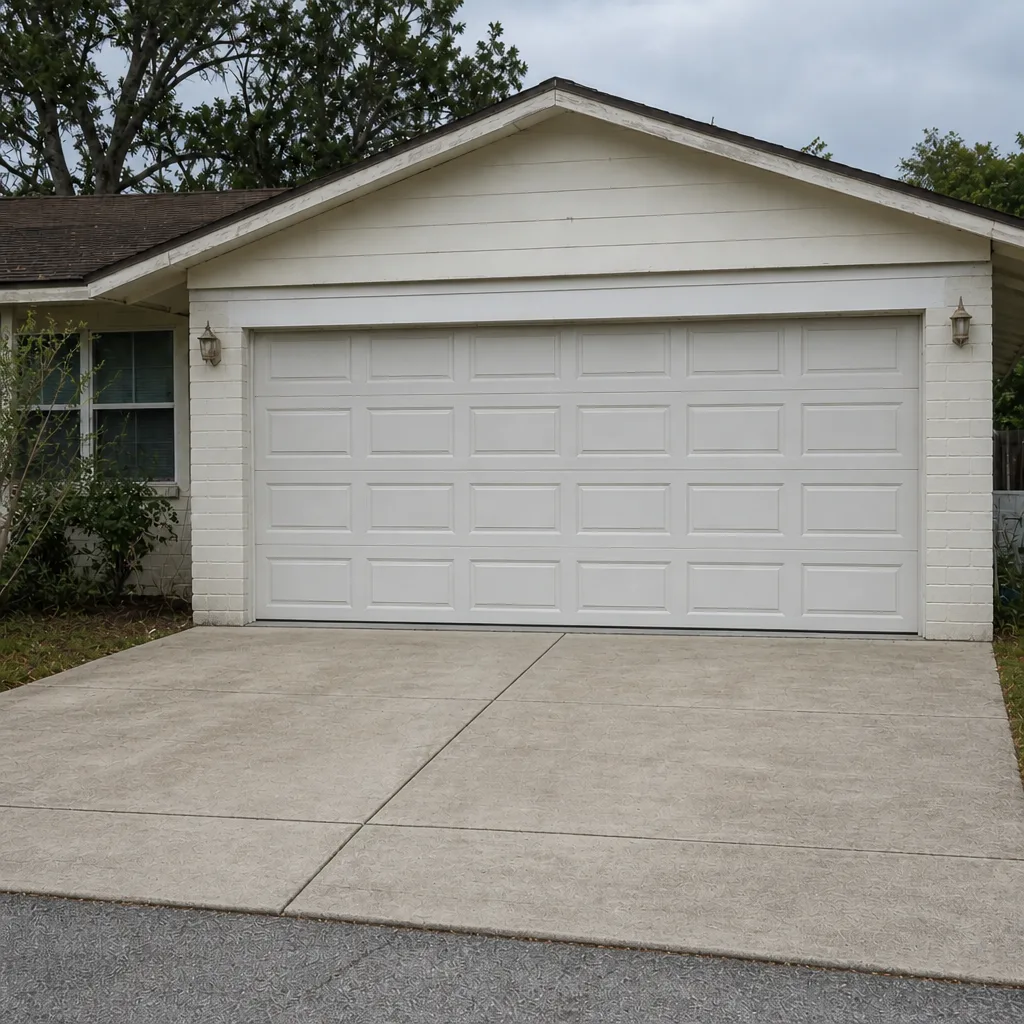
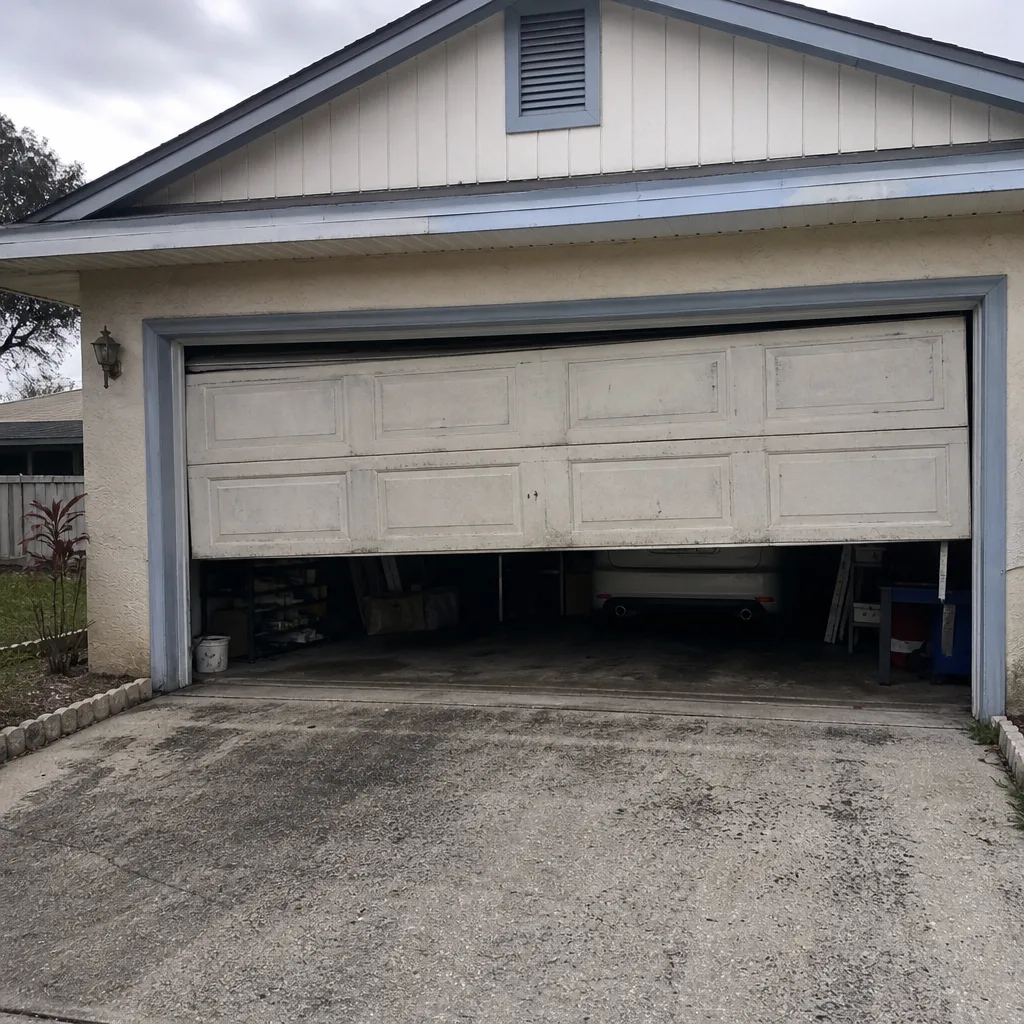
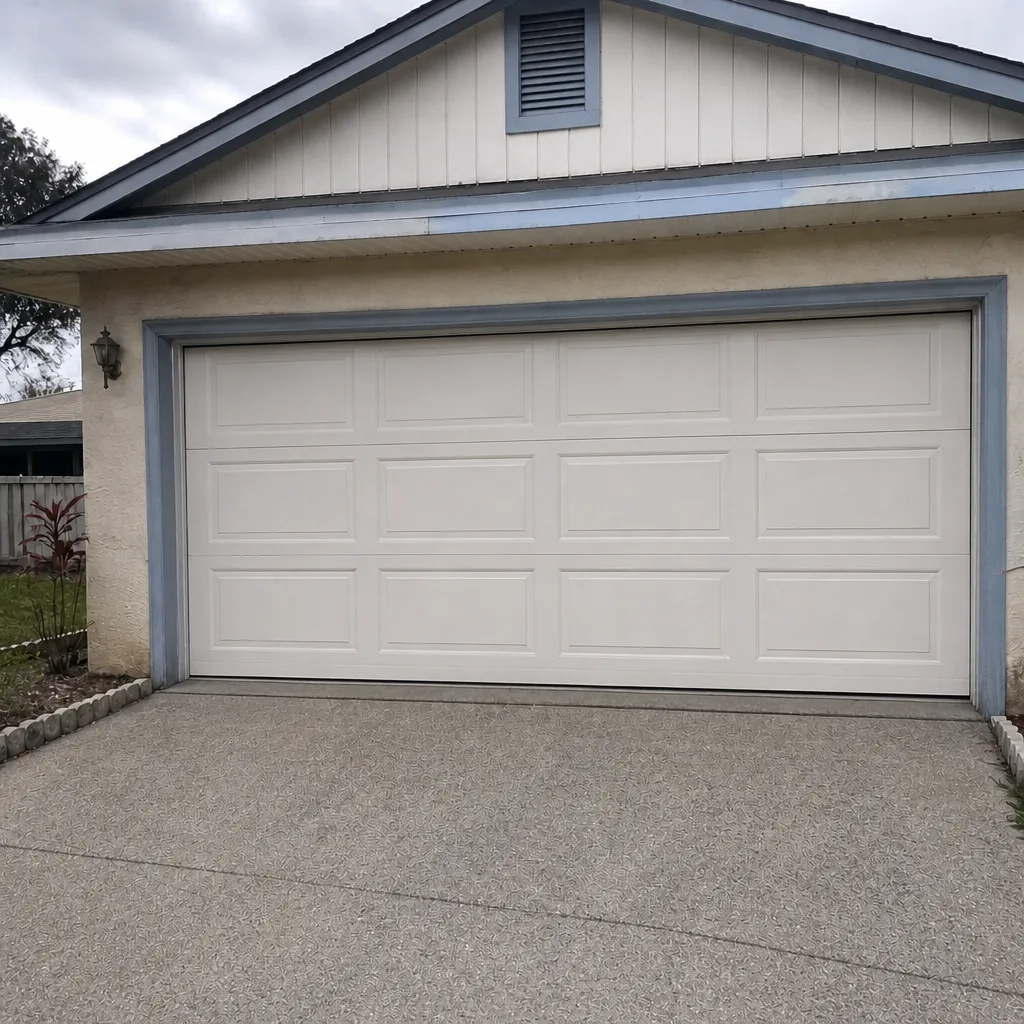
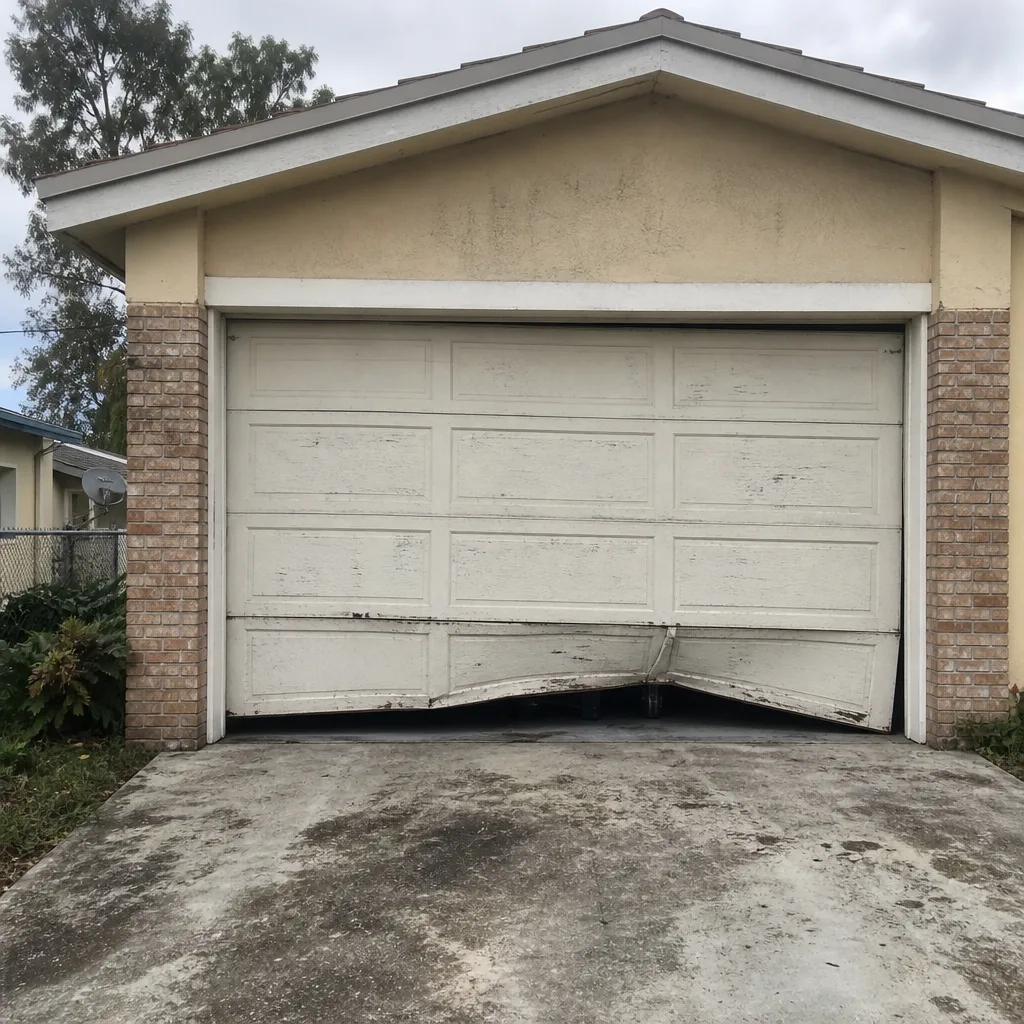
See the difference
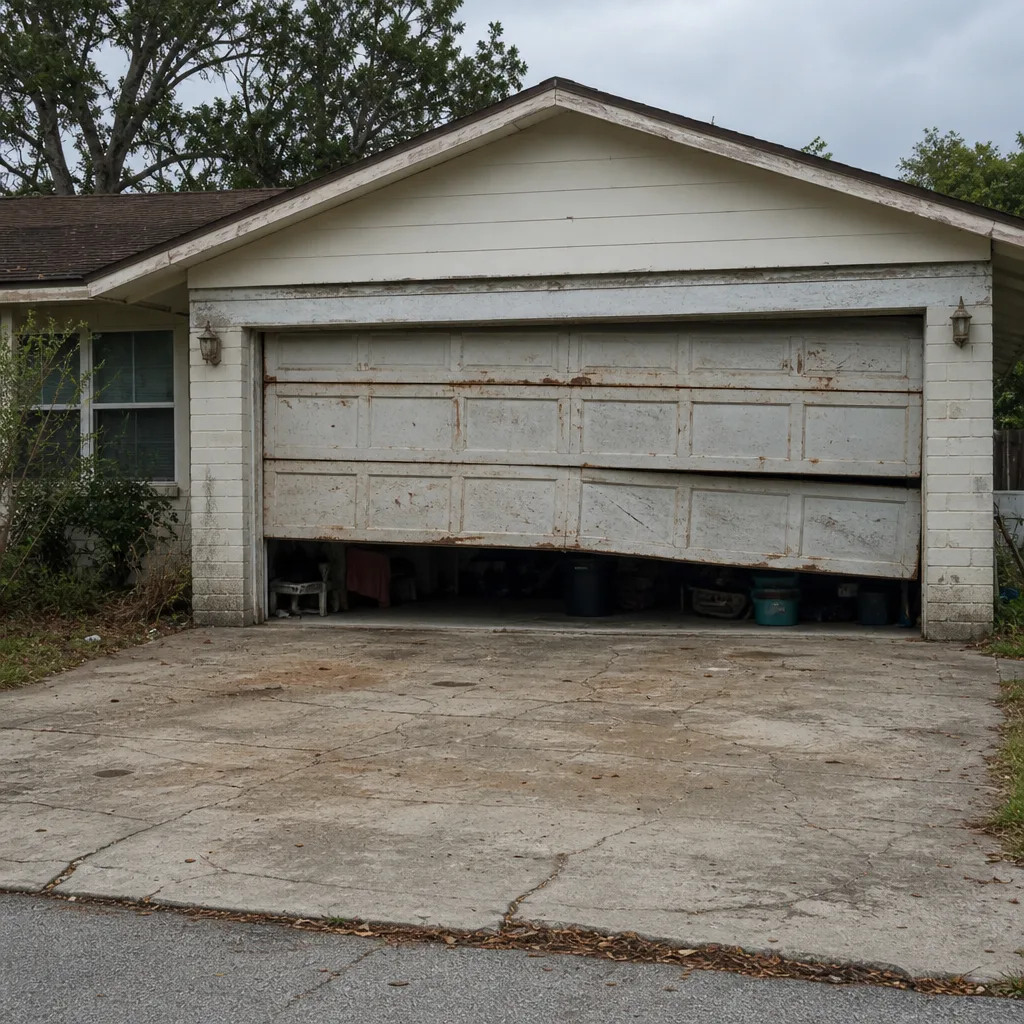 Before
 After
 Before
 After
 Before
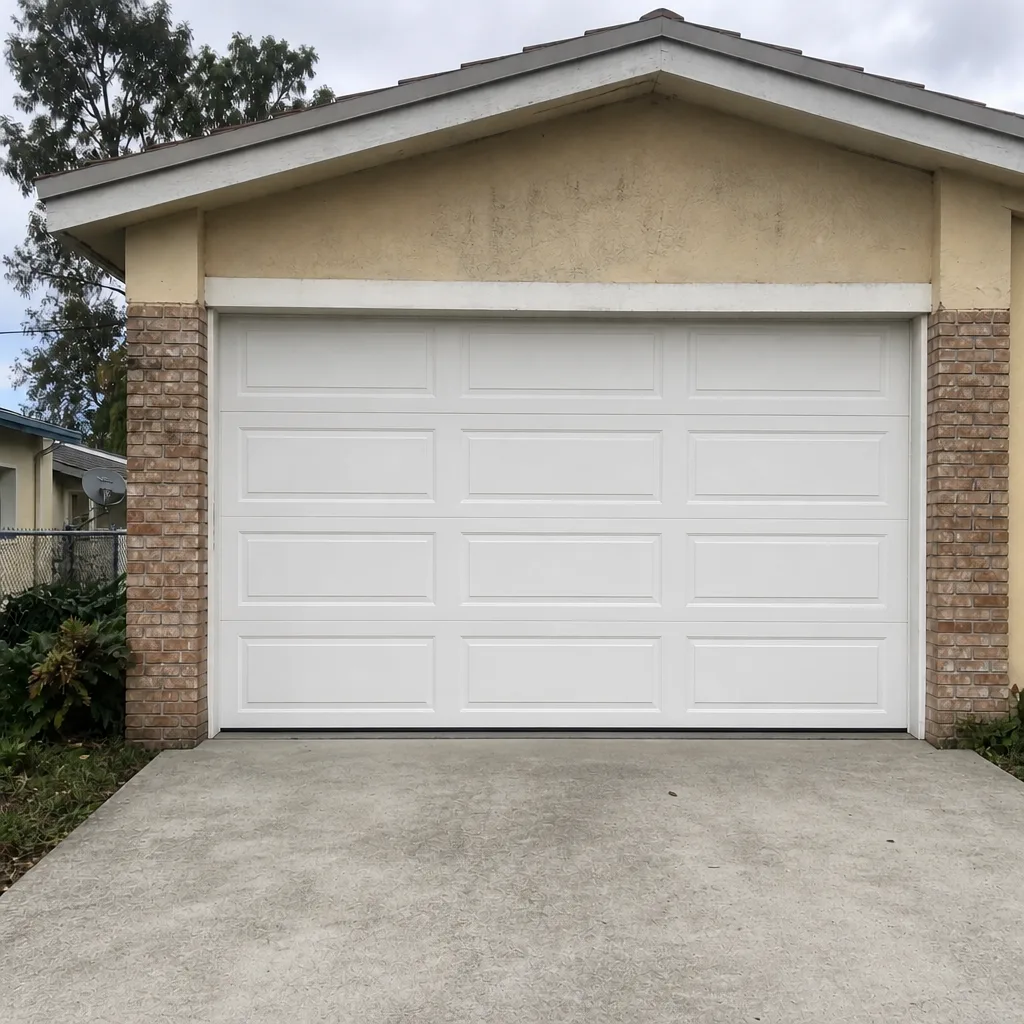 After