
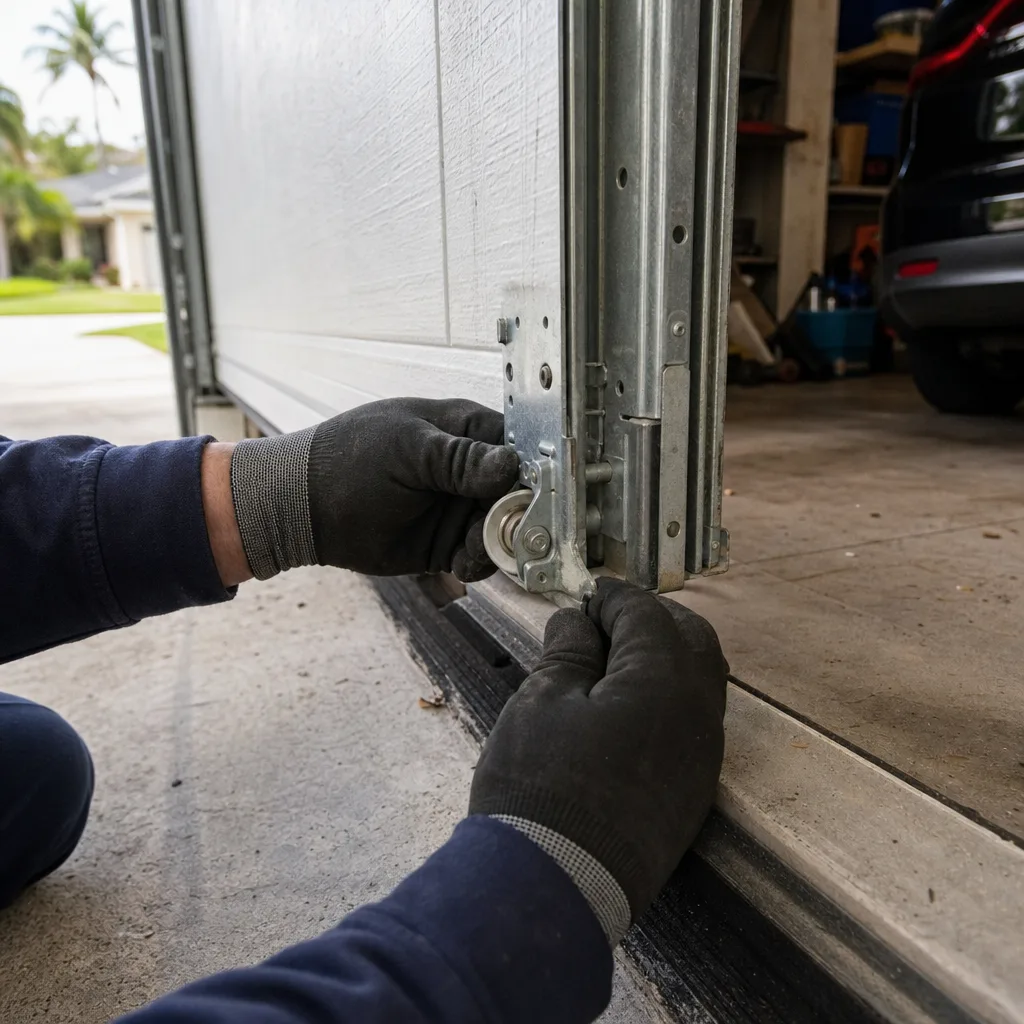
Last updated November 23, 2026
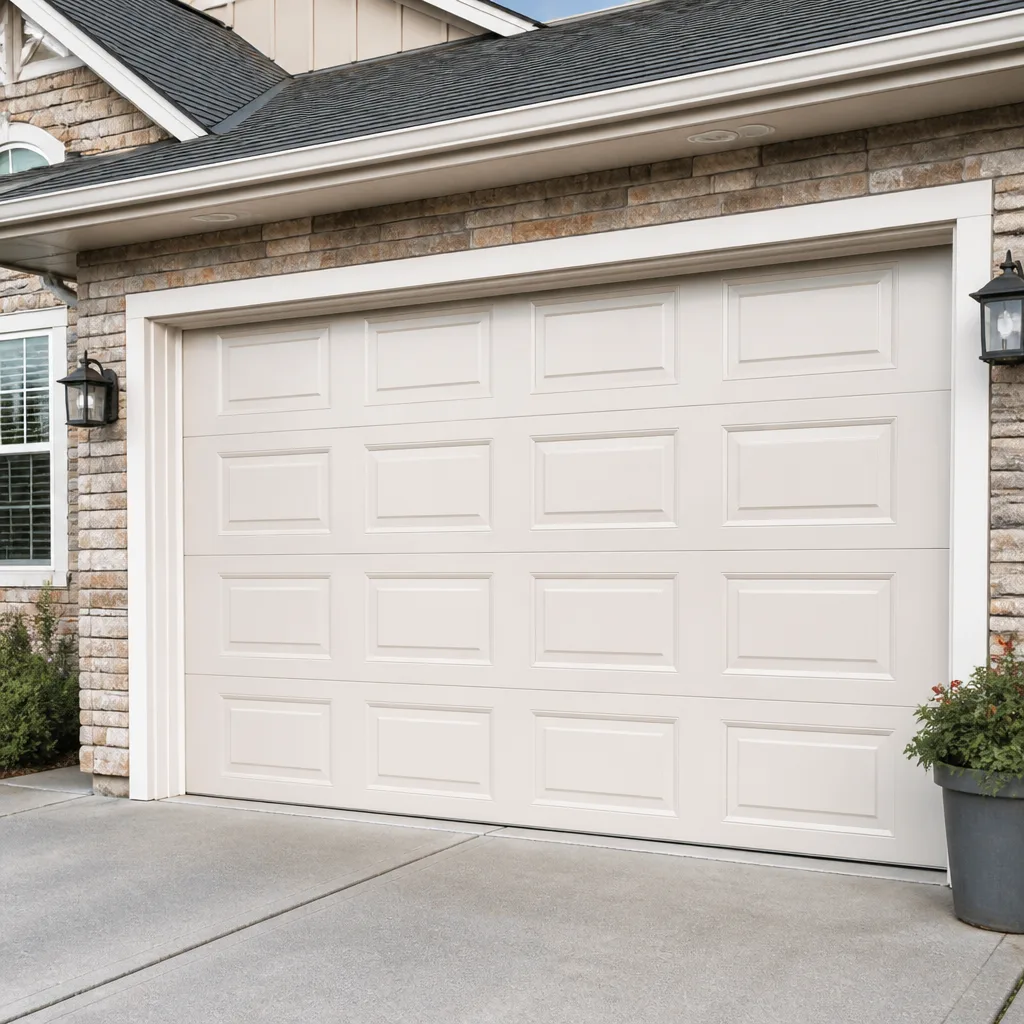 Raised-panel steel
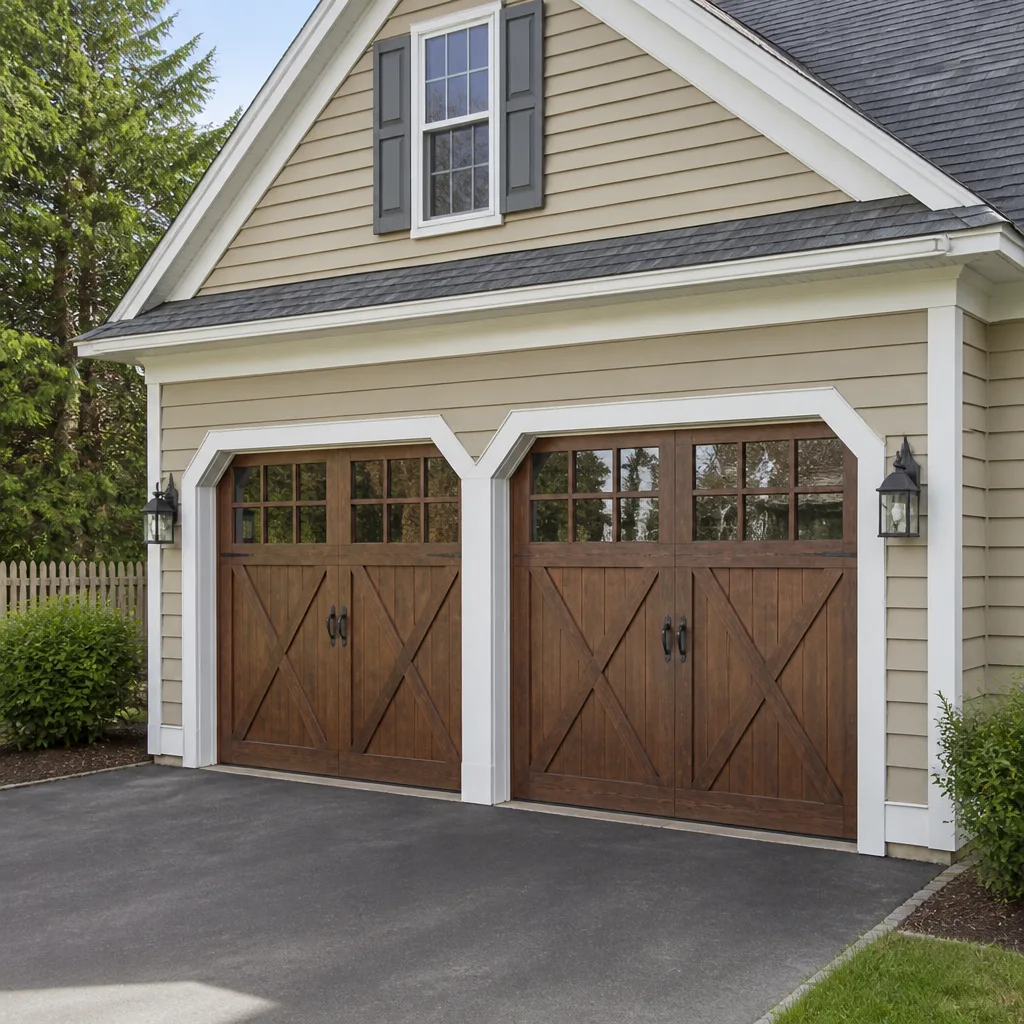 Carriage house
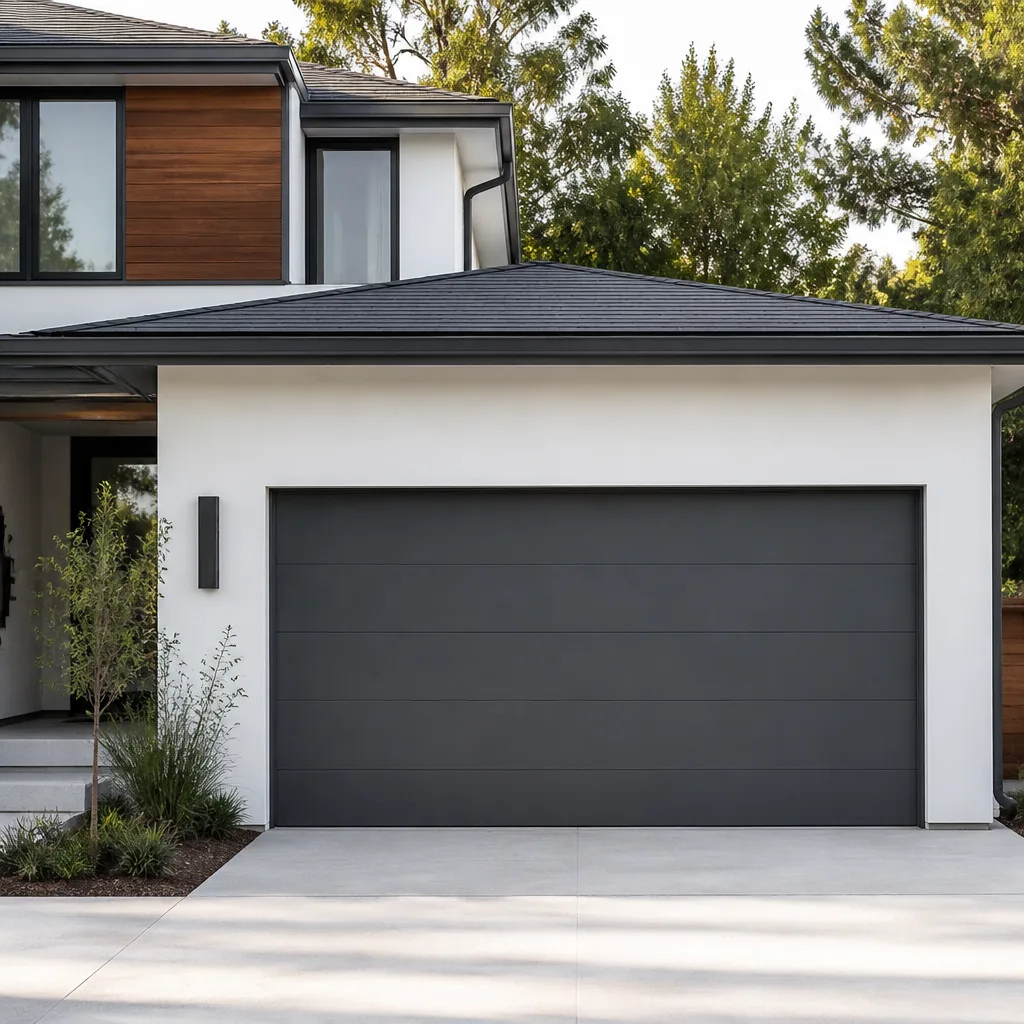 Modern flush
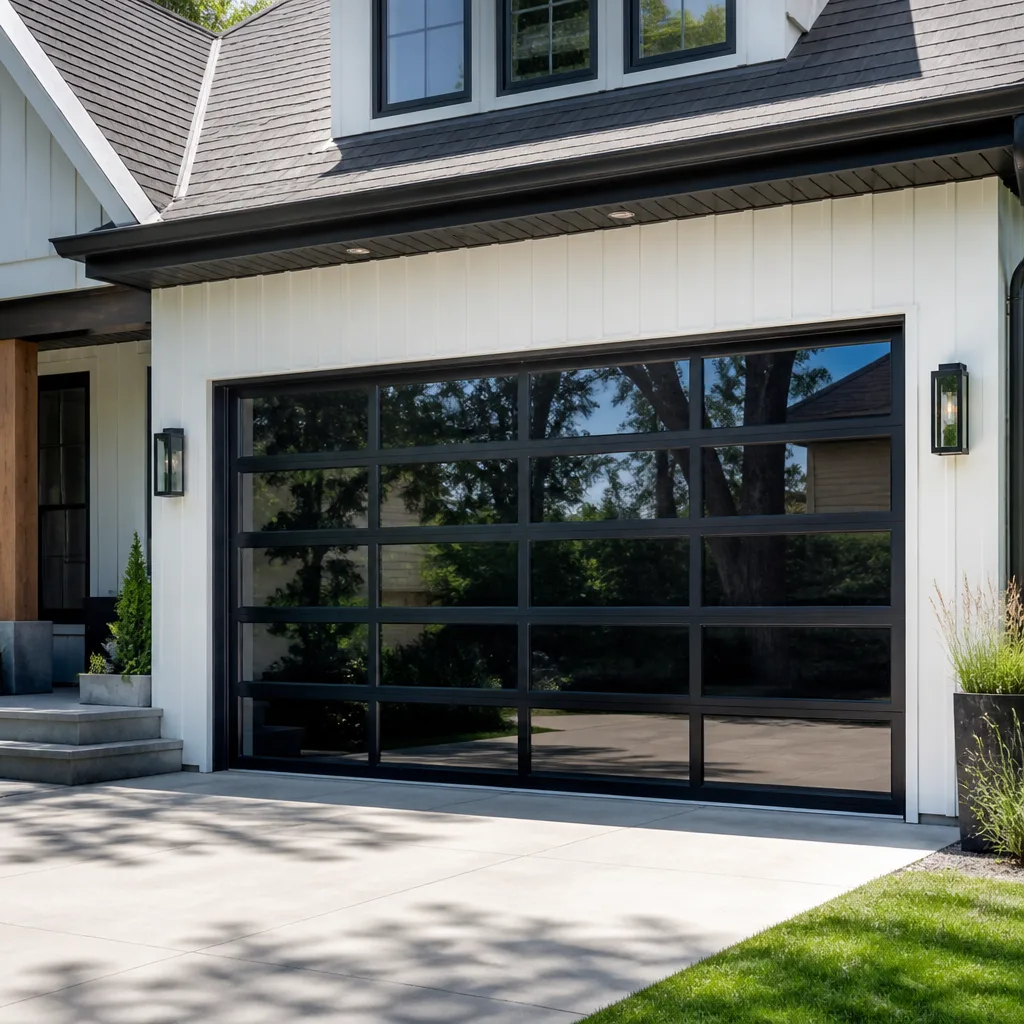 Full-view glass
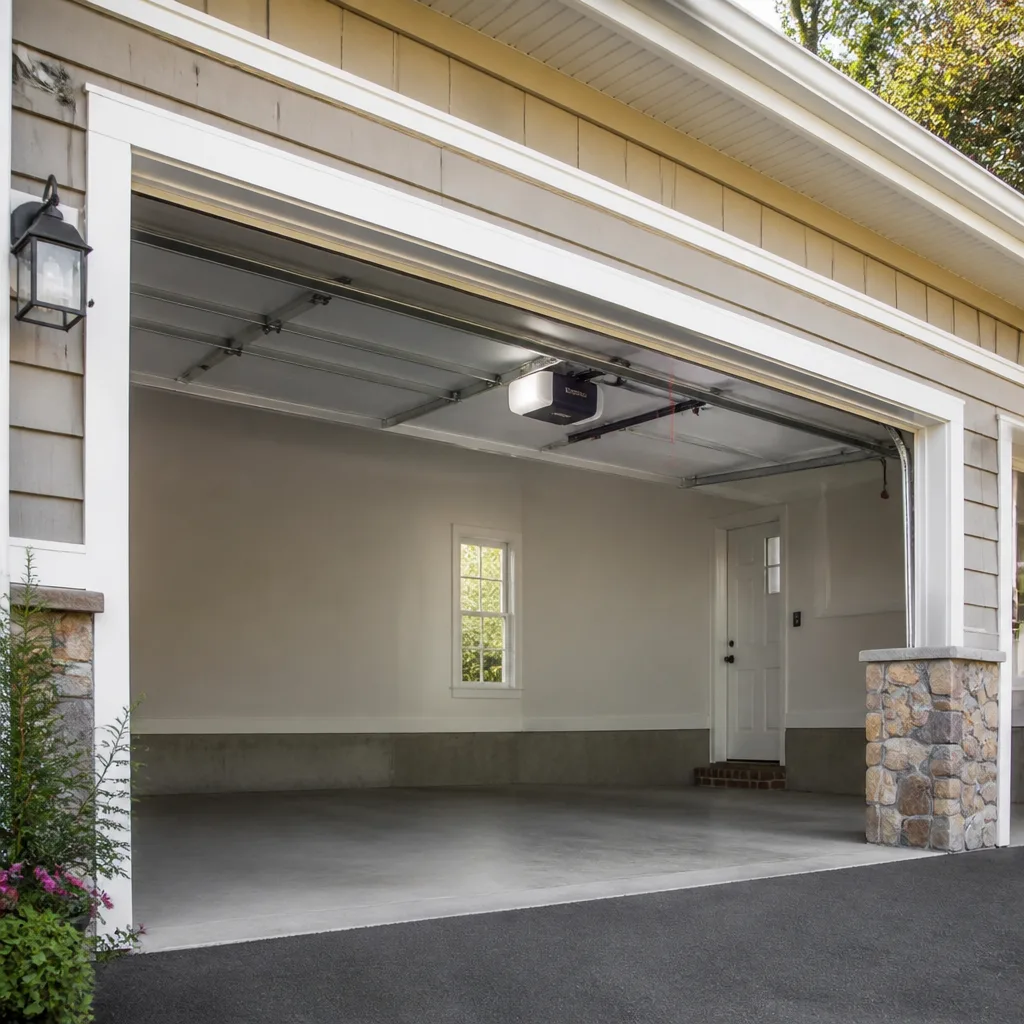 LiftMaster openers
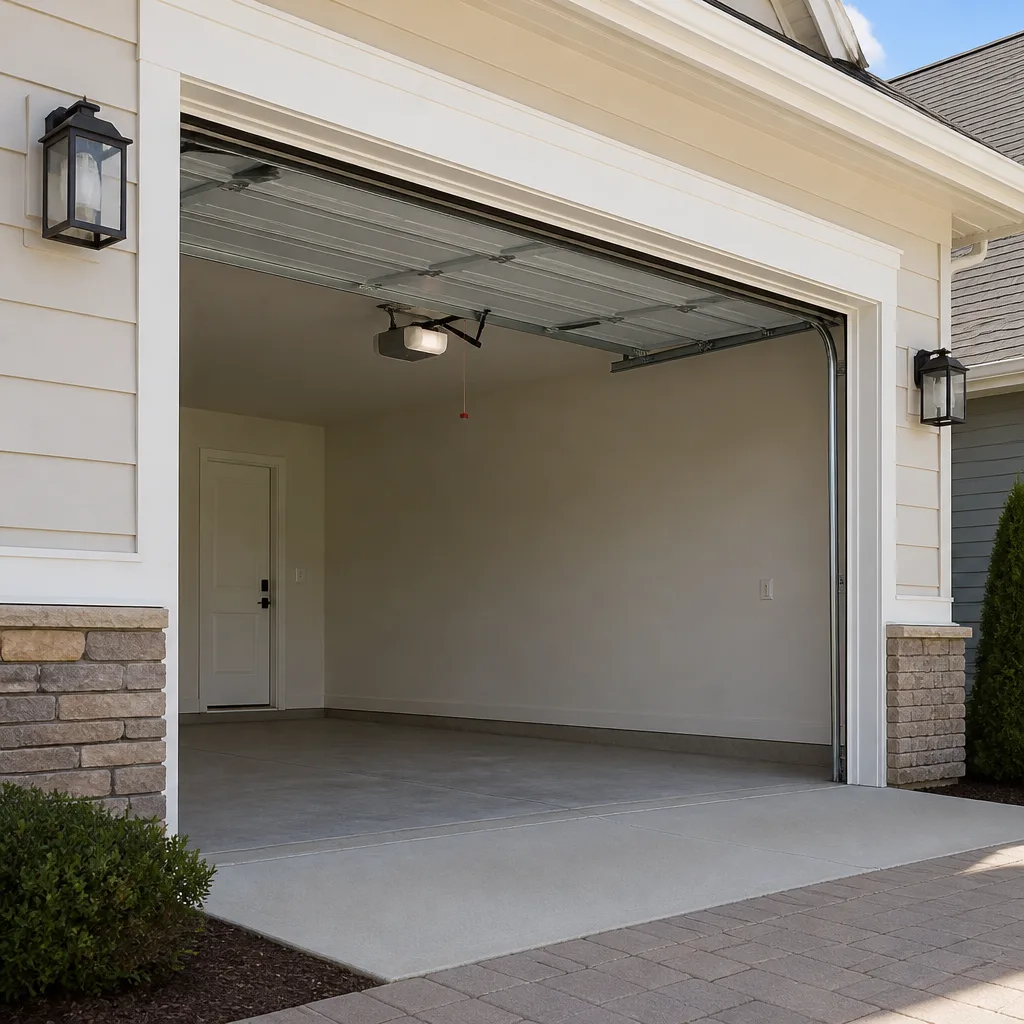 Chamberlain openers
Full 25-point door and opener safety check with every visit - springs, cables, rollers, tracks, and your LiftMaster or Chamberlain opener included
You get a price before we start. It does not change when the pro arrives.
Get your free estimateGarage Door Repair Maintenance Checklist for Boynton Beach Homeowners
Most homeowners picture garage door failure as a loud, sudden event. In our experience, that’s rarely how it happens. Doors in Boynton Beach tend to fail slowly – a hinge that stiffens a little more each month, a bottom seal that hardens in the sun, a spring that quietly loses tension long before it breaks. By the time a door jams or refuses to lift, the problem has usually been building for months. A ten-minute monthly check catches those problems early, and this guide gives you the exact points to inspect, the products to use in our humidity, and the tests that predict a failure before it strands your car. We work exclusively on garage doors in Boynton Beach, and this is the checklist we’d hand any neighbor.
Quick Answer
A Boynton Beach maintenance checklist has four parts: a monthly corrosion check at the spring anchor plate and hinges, a weather seal inspection for UV brittleness and wood rot, a two-minute balance test that predicts spring failure, and lubrication with a product that won’t wash out in humidity. Do those four things monthly and a professional tune-up once a year, and you’ll catch the slow failures that cause most emergency calls in this climate.
Key Takeaways
- Rust at the spring anchor plate is serious; rust on hinge surfaces is usually cosmetic.
- Florida humidity swells wood jamb stops and invites carpenter ants into soft wood.
- UV light hardens the bottom seal until it cracks and stops sealing.
- A door that fails the balance test is telling you the springs are nearly done.
- Document your wind rating check after every hurricane season.
- Never adjust springs or cables yourself. Those carry dangerous tension.
Styles & brands we work with
- Raised-panel steel
- Carriage house
- Modern flush
- Full-view glass
- LiftMaster openers
- Chamberlain openers
Table of Contents
- Why a Boynton Beach-Specific Checklist Matters
- Monthly Corrosion Inspection: What to Look At
- Lubrication That Survives Florida Humidity
- Weather Seal Inspection: UV, Wood Rot and Insects
- The Two-Minute Balance Test
- Wind Resistance Rating: How to Test and Document
- Opener and Safety Reverse Check
- The Annual Professional Tune-Up
Why a Boynton Beach-Specific Checklist Matters
Garage doors in Boynton Beach live in a climate that works against them. Humidity stays high through most of the year, the sun hits east and west-facing doors hard, and storm season brings wind-blown debris and driving rain. That combination drives three failure modes more than anything else: corrosion at load-bearing hardware, humidity-swollen wood, and storm debris damage to panels, tracks and seals.
Generic maintenance lists written for a national audience miss all three. They’ll tell you to check your springs and tighten bolts, which is fine, but they won’t tell you which rust spots mean trouble and which don’t. They won’t tell you that the wood around your door swells in the wet season and draws insects. Those local details are what separate a useful checklist from a list of things you forget by spring.
Our technicians have up to 12 years of experience working on the eight major brands – LiftMaster, Chamberlain, Genie, Clopay, Amarr, Wayne Dalton, Craftsman, and Raynor – and the recurring pattern on Boynton Beach doors is consistent. Hardware rarely fails from a single event. It fails from repeated moisture cycles and sun exposure. Your checklist should target exactly that.
The good news is that a proper monthly check takes about ten minutes. Set a reminder on the first of each month and work through the steps below. The full guide you’re reading is also a good reference to save and return to. If you need Boynton Beach Garage Door Repair Pros at any point, we’re here.
Monthly Corrosion Inspection: What to Look At
Corrosion is the leading cause of slow garage door failure in humid climates, and it’s the one most homeowners overlook. Not all rust means the same thing, though. Learn the difference between cosmetic surface rust and structural rust, and you’ll know when to relax and when to call.
Inspect these points monthly:
- Spring anchor plate – the metal plate bolted to the wall above the door where the springs attach.
- Hinges – the pivot points that connect each panel.
- Rollers and roller tracks – the wheels that guide the door and the metal channels they run in.
- Bottom brackets – the plates at the base of the door that hold the panel to the cable.
- Lift cables – the steel cables that run along each side of the door.
Surface rust on hinges is cosmetic. A light dusting of orange on the hinge plates or roller stems is common and easily handled with a wipe-down and a light lubricant. It doesn’t compromise the hinge.
Rust at the spring anchor plate is a different story. That plate holds the tension of the springs. If you see bubbling paint, flaking metal or rust streaks running down the wall from where it’s bolted, that’s a sign the metal is degrading. It means moisture has reached the load-bearing hardware, and it’s worth a professional look before the plate or bolts fail.
Rust on cables is also worth attention. Cables are under high tension. Any sign of fraying or noticeable corrosion on the cable strands means the cable is weakened. Do not touch it. Call us. These are the failures that turn a routine checkup into an emergency garage door repair call.
A note on safety with the spring system. Torsion springs and their cables hold dangerous stored energy. We don’t recommend doing anything more than a visual inspection at the anchor plate. If something looks off there, stop and call a specialist. Our garage door spring repair service exists precisely because this is a high-risk component.
Lubrication That Survives Florida Humidity
Lubrication is where most homeowners go wrong, and it’s not their fault. The products sold at national hardware chains are usually formulated for dry climates. In Boynton Beach, high humidity and frequent rain push those products past their limits. Here’s what actually holds up.
Products that work in humid climates:
- Silicone-based spray lubricant – water-resistant and doesn’t attract dust. Good for hinges, roller bearings and the torsion spring coils.
- White lithium grease – stays put on tracks and moving metal. Use sparingly because it holds dust if over-applied.
- Dry PTFE spray – leaves a thin film without gumming up. Good for exposed hardware and pivot points.
Products that don’t hold up here:
- WD-40 (as a lubricant) – it’s a solvent, not a lasting lubricant. It evaporates, leaving pivot points dry again within days.
- Petroleum-based grease – gums up in Florida humidity and will actually attract dirt and slow the door over time.
- Household oil or cooking spray – washes off in the first couple of rainstorms, taking any protection with it.
What to lubricate and how often:
- Hinges – apply a few drops at each pivot point. Monthly.
- Rollers – spray each roller bearing, not the wheels themselves. Monthly.
- Roller tracks – wipe clean and apply a thin coat of dry lubricant. Every two to three months.
- Torsion spring coils – a light mist of silicone. Every three months.
- Operator rail or chain (if you have a chain-drive opener) – use the manufacturer’s recommended product. Every six months or as needed.
Do not lubricate the door’s balance cable or the flat surface of the track itself. Track surfaces should stay clean, not slick. If you’ve got a LiftMaster or Chamberlain chain-drive opener, keep in mind that a chain should be lightly lubricated, not packed with grease. We get questions about that every week.
Once your door is properly lubed and running smoothly, you’ll know within a week if something else is dragging. If it still feels stiff or noisy, that’s a sign of a hardware problem, not a lubrication one. In that case, call us for a checkup.
Weather Seal Inspection: UV, Wood Rot and Insects
The bottom weather seal and the wood jamb around your door are its first line of defense. In Boynton Beach, they take a beating. UV exposure, humidity and the wet season all conspire to break them down, and when they go, the damage spreads.
Bottom seal inspection:
- Run your hand along the bottom seal with the door closed. It should feel flexible, not stiff.
- Look for cracks, brittleness or sections that are flaking away.
- Close the door and check that the seal contacts the floor evenly. Gaps mean air, insects and water get in.
- Look for a stretched or sagging seal. UV light weakens the rubber over time, so even if the door still closes, the seal may not be doing its job.
Florida sun makes the bottom seal brittle. Rubber that’s been in place a few seasons will harden, crack at the corners and lose its spring. A cracked seal lets water and pests inside, and it lets air conditioning escape. Replacing a bottom seal is one of the simplest, most impactful maintenance items on the whole door.
Wood jamb and trim inspection:
The wood stops around the door can swell in the wet season and dry out in the dry season. Repeated cycles of that open up small cracks. Carpenter ants are drawn to soft, damp wood, and a jamb stop is an easy target. Signs to watch for:
- Wood that feels soft or spongy under pressure.
- Fine sawdust or frass near the bottom corners of the jamb.
- Small holes in the wood trim.
- Paint that’s bubbling or lifting on the interior side of the jamb.
If you see any of those, the wood rot needs to be addressed before it spreads and before insects make a home in it. If you’re not sure, our team can take a look during a routine tune-up. Whether you have a Clopay wood-composite or an Amarr steel door, the jamb inspection is the same.
Last, check the side seals. The vertical brushes or rubber strips along each side of the door should seal against the jamb without gaps. If the door doesn’t sit flush, the sides can leak and the door can rattle in the wind. A tune-up usually catches this.
The Two-Minute Balance Test
This is the most useful test any homeowner can do, and it’s the one that predicts spring failure best. A torsion spring holds the door’s weight in balance, so the door should be easy to lift by hand. As the spring weakens, the door gets heavier. That heaviness is the early warning.
How to run the balance test:
- Disconnect the door from the opener. With the door closed, pull the manual release cord (or the emergency release lever) hanging from the opener rail. This disconnects the door from the motor.
- Lift the door by hand to about waist height, then let go.
- Watch what happens. If the door stays balanced at the halfway point, the springs are healthy. If it sinks quickly or slams down, the springs are losing tension.
- Raise the door to shoulder height, release it, and check again. It should stay put or drift only slightly.
- Reconnect the door to the opener by pulling the release cord back into position and running the opener through one full open-and-close cycle.
A door that sinks on its own after the balance test is telling you to call. There’s still time before it fails, but the springs are on their way out. Catch it at this stage and you’re looking at a planned repair rather than an emergency call with the car stuck inside.
Safety note: if the door falls hard during the balance test, do not repeat it. If the door won’t lift by hand at all, or feels dangerously loose, stop and call a professional. A torsion spring under tension is not a DIY job. We offer garage door repair across Boynton Beach for exactly these moments.
Run the balance test monthly. It takes two minutes and gives you a clear yes-or-no on the springs.
Wind Resistance Rating: How to Test and Document
Garage doors are rated for wind resistance, and in a storm-prone place like Boynton Beach, knowing your door’s rating matters. Florida building code generally requires doors in wind zones to be rated, and if you don’t know your rating, you can’t verify compliance or insurance coverage. The question to ask your city’s building department is simple: what does my door need for this address? Then ask the same question of your door.
How to test and document your wind rating:
- Find the rating label. It’s usually on the inside face of the door’s bottom panel or on a sticker affixed to the vertical track. It should state a wind resistance rating.
- Photograph the label and keep it where you can find it. A photo of the label, the model number and the installation date is a reasonable record.
- Inspect the mounting hardware. Wind rating depends not just on the door panel, but on the hinges, track anchors, bottom brackets and anchor bolts. Loose anchors or rusted-through brackets compromise the rating even if the door itself is rated.
- Check the door’s seal contact with the opening. Any gap at the perimeter is an air path, and during a wind event, pressure can drive water through it.
- After every hurricane season, re-run this check. Season damage happens gradually, and a bracket that was fine in June might not be in October.
If your door has no visible rating label, the manufacturer and model number can usually tell you what rating it was built to. If the model is a Clopay, Amarr or Wayne Dalton, the label is typically on the interior face. If you can’t find it, our team can help identify the door and what rating it was built with.
Documenting your rating isn’t just about compliance. It’s also useful for insurance. Keep the photo record with your home documents. If the door is ever damaged in a storm, having a documented current rating is a whole lot easier than trying to reconstruct one from memory.
Opener and Safety Reverse Check
Your opener gets a lot of use. It goes up and down several times a day, and its safety systems matter for your household. Test the safety reverse at least every few months. It’s a quick check and catches a serious hazard.
The photo eye test:
- With the door fully open, pass your hand through the safety sensors on each side of the door opening. The door should stop and reverse immediately.
- If the door doesn’t reverse, the sensors may be misaligned, dirty or failing. Wipe the lenses clean and check alignment before anything else.
The mechanical reverse test:
- Place a small block of wood on the floor in the middle of the door’s path.
- Close the door with the opener. The door should reverse when it contacts the block.
- If it doesn’t reverse, the opener’s force settings need adjusting or the opener needs service.
Openers we work on:
Our team services LiftMaster, Chamberlain, Genie and Craftsman openers, along with the other major brands. Each has its own quirks in a hot, humid climate. Belt drives tend to be quieter but can stretch; chain drives are louder but more tolerant. Screw drives can be sensitive to track alignment. If your opener is newer and connected to an app or a smart-home system, keeping the firmware current helps.
If your door reverses with no obstacle, or won’t reverse at all, stop using the opener until it’s checked. Call us for garage door opener repair. This one isn’t a DIY fix. The safety systems exist for a reason.
The Annual Professional Tune-Up
Monthly self-checks cover the big items. Once a year, a professional tune-up catches everything you can’t see or safely reach. Here’s what typically goes into it:
- Full balance test and spring tension evaluation.
- Spring length retention check on any torsion springs.
- Cable and drum inspection for fraying, wear or misalignment.
- Roller replacement evaluation and track alignment.
- Hinge tightening and hardware inspection.
- Weather seal and perimeter seal replacement evaluation.
- Opener force and travel limit adjustment.
- Safety reverse and photo eye function test.
- Full lubrication with a humidity-resistant lubricant.
Ask your technician to note anything that needs to be scheduled soon, even if it doesn’t need to be fixed during the visit. That way you’re not caught off-guard later. A good tune-up also gives you a written record of the door’s condition, which helps with insurance and with future repair planning.
If your door is a Clopay, Amarr, Wayne Dalton or Craftsman model, the tune-up also covers brand-specific wear points. Each manufacturer has its own hardware layout and quirks, and knowing the door matters. We work on all eight major brands: LiftMaster, Chamberlain, Genie, Clopay, Amarr, Wayne Dalton, Craftsman and Raynor.
An annual tune-up is also the right time to talk about replacement. If your door is on its last legs, you’ll want to know before it fails. If a new door is in your future, our team handles full new installation along with repair, so you don’t need a second contractor.
Common Mistakes to Avoid
- Lubricating with WD-40 and calling it done. WD-40 evaporates within days and leaves the pivot points dry again. In Boynton Beach humidity, you need silicone or white lithium to hold up.
- Ignoring rust at the spring anchor plate. Surface rust on a hinge is not the same as rust on the anchor plate. That plate carries the spring tension, and rust there is a warning sign.
- Skipping the balance test. It’s the fastest, cheapest predictor of spring failure. Skipping it is the reason so many homeowners don’t see the failure coming.
- Trying to adjust the torsion spring yourself. We’ve seen too many homeowners start this and end up calling us mid-job. The tension in a torsion spring can seriously injure you.
- Overlooking the bottom seal. UV light dries out the rubber over time. A cracked seal lets water, insects and hot air through, and you may not notice until the AC bill goes up.
- Not documenting your wind rating label. When storm season hits and you need to prove the door’s rating, a photo from a year ago is a lot more useful than trying to remember.
- Waiting too long on a noisy door. A door that starts squeaking or groaning is telling you something. Small problems are cheap to fix. Big problems are expensive.
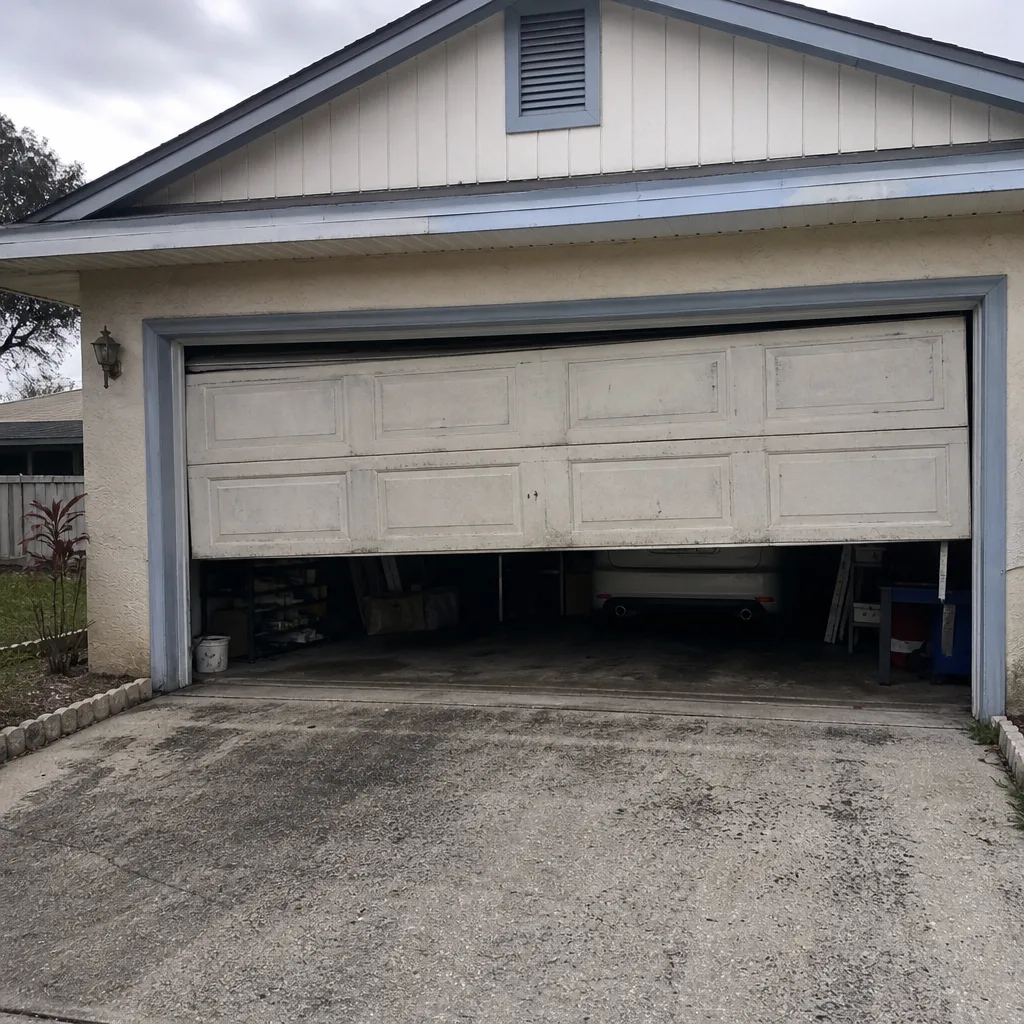
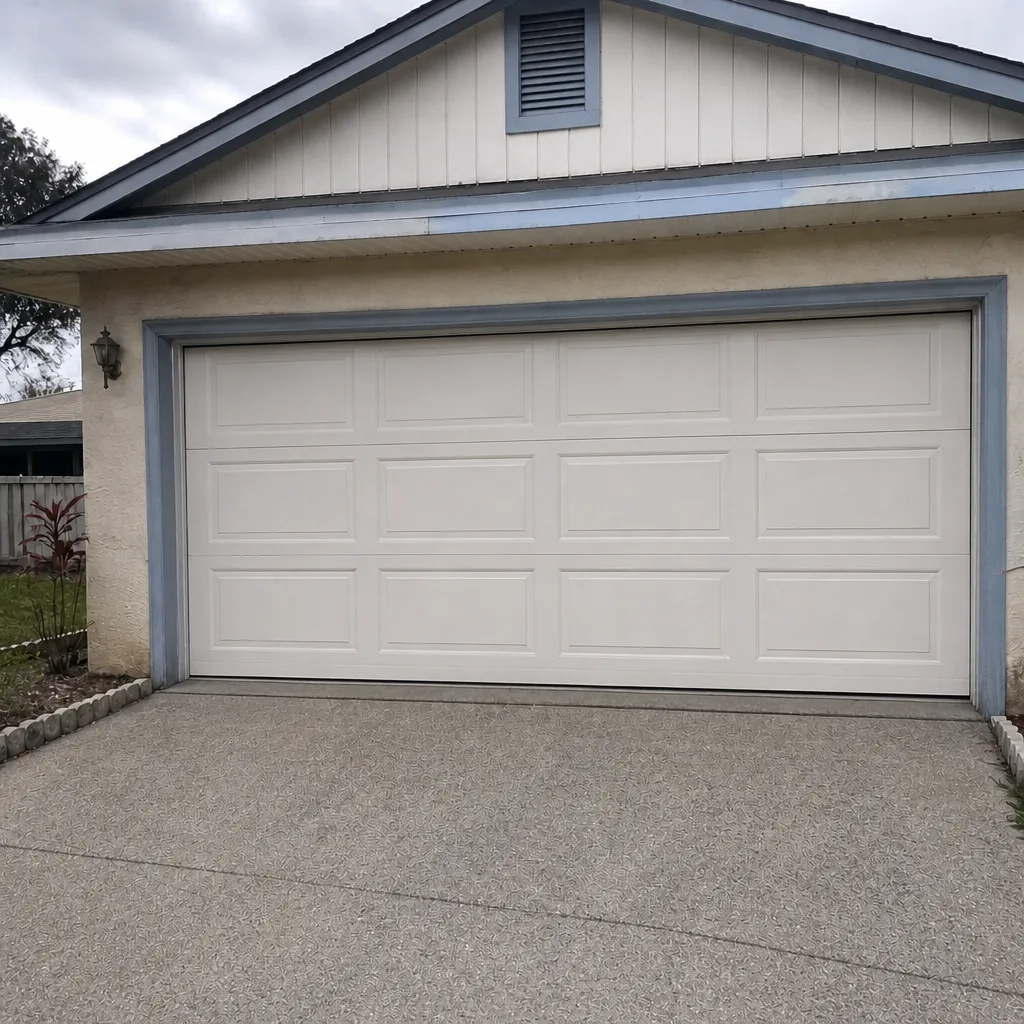
See the difference
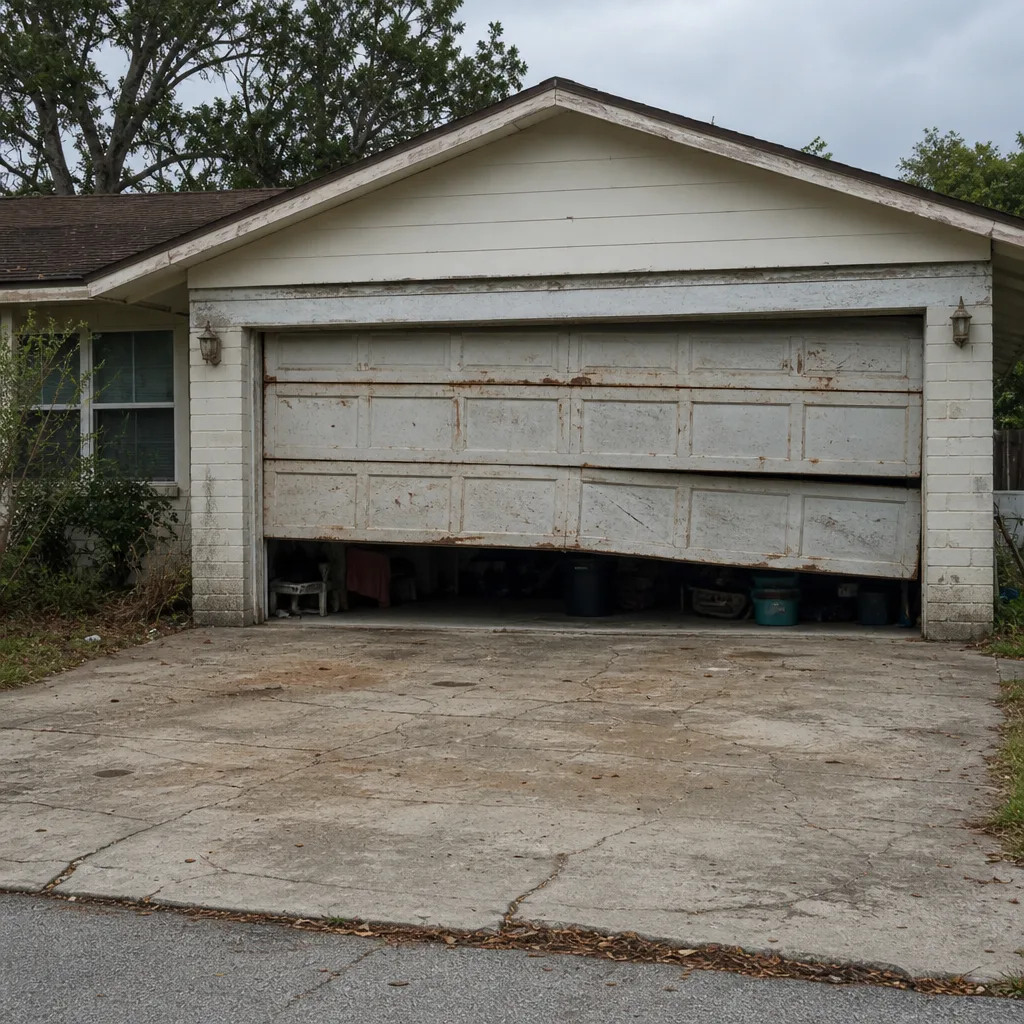 Before
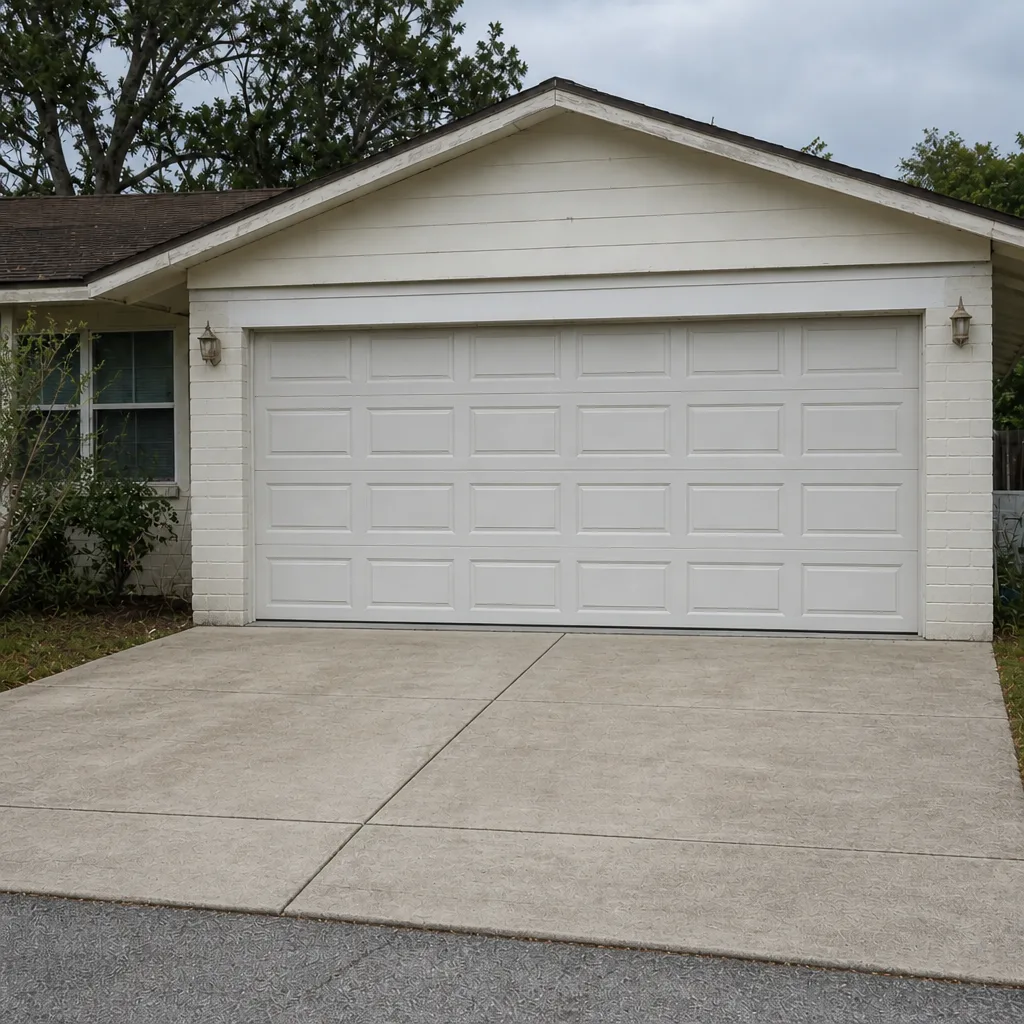 After
 Before
 After
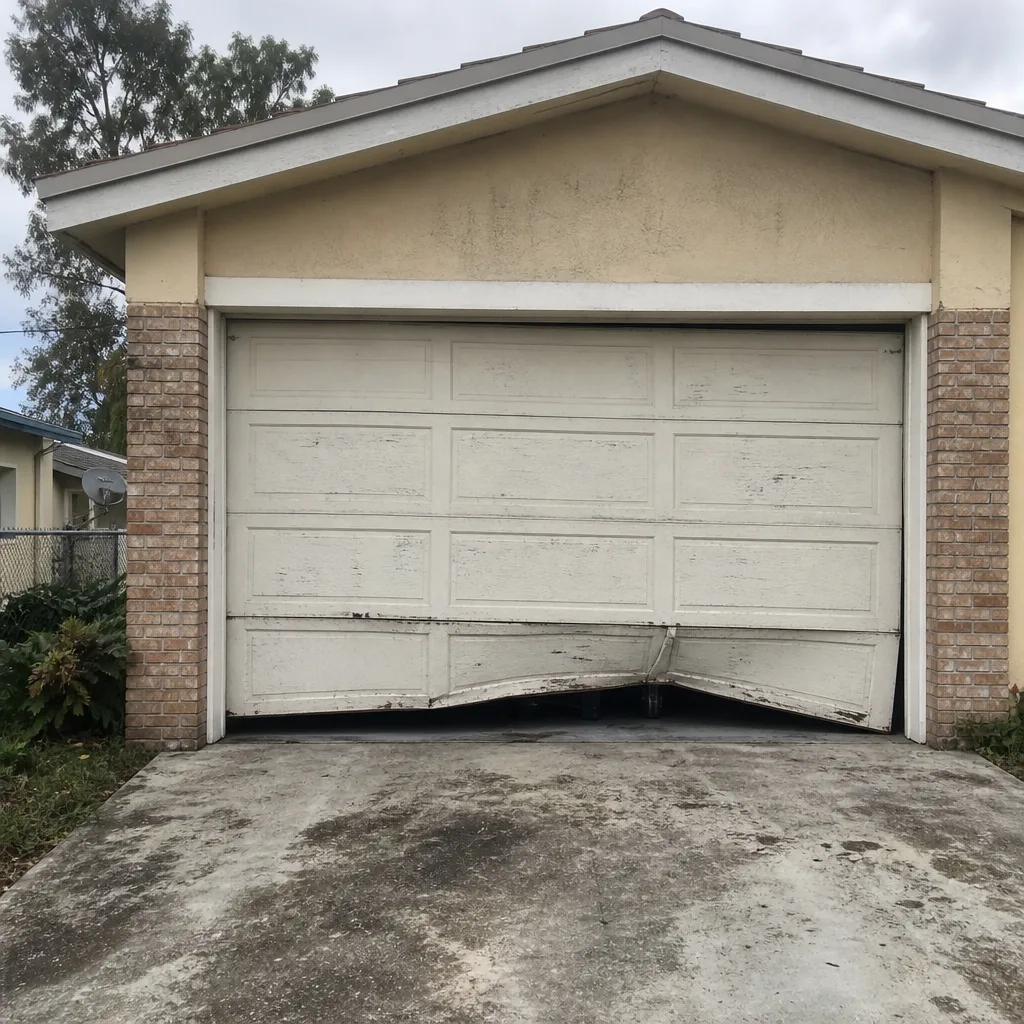 Before
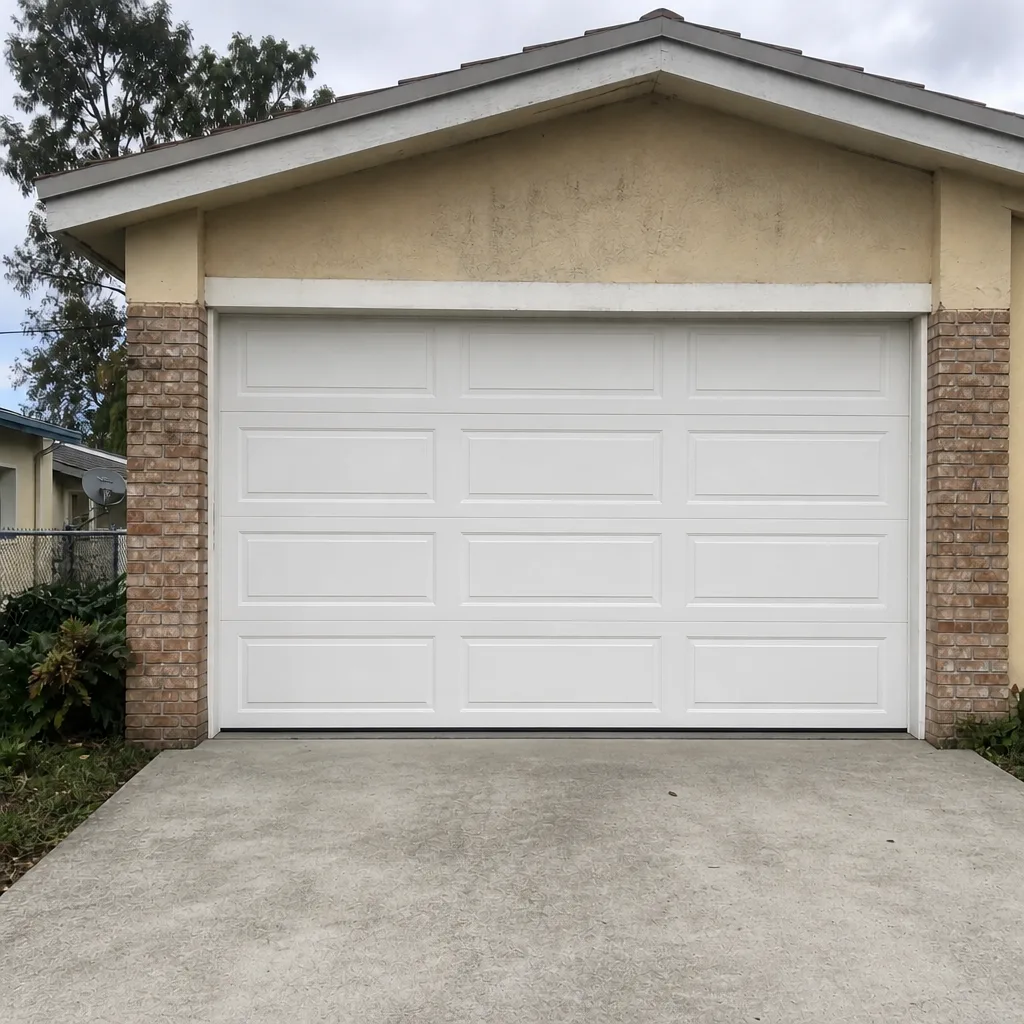 After
When to Call a Professional
Most of this checklist is safe for you to handle on your own. Spring repairs, cable repairs and anything involving the door’s torsion system are not. If your door sags during the balance test, if the spring anchor plate is rusted through, if any cable is frayed or if your opener fails the safety reverse test, stop using the door and call a professional.
Boynton Beach Garage Door Repair Pros offers free estimates in Boynton Beach. Call (866) 937-8319. Our technicians service the eight major brands – LiftMaster, Chamberlain, Genie, Clopay, Amarr, Wayne Dalton, Craftsman and Raynor – so you’ll get a technician who knows your equipment. Same-day service is often available, and emergency service is a confirmed offering because we know that a stuck door means a stuck car. The estimate is free, and the price is set per job by the written estimate before any work begins. We answer 24/7. Fast dispatch from 7am to 7pm, Sunday through Friday.
Frequently Asked Questions
Once a month for the quick checks, and once a year for a professional tune-up. The monthly check covers the corrosion inspection, the balance test and the safety reverse test. The annual tune-up covers hardware inspection and anything you can’t safely reach. Given the humidity and UV exposure in Boynton Beach, monthly checks give the best early warning of a developing problem.
It means moisture has reached the metal that holds the door’s spring tension, and the metal is likely degrading. Surface rust on hinges is cosmetic, but rust at the anchor plate is different. Stop and call a professional. Do not attempt to loosen or adjust anything at the anchor plate yourself. Call (866) 937-8319 for a free estimate on a professional inspection.
No. Garage door torsion springs are under dangerous tension and can cause serious injury if handled incorrectly. We strongly recommend against any DIY spring work. A trained technician uses specific tools and procedures for safe spring replacement. Our garage door spring repair service is one of the highest-risk repairs we handle, and there’s a reason for that. Call us for an estimate if your spring is broken or worn.
In summer, the combination of humidity and heat can cause wood components to swell and hardware to bind slightly, but the most common cause of a heaviness feeling is weak springs. Run the balance test. If the door falls when you let go halfway up, the springs are losing tension. Humidity alone wouldn’t cause that. If the door passes the balance test but still feels sluggish, it might be a track alignment issue or a lubrication problem. Call us if it doesn’t improve after a proper lubrication.
Find the rating label on the inside face of the door’s bottom panel or on the vertical track, and photograph it. Then verify that the mounting hardware – hinges, anchors and bottom brackets – is still in good condition. After every hurricane season, re-check. If the label is missing or damaged, or the brackets show rust, have a professional inspect the door. Only the city’s building department can confirm the exact requirement for your address, so ask them and compare.
Yes, same-day garage door repair in Boynton Beach is often available, and emergency service is a core offering. Call (866) 937-8319. We answer 24/7, and fast dispatch runs from 7am to 7pm, Sunday through Friday. If a call comes in outside dispatch hours, it goes into the next opening. The estimate is free, and pricing is set per job by the written estimate before work starts.
The Bottom Line
Garage doors in Boynton Beach fail from the climate, not from sudden bad luck. Corrosion at load-bearing hardware, humidity-swollen wood and UV-brittled seals are the three failures that take doors offline, and all three are visible during a monthly ten-minute check. Run the balance test, inspect the anchor plate, lubricate with silicone or white lithium, and photograph your wind rating label after every storm season. Schedule a professional tune-up once a year, and never touch the torsion spring yourself. That routine will catch almost every problem long before your car is stuck inside a broken door. When something needs professional attention, or you want a documented annual inspection, call (866) 937-8319 for a free estimate. We answer 24/7. Fast dispatch from 7am to 7pm, Sunday through Friday.
Written by the team at Boynton Beach Garage Door Repair Pros.